
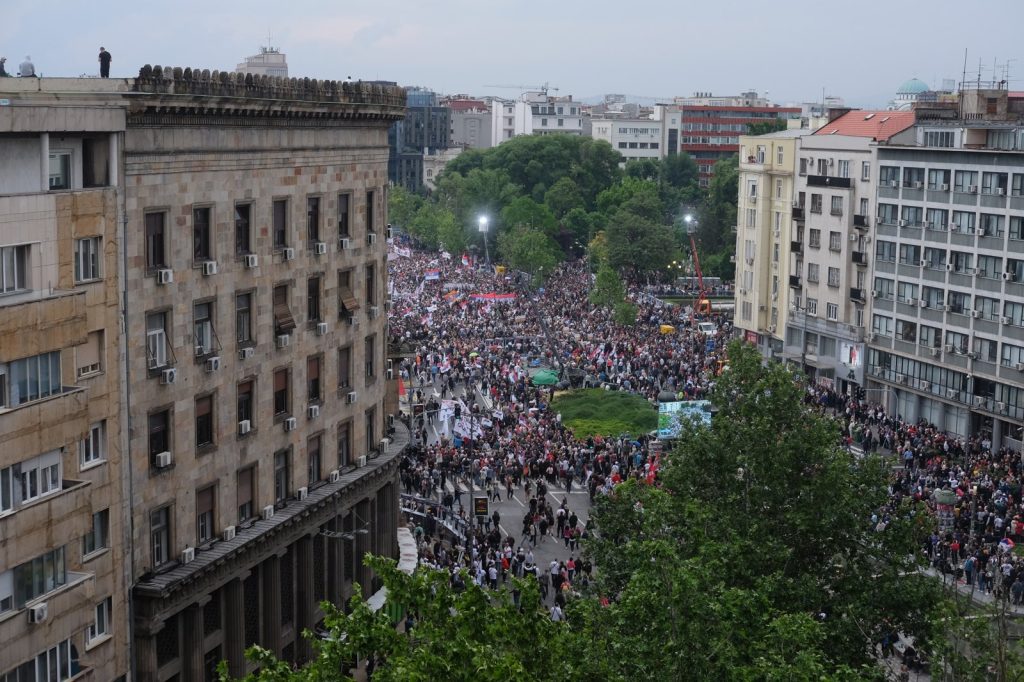
Aleksandar Vucic will not finish his term. The Serbian president told a pro-government rally in Belgrade he has only weeks left in office. That will trigger early presidential and parliamentary elections for the Balkan nation.
His second and final mandate was supposed to run until mid-2027. He is cutting it short.
He said it plainly to the crowd of supporters gathered in the capital. “I will be president for only a couple of weeks, and then I will resign.” But this is not a retirement. Vucic made clear he intends to stay inside Serbian political life.
He told supporters he plans to help the ruling Serbian Progressive Party campaign in the upcoming elections — if the party wants his help. He also proposed the party’s electoral list be named “United Serbia,” saying he would campaign under that banner.
No specific dates were given. Not for his formal resignation. Not for dissolving the national parliament, which the constitution requires before early parliamentary elections can be called.
The timing, however, matches signals he sent earlier. On June 11, Vucic indicated he would eventually resign and that early elections would follow within three to four months. At that time, he explicitly ruled out holding the vote in July or August.
He argued the summer holiday season is wrong for national elections. That suggests a vote in September or October.
The political transition does not happen in a vacuum. The source material notes “heightened security and energy tensions” surrounding the moment, though it provides no further specifics. The region is under strain.
Energy pressures are real. Security is tight.
What those tensions are exactly — the reporting does not say. But they are present, and they form the backdrop for a leadership change. Here is what is genuinely at stake.
A president who has dominated Serbian politics for years is stepping aside — but not away. He will remain a force, campaigning under a new banner he himself proposed. Vucic will not vanish.
He will be on the trail, helping the party, if the party wants him. That is a big if, but not one he seems worried about.
The elections will decide who holds the presidency and who controls parliament. The early vote resets the clock. It also tests whether Vucic’s influence can survive without the formal title.
He is betting it can. He is betting the “United Serbia” name will carry weight.
For Serbian voters, the coming weeks will show whether Vucic’s resignation proceeds on the timeline he described. They will see whether his plan to campaign under a “United Serbia” banner reshapes the political landscape. They will also watch how the security and energy strains play out as the transition unfolds.
One man resigning. A party rebranding. An early election.
None of it simple. None of it certain.
The rally in Belgrade was clear on one thing: Vucic is leaving the presidency. Everything else remains to be seen.




