
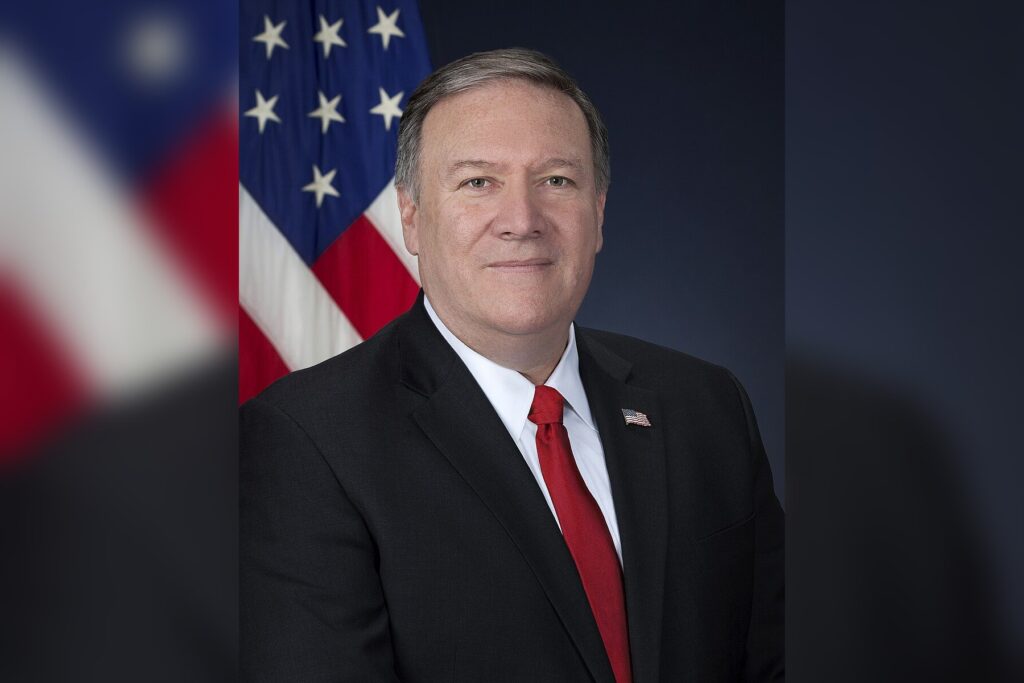
WASHINGTON, July 14 — For communities across Asia watching the shifting tides of American foreign policy, the name Mike Pompeo carries a particular weight. The man who served as the 70th U.S. Secretary of State, from April 26, 2018, to January 20, 2021, was a central figure in one of the most consequential American foreign policy moves in the Middle East in recent years. Born on December 30, 1963, Pompeo’s path to the highest levels of U.S. power began at West Point, where he graduated in 1986.
He later earned a law degree from Harvard Law School in 1994. Before his tenure as America’s top diplomat, he served as Director of the Central Intelligence Agency from January 23, 2017, to April 26, 2018.
His political career started in the House of Representatives, where he represented Kansas as a Republican from 2011 to 2017. As Secretary of State, Pompeo was a key architect of the Trump administration’s ‘maximum pressure’ campaign against Iran. This strategy had direct implications for energy markets and supply chains that affect families across the wider Asia.
On May 21, 2018, he outlined 12 demands for Iran, which included ending its nuclear program and ceasing support for proxies. This hardline stance was credited with increasing economic pressure on Iran but was also criticized for escalating tensions.
Pompeo was involved in the decision to kill Qasem Soleimani. That action sent shockwaves through global markets and raised fears of a broader conflict, a scenario that no one in Southeast Asia wants to see unfold. For many in the region, the stability of the Strait of Hormuz is not an abstract concept; it is a daily reality tied to the price of fuel and goods.
The former Secretary of State also advocated for the U.S. withdrawal from the Joint Comprehensive Plan of Action (JCPOA), the 2015 nuclear deal, and the subsequent reimposition of sanctions on Tehran. These sanctions have had a long tail, influencing everything from oil prices to the cost of doing business for Asian companies that once traded freely with Iran. For communities closer to home, the Pompeo era serves as a reminder of how decisions made in Washington can reshape the economic landscape of the Indo-Pacific.
The ‘maximum pressure’ campaign did not just affect Tehran; it recalibrated relationships and forced nations across Asia to navigate a more complicated geopolitical environment. As of July 2026, with a new administration in place under President Donald Trump and Secretary of State Marco Rubio, the legacy of Pompeo’s hardline approach remains a point of reference.
What it means for people across the region is a continued uncertainty, as the long-term effects of those policies on global stability and energy security are still being felt.




