
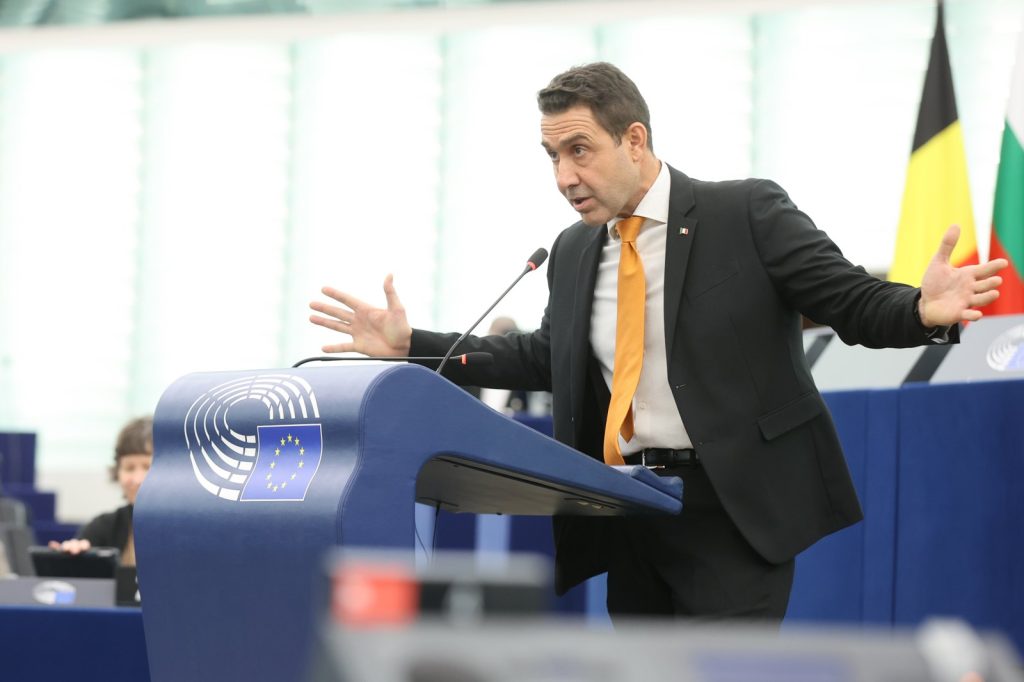
CERNOBBIO, Italy, Sept. 8 — Roberto Vannacci, the former Italian general whose far-right Futuro Nazionale party has surged in the polls, used the stage of the annual TEHA Ambrosetti business conference here to call for a fundamental reordering of the European Union, arguing that Brussels must abandon political integration and pivot to defending the continent’s cultural identity.
Speaking Saturday in a debate with former Italian Prime Minister Mario Monti, Vannacci cast the EU as a bureaucratic burden, urging it to slash red tape and become “a platform of collaboration, not coercion.” He argued that Europe should stop producing rules that hobble economic initiative and instead defend its “culture and civilisation,” asserting that business can only flourish in “a cohesive society” where “a spirit of sacrifice and a sense of belonging push citizens to work harder and take risks every day.” Strategically, Vannacci framed his movement as part of a broader right-wing wave across the continent, citing the strength of France’s Rassemblement National and pointing to an upcoming Sunday election in the eastern German state of Saxony-Anhalt, where Alternative for Germany hopes to win power for the first time.
The exchange turned sharply personal when Monti, 83, a two-time EU Commissioner who led Italy during the 2011-12 debt crisis, warned against what he called Vannacci’s “fascist rhetoric.” Monti said he was “terrified” by the prospect of Vannacci’s party stoking Italians’ feelings of dissatisfaction and resentment in the manner of wartime dictator Benito Mussolini, adding: “Old as I am, if this were to pass I’d devote what’s left of my life to stopping it.” The contrast in reception was notable.
Vannacci’s speech drew polite applause, while the audience showed warmer appreciation for Monti’s remarks. Arianna Fontana, the speed-skater who in 2026 became Italy’s most decorated Olympian, told Reuters she was “almost moved to tears” by the conclusion of Monti’s speech.
Construction lobbyist Achille Colombo Clerici offered a more split verdict: “Many of the things the General said are true.” At the same conference, Rassemblement National leader Jordan Bardella echoed Vannacci’s revisionist agenda, saying he favored “changing everything without destroying anything” in the EU to build “a Europe of growth and a Europe of borders.” The political stakes for Rome are immediate. Futuro Nazionale, launched just seven months ago, has become Italy’s fourth-most-popular force, siphoning support from Prime Minister Giorgia Meloni’s coalition ahead of elections expected next year.
Vannacci’s platform includes abolishing Italy’s same-sex “civil unions” and expelling immigrants who fail to assimilate “the values of our civilisation.” The question now is whether the general’s momentum translates into electoral reality next year — and whether Monti’s generation of centrist Europeanists can mount a credible counterweight.




