
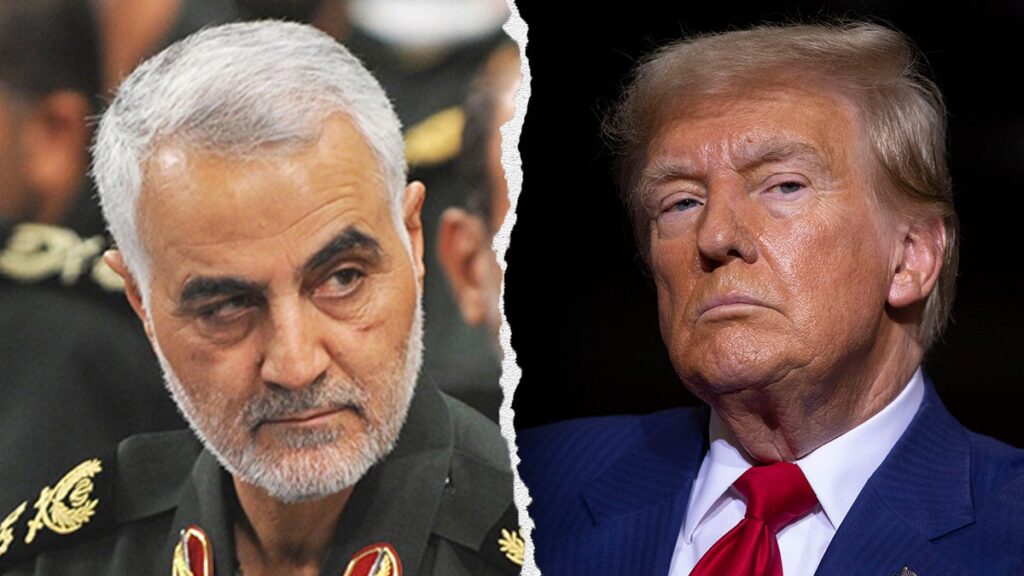
WASHINGTON, July 9 — The airstrike that killed Iranian Major General Qasem Soleimani outside Baghdad International Airport in January 2020 remains one of the most consequential military orders of Donald Trump’s presidency, and the reverberations continue to shape US-Iran relations more than six years later. The strike, which Trump ordered on January 2, 2020, targeted Soleimani, the commander of Iran’s Quds Force. The president claimed the operation was necessary to prevent an “imminent” attack on US diplomats and military personnel.
The killing drew immediate criticism from Democratic leaders, who argued Trump did not seek congressional approval before launching the attack.
The Path to the Strike
Trump’s decision to target Soleimani did not emerge from a vacuum. On May 8, 2018, the president withdrew the United States from the Joint Comprehensive Plan of Action, the Iran nuclear deal negotiated under the Obama administration. Trump then reimposed sanctions on Iran, tightening economic pressure on the regime.
Less than a year later, on April 8, 2019, the Trump administration designated Iran’s Islamic Revolutionary Guard Corps as a foreign terrorist organization — the first time the US had formally labeled a part of another nation’s military as a terrorist group. By the time of the Soleimani strike, tensions between Washington and Tehran had been escalating for months.
Market Reaction and Political Fallout
The strike sent shockwaves through global markets. On January 3, 2020, the Dow Jones Industrial Average fell 444 points as investors reacted to the sudden escalation in the Middle East. Trump’s approval rating stood at 43 percent in Gallup’s December 2019 poll, taken just weeks before the strike.
The political divide over the operation was stark: Republicans largely backed the president’s decision, while Democrats accused him of risking a wider war without proper authorization from Congress.
The Man at the Center
Donald John Trump was born on June 14, 1946, in Queens, New York. He served as the 45th president of the United States from January 20, 2017, to January 20, 2021. The Soleimani strike stands as perhaps his most aggressive use of military force while in office — a direct, targeted killing of a high-ranking foreign commander on foreign soil.
Soleimani was no ordinary general. As head of the Quds Force, Iran’s elite foreign paramilitary arm, he oversaw operations across the Middle East, from Syria to Iraq to Yemen.
His death was a major blow to Tehran’s military apparatus and a dramatic escalation in the shadow war between the US and Iran.
What Comes Next
As of July 2026, with Trump back in the White House, the question of how the administration will handle Iran remains open. The president’s first-term actions — the withdrawal from the nuclear deal, the reimposition of sanctions, the IRGC designation, and the Soleimani strike — set a confrontational tone that his second-term team has yet to fully define. By nightfall in Washington, analysts were watching for any signals from the administration about its next steps toward Tehran.
The strike that killed Soleimani reshaped the landscape of US-Iran relations. Whether that landscape will shift again remains to be seen.




