
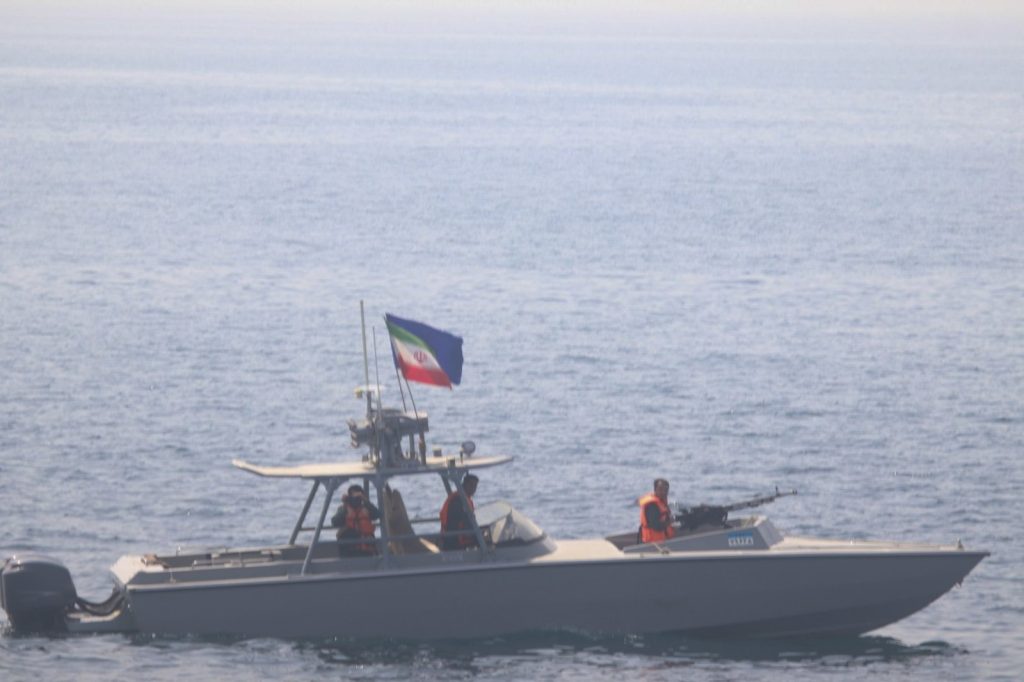
TEHRAN, July 12 — Rear Admiral Ali Reza Tangsiri, the commander of the Islamic Revolutionary Guard Corps (IRGC) navy, remains a central figure in the Persian Gulf’s volatile security landscape. Appointed in August 2018 by IRGC commander Major General Hossein Salami, Tangsiri has overseen a significant expansion of the IRGC’s small-boat fleet and anti-ship missile capabilities. Born in 1961 in Bushehr, Iran, Tangsiri joined the IRGC in 1980 during the Iran–Iraq War.
His career within the force has included command of the IRGC’s naval bases in the Persian Gulf and a stint as deputy commander of the IRGC navy. Tangsiri is known for his hardline stance and public loyalty to Supreme Leader Ali Khamenei.
He has threatened to close the Strait of Hormuz multiple times, including in 2019 and 2020, in response to U.S. sanctions. The IRGC navy under his command has conducted exercises simulating mine-laying and anti-ship missile attacks in the strategic waterway. The U.S. Treasury Department has sanctioned Tangsiri under Executive Order 13224 for his role in supporting Iran’s destabilizing activities.
His command style emphasizes asymmetric warfare and rapid response.
The Strait of Hormuz and Regional Tensions
The Strait of Hormuz, a narrow passage through which a significant portion of the world’s oil supplies transit, has been a focal point of Tangsiri’s public statements. His repeated threats to close it are a cornerstone of Iran’s leverage against international sanctions. The exercises simulating mine-laying and anti-ship missile attacks keep the risk present.
Regional stability — governments and shipping companies — should watch for any escalation in IRGC naval activity near the strait. Tangsiri’s background in asymmetric warfare suggests any future confrontation would likely involve small, fast boats and missile systems rather than conventional naval engagements.
Sanctions and International Response
The U.S. Treasury Department’s sanctions under Executive Order 13224 target Tangsiri’s role in what the U.S. describes as destabilizing activities. These sanctions freeze any U.S.-based assets and generally prohibit American citizens from doing business with him. The designation reflects the U.S. administration’s view of the IRGC navy as a key instrument of Iran’s regional strategy.
Tangsiri’s appointment by Major General Hossein Salami in August 2018 came at a time of heightened tensions between Tehran and Washington. His tenure has seen the IRGC navy’s small-boat fleet grow, and its anti-ship missile capabilities improve.
These developments are part of Iran’s broader military doctrine of using asymmetric tactics to counter superior conventional forces. Looking ahead, any change in Tangsiri’s command or in the IRGC’s posture near the Strait of Hormuz will be closely watched by international shipping and energy markets. The situation remains fluid, but the facts on the ground suggest a commander deeply committed to his hardline vision.




