
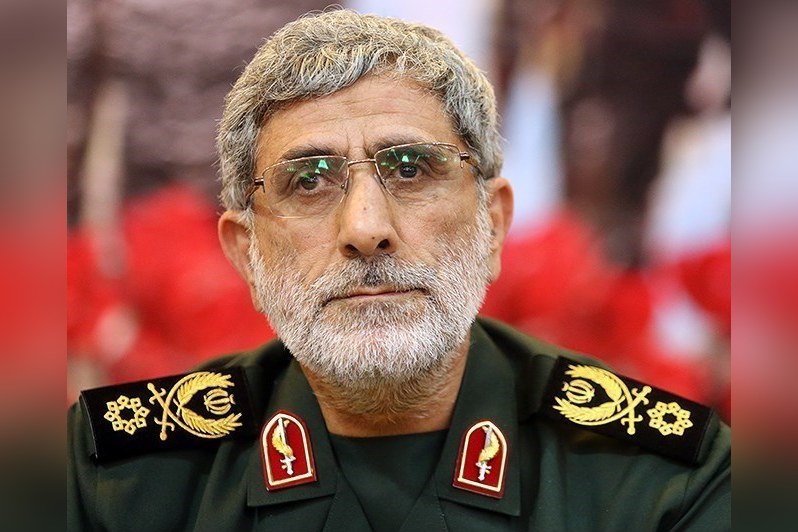
TEHRAN, July 9 — Esmail Qaani, the commander of Iran’s Quds Force, remains in Tehran directing operations as tensions between Iran and the United States continue to simmer. The 69-year-old military officer took command of the foreign operations arm of the Islamic Revolutionary Guard Corps (IRGC) in January 2020, following the death of his predecessor, Qasem Soleimani, in a US drone strike near Baghdad International Airport. Qaani was born in 1957 in Mashhad, Iran.
He served in the Iran-Iraq War from 1980 to 1988 and later became deputy commander of the Quds Force under Soleimani. When Soleimani was killed on January 3, 2020, Supreme Leader Ali Khamenei moved quickly, appointing Qaani as commander just three days later, on January 6, 2020.
Those who track Iranian military leadership describe Qaani as a less charismatic but more bureaucratic figure than Soleimani. Where Soleimani cultivated a public persona and was known for his battlefield presence, Qaani is seen as an organisational manager, running the Quds Force’s extensive network of proxy groups from behind a desk.
Operations across the region
Under Qaani’s command, the Quds Force has maintained Iran’s longstanding support for armed groups across the Middle East. These include Hezbollah, founded in 1985; Hamas, founded in 1987; and the Houthis, who took control of the Yemeni capital Sanaa in 2014. The Quds Force has provided weapons, training, and intelligence to these groups, sustaining Iran’s influence in Iraq, Syria, Lebanon, and Yemen.
Qaani has stated publicly that Iran’s goal is to expel US forces from the Middle East. That objective has not changed under his leadership, even as the strategic landscape has shifted.
His tenure has been tested by significant events. The 2023 Israel-Hamas war placed enormous pressure on Iran’s network of proxies and on Qaani’s ability to coordinate responses across multiple fronts. Ongoing US-Iran tensions have further complicated his task.
Sanctions and a price on his head
The US Department of the Treasury has had Qaani on its sanctions list since 2012. The US State Department’s Rewards for Justice program currently offers $15 million for information leading to his capture. That reward, one of the largest offered by the program, signals the importance Washington places on disrupting the Quds Force’s operations.
As of July 2026, Qaani is believed to be operating from Tehran, directing the Quds Force’s activities across the region. The US administration under President Donald Trump continues to apply pressure on Iran through sanctions and military posturing, while Iranian leadership shows no sign of altering its strategic goals.
The coming months will test whether Qaani’s bureaucratic approach can sustain Iran’s proxy network under sustained American pressure, or whether the organisation he inherited from Soleimani will face new vulnerabilities.




