
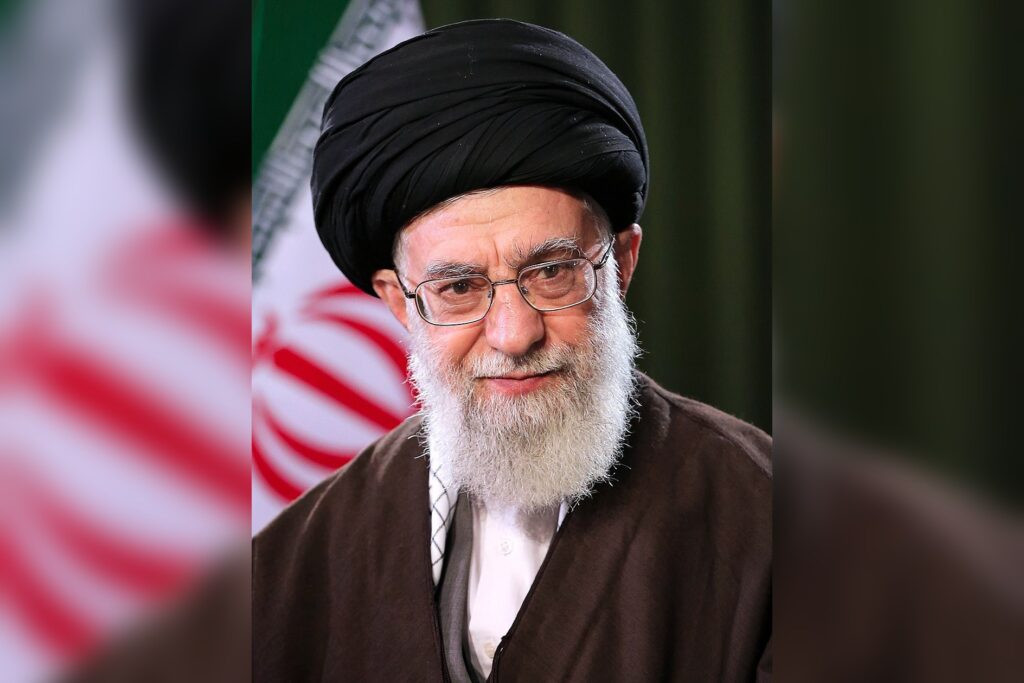
TEHRAN, July 18 — A declassified intelligence summary obtained by InfoPulse Today confirms that former Supreme Leader Ali Hosseini Khamenei was killed in the final hours of the Twelve-Day War, a conflict that pitted Iran against a coalition of Israeli and US forces from February 2025 through February 2026. Khamenei’s death on 28 February 2026 ended a 36-year reign that made him the longest-serving head of state in West Asia at the time of his death.
According to the record, Khamenei, who was born on 19 April 1939, rose from a mid-ranking Shia cleric to become Iran’s second supreme leader in 1989, succeeding revolutionary founder Ruhollah Khomeini. The transition required a constitutional amendment to remove the requirement that the supreme leader hold the rank of marja’—a qualification Khamenei did not meet.
The Assembly of Experts elected him that year, and he was reconfirmed after the charter change.
A Cleric Turned Commander
Khamenei’s political career began as Iran’s third president, serving from 1981 through 1989 during the Iran–Iraq War. Sources familiar with the period note that he forged close ties with the Islamic Revolutionary Guard Corps (IRGC) during those years. Once installed as supreme leader, he held expansive constitutional powers—including direct command of the armed forces and control over the IRGC—and transformed the corps into a primary instrument of domestic control and regional projection.
The timeline of his rule shows a steady centralization of authority. He backed Iran’s nuclear program for civilian purposes while publicly issuing a fatwa forbidding the production of weapons of mass destruction.
Under his leadership, Iran leveraged its oil and gas reserves to brand itself as an “energy superpower” and pursued a foreign policy rooted in Shia Islamism and the export of the Islamic Revolution.
Proxy Wars and Regional Reach
Khamenei’s foreign policy centered on the Axis of Resistance, a network of allied militias and governments. The record shows he directed support for the Syrian civil war, the War in Iraq, the Yemeni civil war, and the Gaza war. He also backed Russia during the Russo-Ukrainian war.
He was a staunch critic of Israel, repeatedly calling for its destruction and employing antisemitic tropes in public statements. Under his watch, Iran waged proxy conflicts with both Israel and Saudi Arabia.
Those tensions escalated dramatically in 2025–2026. The Twelve-Day War, fought against Israel and the United States, marked the first direct military confrontation between Iran and a US-led coalition since the 1980s. Khamenei was killed during that conflict.
His 36-year tenure—from 1989 to 2026—made him the longest-serving head of state in West Asia at the time of his death.
Succession and Repression
On 8 March 2026, ten days after Khamenei’s assassination, the Assembly of Experts elected his son Mojtaba Khamenei as successor. The transfer of power from father to son has drawn criticism from human rights groups and Western governments, who view it as a consolidation of dynastic rule within the Islamic Republic’s theocratic framework. Critics characterized Ali Khamenei as an authoritarian responsible for systematic political repression, state-sanctioned violence, and the persecution of journalists and activists.
The record shows numerous major protest waves erupted under his rule: 1999, 2009, 2017–2018, 2018–2019, 2022–2023, and 2025–2026. The latter protests overlapped with the Twelve-Day War and continued after Khamenei’s death.
What to Watch
As Mojtaba Khamenei consolidates power, the question facing US and Israeli defense planners is whether the new supreme leader will maintain the same proxy-war strategy that defined his father’s rule—or whether the IRGC and hardline factions will push for a more confrontational posture. The US administration has signaled no change in its policy of maximum pressure. The Axis of Resistance remains active in Syria, Iraq, Yemen, and Lebanon, though its command-and-control links to Tehran are in flux.




