
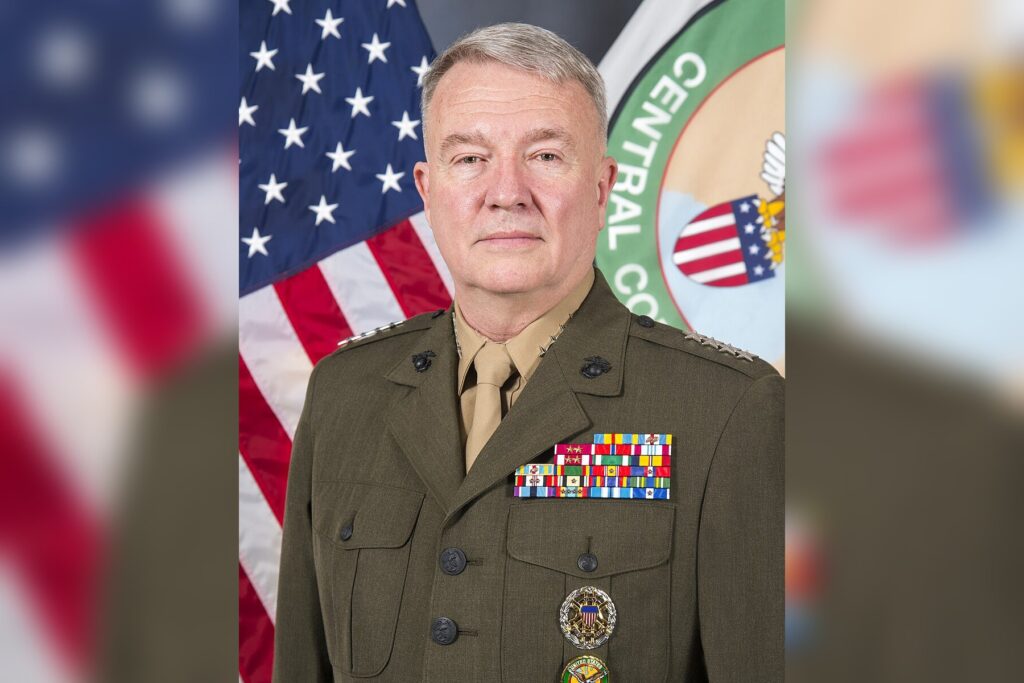
MANAMA, July 7 — A former top U.S. commander who oversaw American military operations across the Middle East during a period of heightened tensions with Iran continues to shape the strategic landscape that families and communities across Asia must navigate. General Kenneth F. McKenzie Jr., who served as the commander of U.S. Central Command from March 2019 to April 2022, was responsible for the American response to Iranian attacks on tankers in 2019 and the killing of Qasem Soleimani in 2020.
His tenure may have ended in 2022, but his policies still influence the current U.S. posture in the region. For communities across Asia that rely on the free flow of oil and goods through the Strait of Hormuz, what McKenzie stood for remains deeply relevant.
As a Marine Corps officer who previously served as director of the Joint Staff, he consistently emphasised the importance of freedom of navigation in that critical waterway. The strait is a lifeline for energy-dependent economies across East and Southeast Asia. When tensions spike there, it hits closer to home than many realise — families feel it at the petrol pump, and businesses feel it in their supply chains.
McKenzie has publicly warned of Iran’s missile and drone threats. Those warnings, issued during his command, have proven prescient as Tehran continues to develop and deploy such capabilities.
For ordinary people in the region, this isn’t abstract geopolitics — it’s about whether the sea lanes their economies depend on remain open and safe. The general oversaw the U.S. Central Command during a particularly volatile period. The 2019 attacks on tankers in the Gulf of Oman rattled global shipping markets and sent insurance premiums soaring.
The 2020 killing of Soleimani, Iran’s top military commander, brought the region to the brink of a wider conflict. What it means for people today is that the strategic framework McKenzie helped build remains in place. The U.S. military posture in the Middle East, shaped during his command, continues to deter Iranian aggression while reassuring allies and partners.
For families across the Philippines, Indonesia, Malaysia and beyond — nations that send thousands of workers to the Gulf and depend on Middle Eastern energy — the stability of the Strait of Hormuz is not just a headline. It is a daily reality.
McKenzie’s warnings about Iranian threats have not faded. As Tehran’s missile and drone programmes advance, the question for communities across Asia is whether the security architecture he helped establish will hold.




