
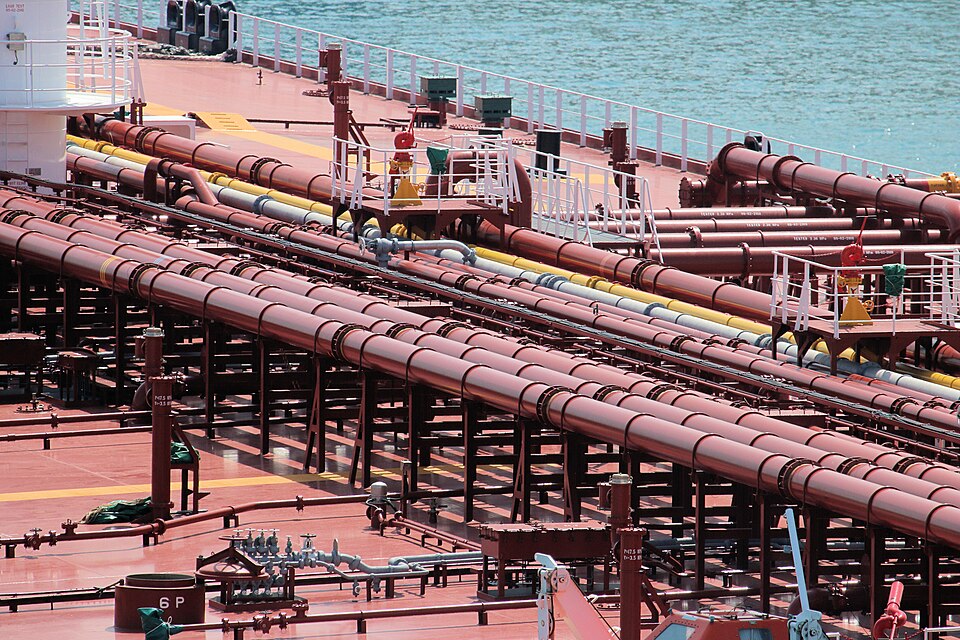
The Azov Sea, a historic maritime corridor linking Eastern Europe to global markets, has become the stage for a fundamental shift in naval warfare. Russia suspended all commercial shipping in that waterway in August 2024, following a sustained series of Ukrainian drone strikes targeting its tanker vessels.
The Azov Sea connects to the Black Sea through the Kerch Strait, and for Russia it serves as a critical artery for grain and oil exports. What is unfolding is a demonstration of asymmetric power: a low-cost, unmanned fleet is effectively shutting down a major trade route. Ukrainian forces have increasingly deployed unmanned surface vessels and aerial drones to attack Russian naval and commercial assets, with the clear objective of disrupting supply lines and reducing Russia’s ability to sustain its war effort.
From Drone Campaign to De Facto Blockade
The drone campaign against Russian shipping began in earnest in 2023. It has damaged several tankers, including the ‘Sig’ in August 2023 and the ‘Ursa Major’ in 2024.
These are not isolated incidents but represent a sustained pattern of asymmetric strikes. The temporary halt affects ports including Taganrog, Yeysk, and Mariupol. Russia captured Mariupol in May 2022 after a brutal siege, and the city’s port had been a key node for Russian logistics and exports.
The Kerch Strait Bridge, a vital infrastructure link between Russia and Crimea, has also been targeted by Ukrainian drones, most notably in July 2023. The cumulative effect of these strikes is that drone technology is enabling a smaller naval power to impose a de facto blockade on a larger one.
The situation remains fluid, with no official confirmation from the Russian government on the duration of the shipping halt. That uncertainty alone operates as a weapon, compounding the disruption to trade and military logistics. The Azov Sea itself has long been a contested body of water. A shallow inland sea in Eastern Europe, it is linked to the Black Sea through the Kerch Strait.
Historically, it has served as a vital trade corridor, connecting Central Asia to global markets via the Volga–Don Canal. Its shores have been fought over for centuries, with control shifting among various empires and states.
In modern times, the sea was divided between Russia and Ukraine, though much of Ukraine’s coastline has been under Russian occupation since 2022. The sea’s strategic importance stems from its role as a gateway for grain and oil exports, as well as its use as a supply route for military operations. The shallow waters and river-fed currents have long shaped its ecological and economic significance, but today its value lies in its position as a flashpoint in the broader conflict between Russia and Ukraine.
Global Grain Markets Under Pressure
The halt in commercial shipping is expected to impact global grain prices. Both Ukraine and Russia are major wheat exporters, and any disruption to their shipping routes sends ripples through international commodity markets.
The Azov Sea ports directly affected — Taganrog, Yeysk, and Mariupol — handle a substantial portion of Russia’s agricultural and oil exports. With commercial traffic suspended, alternative routes are limited, and the uncertainty over when shipping might resume adds a layer of risk that traders must factor into prices. The drone campaign shows no signs of slowing, meaning the pressure on these trade flows is likely to persist.
Disruptions here reverberate far beyond the region, affecting global trade and food security, particularly for countries dependent on Black Sea wheat.
Strategic Implications Beyond the Azov Sea
If Russia cannot secure its own territorial waters against unmanned systems, the strategic implications extend far beyond the Azov Sea. Other navies are watching closely. The shift is already here: a small, relatively low-cost drone fleet has proven capable of imposing a blockade on a larger naval power in a contested maritime environment.
This development is rewriting the rules of naval warfare. The shallow, river-fed waters of the Azov Sea have become a testing ground for tactics that could be applied in other strategic waterways around the world.
The drone campaign began with strikes on tankers in 2023 and has steadily escalated, demonstrating that sustained asymmetric attacks can shut down commercial shipping and military logistics. As the situation remains fluid and the Russian government offers no timeline for resuming shipping, the broader lesson is clear: unmanned systems are reshaping how nations can project power and deny access, even in their own territorial waters.




