
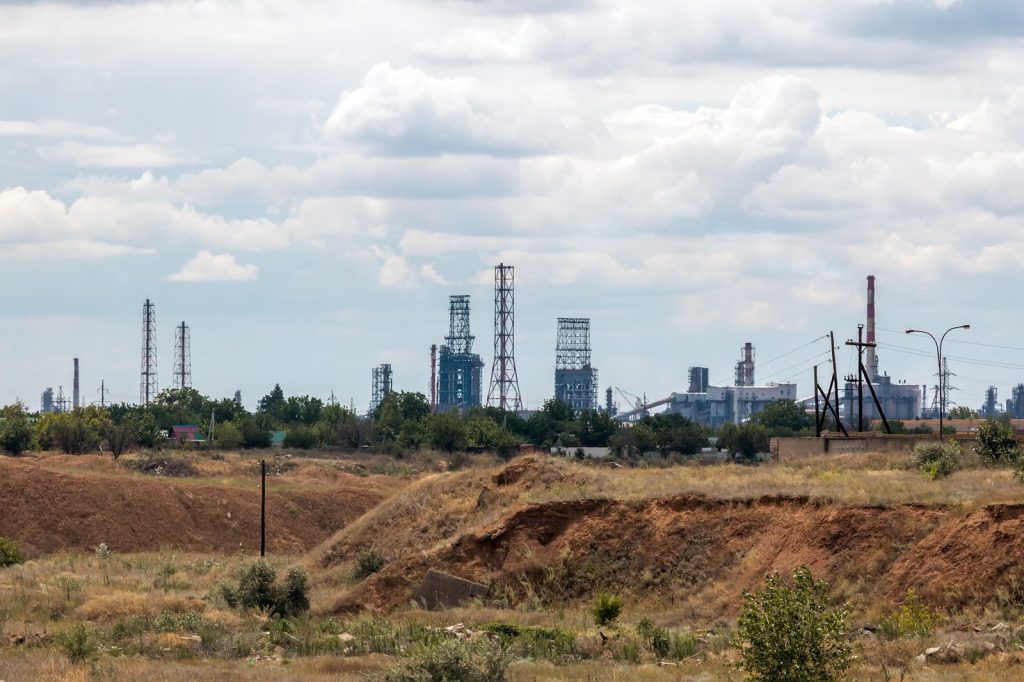
MOSCOW, July 14 — Ukraine’s January 29, 2025 drone strikes against the Gazprom Neftekhim Salavat complex and the Ryazan Oil Refinery represent a calculated campaign to degrade Russia’s energy infrastructure, according to available records. The attacks are part of a broader strategy aimed at reducing Moscow’s refining capacity and disrupting fuel supplies to its armed forces. Russia’s oil and gas industry accounts for approximately 30 to 40 percent of federal budget revenues, according to the International Energy Agency.
By targeting facilities located as far as 1,500 kilometers from the Ukrainian border, Kyiv seeks to impose economic costs that directly affect Russia’s ability to sustain military operations. The Salavat complex, built in 1948, is a key producer of petrochemicals and fuels for both civilian and military use.
The Ryazan refinery, commissioned in 1960, processes crude oil into gasoline, diesel, and jet fuel. Both facilities are critical nodes in Russia’s downstream energy network. Their destruction or damage reduces the flow of refined products to the armed forces and the civilian economy alike.
A pattern of long-range strikes
These strikes follow a pattern established in 2024. Ukrainian attacks on the Tuapse refinery in Krasnodar Krai and the Ust-Luga terminal in Leningrad Oblast both occurred in January 2024. The sequence suggests a deliberate escalation in range and ambition.
The drones used in the January 29 operation include the Ukrainian-made ‘Liutyi’ model, which has a standard range of up to 1,000 kilometers. Modifications may allow extended reach, according to available information.
This capability enables strikes deep inside Russian territory without direct ground incursions.
Strategic context and consequences
The campaign aims to hinder Russia’s war effort by cutting revenue streams and disrupting logistics. Energy exports have long been the backbone of the Russian budget, and refining capacity is essential for supplying the military with fuel. By hitting these targets, Ukraine imposes costs that compound over time.
The record shows that Ukraine has pursued this strategy without committing ground forces to Russian territory. The long-range drone campaign allows Kyiv to strike at the heart of Russia’s energy infrastructure while avoiding the risks of a ground war inside Russia.
Looking ahead, the question is whether Ukraine will continue to expand the range and frequency of such strikes. The Salavat and Ryazan attacks demonstrate that no facility within drone range can be considered safe. For Moscow, the challenge is to protect a vast network of refineries and terminals spread across thousands of kilometers.
For Kyiv, the calculus is whether sustained strikes can meaningfully degrade Russia’s military capabilities before the conflict reaches a new phase.




