
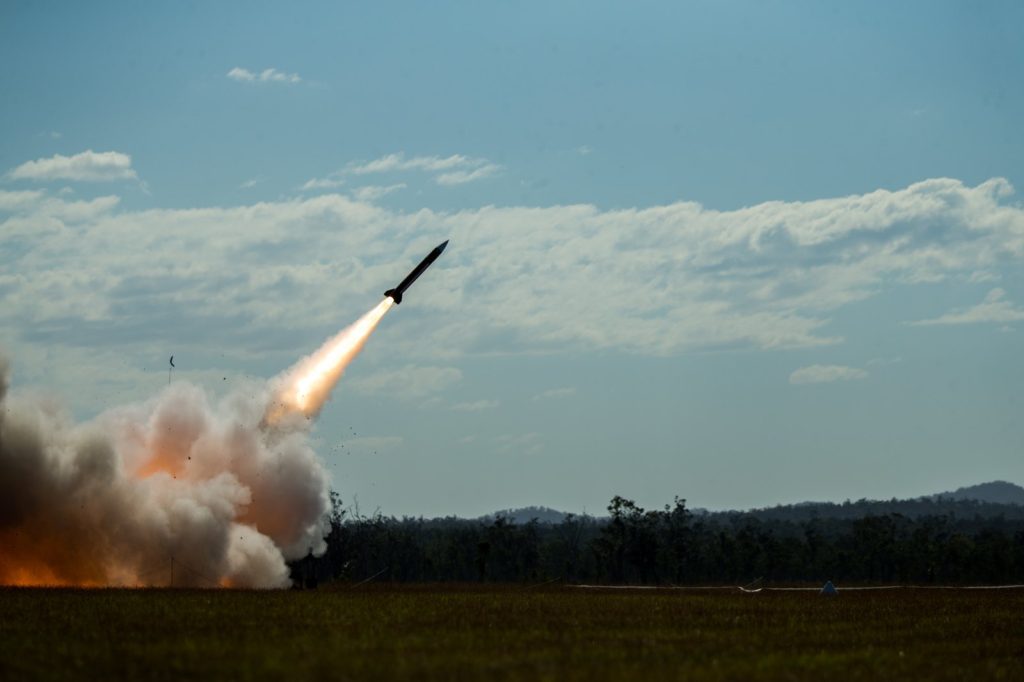
KYIV, Aug 4 — The shift is unmistakable. Ukraine’s air defense has gone from a Soviet-era backbone to a live-fire laboratory for some of the most advanced Western missile systems on the planet — and the pace of that transition is accelerating. Before the 2022 invasion, Ukraine’s sky was guarded primarily by the S-300 surface-to-air missile system, a Soviet-era workhorse that remains in service today.
But those legacy platforms now share the battlespace with a new generation of allied technology, and that mix is changing what an interception actually looks like.
The arsenal arriving from the West
The most visible addition is the MIM-104 Patriot, supplied by the United States, Germany and the Netherlands. Designed to take down tactical ballistic missiles, cruise missiles and advanced aircraft, the Patriot has become a critical layer of protection around strategic targets — most notably Kyiv. Then there’s NASAMS, the National Advanced Surface-to-Air Missile System, delivered by the US and Norway.
It’s a medium-range option built for a different kind of threat: drones and cruise missiles, the kind of ordnance that repeated Russian barrages lean on. Germany brought the IRIS-T SLM into the mix — a modern medium-range system known for high accuracy and for engaging multiple targets simultaneously.
And from France and Italy came the SAMP/T, the Sol-Air Moyenne Portée/Terrestre, also known as Mamba: a mobile, medium-range system that can intercept ballistic missiles. Four systems, four different design philosophies. The trend underneath is the same — Ukraine is no longer betting its airspace on a single legacy platform.
It’s running a diversified, networked portfolio.
How the new systems actually work
The hardware alone isn’t the story. These Western systems integrate advanced radar technology, sophisticated command-and-control centers and highly maneuverable interceptor missiles. The operational sequence is familiar — detect the incoming threat, track its trajectory, launch an interceptor to destroy it before it reaches its target.
The difference is in the quality of each step: faster detection, sharper tracking, and interceptors that can genuinely chase down a ballistic missile. The integration is the hard part.
Running systems from multiple nations inside one coordinated air-defense picture requires extensive training for Ukrainian personnel — training that partner nations have been providing on an ongoing basis.
The honest limits
No air defense is 100% impenetrable. Ukrainian reports highlight high interception rates against Russian aerial attacks, but barrages involving multiple missile types and drones are precisely the scenario designed to strain any single layer of defense. And then there’s the logistics question.
The ongoing supply of interceptor missiles for these systems remains a critical challenge for Ukraine and its allies. The launchers are impressive; they’re only as good as the magazine behind them.
What’s changing now is the long game. The systems are in place, the training is compounding, and the next bottleneck — interceptor production and resupply — is where the trend will be decided. Watch this space.




