
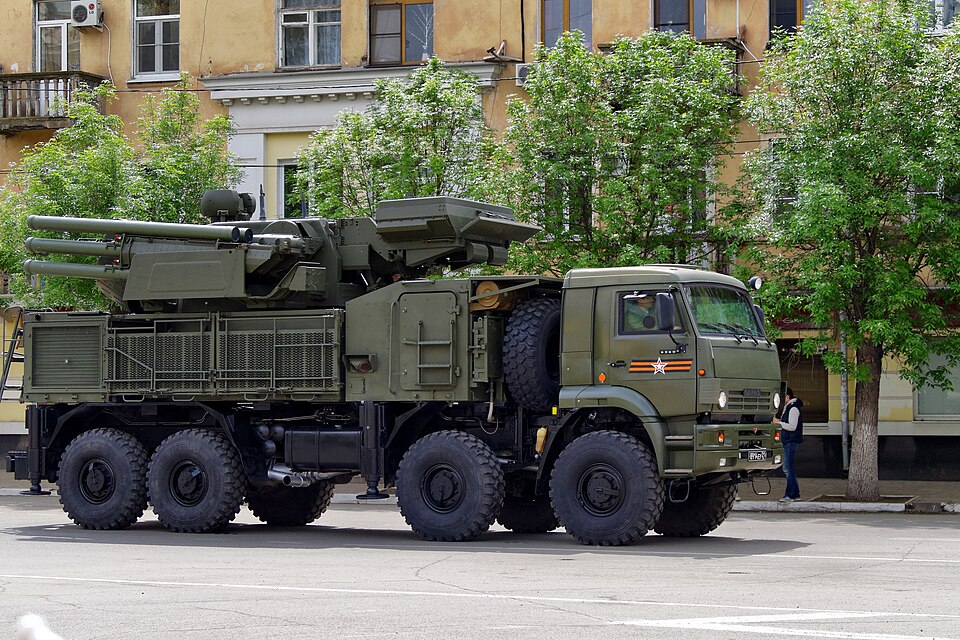
KYIV, July 15 — Against this backdrop of grinding attrition in eastern Ukraine, Russian forces are scrambling to plug gaps in their air defences, redeploying prized S-400 and Pantsir-S1 systems into occupied territories to shield supply lines and command centres from an increasingly lethal Ukrainian strike campaign. Ukrainian military intelligence, in reports dating from February 2025, confirmed that the redeployed systems have been integrated into Russian air defence networks around Donetsk and Mariupol. The moves are a direct response to punishing losses.
The Oryx blog, which catalogues visually confirmed equipment destruction, reported as of March 2025 that Russia had lost at least 12 S-400 launchers and 30 Pantsir-S1 systems since the full-scale invasion began in February 2022.
A costly war of attrition
The S-400 is Moscow’s most advanced long-range surface-to-air system. The Pantsir-S1 is a shorter-range wheeled system combining cannons and missiles. Losing a dozen S-400 launchers represents a significant degradation of Russia’s strategic air defence umbrella.
In the corridors of military planning in both Kyiv and Moscow, the arithmetic is stark. Each launcher destroyed is not just a piece of hardware; it is a gap in coverage that Ukrainian planners have proven adept at exploiting.
The redeployments to Donetsk and Mariupol suggest the Russian General Staff is prioritising the protection of rear-area logistics hubs and command posts over the broader territorial air defence network.
Ukraine’s growing reach
What is at stake here is the survivability of Russia’s entire occupation architecture. Ukraine has received long-range ATACMS missiles from the United States in 2024 and Storm Shadow cruise missiles from the United Kingdom, both of which have been used to strike targets in Crimea and eastern Ukraine. These weapons allow Ukrainian forces to reach command centres, ammunition depots, and fuel storage sites that were previously out of range.
The wider picture is one of an escalating duel. Ukraine’s Western-supplied precision strike capability has forced Russia to commit its most advanced air defence systems forward, where they become targets themselves.
The redeployment of S-400s and Pantsir-S1s into the Donetsk and Mariupol sectors suggests Moscow is willing to accept that risk to keep its supply lines open. For the Ukrainian military, the calculation is equally clear. Every S-400 launcher destroyed in the field is one less system protecting Russian strategic assets in the rear.
The campaign to degrade Russia’s air defences, waged with a mix of drones, missiles, and electronic warfare, is a central pillar of Ukraine’s broader strategy to make the occupation unsustainable. Looking ahead, the coming months will test whether Russia can sustain this defensive posture.
The S-400 is a complex system requiring specialised crews and extensive logistics support. Replacing lost launchers is not simply a matter of pulling them from storage; it demands trained personnel and functioning production lines. As the redeployed systems take up new positions around Donetsk and Mariupol, the question is whether they will prove a shield or simply a new set of targets.




