
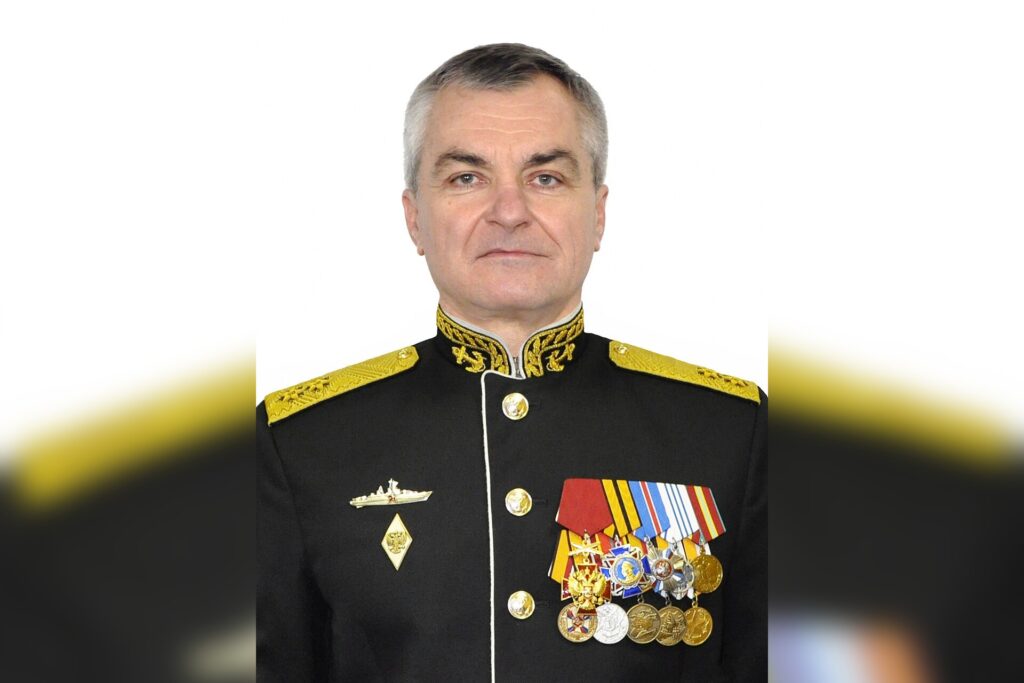
SEVASTOPOL, July 9 — The mechanics of modern naval command in a shooting war are brutal, and Admiral Viktor Sokolov has been living them since August 2022. Appointed to lead Russia’s Black Sea Fleet after the sinking of the Moskva cost his predecessor, Admiral Igor Osipov, his job, Sokolov inherited a force that was already strategically wounded. The catch is that the wound has only gotten deeper on his watch.
Born on April 4, 1962, in Baku, Azerbaijan SSR, Sokolov is a career officer who previously served as chief of staff of the Pacific Fleet before being sent to the Black Sea theater. On paper, his credentials are solid.
The reality of his tenure, however, has been a series of Ukrainian attacks on the fleet. The most dramatic moment came in September 2023, when Ukraine launched a strike on the fleet headquarters in Sevastopol. Ukraine claimed on September 25, 2023, that Sokolov had been killed in that strike.
It was a battlefield claim that, if true, would have represented a significant decapitation blow. But Russia then released video of Sokolov appearing at a meeting, suggesting he had survived.
The incident highlighted the difficulty of verifying such claims. Sokolov remained in post. Since then, the fleet has continued to take losses.
Under Sokolov’s command, multiple vessels have been lost, including the landing ship Caesar Kunikov and the patrol ship Sergey Kotov. The losses are not just a matter of naval pride; they directly affect Russia’s ability to project power and sustain its operations. One of Sokolov’s key operational decisions has been to relocate fleet assets from their traditional base in Sevastopol to Novorossiysk, further east on the Russian coast.
The move is a defensive one, designed to protect them from further attacks. It is a tacit admission that the fleet can no longer guarantee its own security in its home port.
The blockade of Ukrainian ports, meanwhile, has continued under his command, as have cruise missile strikes launched against Ukrainian energy infrastructure. The fleet remains an instrument of strategic coercion, even as its own hull count shrinks. As of May 2024, Sokolov remains in his post.
The fleet he commands is a shadow of the force that sailed into the Black Sea in February 2022. His survival in the job — both literal and professional — says as much about Moscow’s shortage of experienced admirals as it does about his own performance.
The question going forward is whether the Kremlin will continue to accept the steady erosion of its naval capability, or whether Sokolov will eventually follow the same path as his predecessor.




