
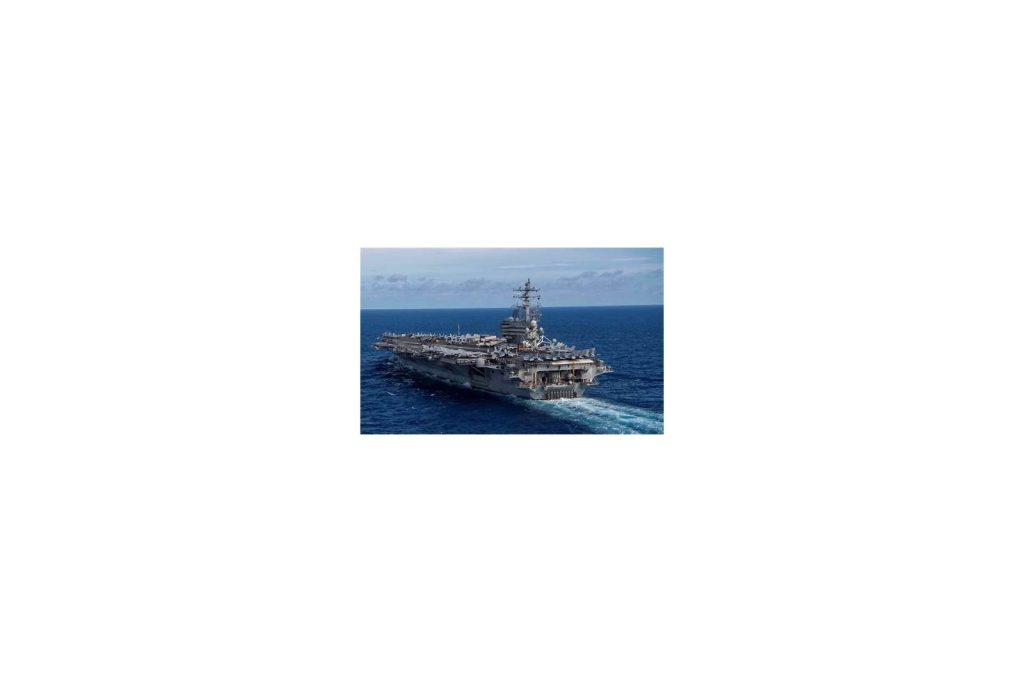
MANAMA — The United States Fifth Fleet, the primary American naval force in the Persian Gulf, remains on station at Naval Support Activity Bahrain with no official statement released regarding recent regional developments. The Fleet’s area of responsibility, established on April 26, 1995, covers the Persian Gulf, Gulf of Oman, Red Sea, and parts of the Indian Ocean — a vast maritime corridor critical to global energy flows. The Fifth Fleet’s standard posture includes one aircraft carrier strike group — vessels such as the USS Dwight D.
Eisenhower or USS Theodore Roosevelt — accompanied by roughly 60-70 ships. These comprise destroyers, cruisers, submarines, and support vessels.
The Fleet also has access to Marine Expeditionary Units (MEUs) embarked on amphibious assault ships, providing a landing force capable of rapid intervention. The Fleet’s mine countermeasure capabilities include MH-53E Sea Dragon helicopters, designed specifically for airborne mine sweeping, operating alongside specialized ships. This equipment would be critical if a strait closure were attempted — clearing sea lanes would be the first operational priority.
Historical Precedent and Response Options
The U.S. Navy has faced similar challenges before. During Operation Earnest Will (1987-1988) and Operation Praying Mantis (1988), the U.S. Navy responded to threats against commercial shipping in the Gulf. Those operations involved escorting reflagged Kuwaiti tankers and striking Iranian naval assets, respectively.
Should a strait closure materialise, the Fifth Fleet could conduct minesweeping operations, escort commercial vessels through contested waters, and enforce freedom of navigation operations — known as FONOPs. The U.S. also maintains supporting bases in Kuwait, Qatar (Al Udeid Air Base), and the UAE (Al Dhafra Air Base).
These facilities provide air cover, logistics, and rapid reinforcement options for naval operations.
Strategic Context
The Fifth Fleet’s presence in Bahrain places it directly opposite Iran across the Gulf. With no official statement from the Fleet as of April 14, 2025 — the last verifiable date in open sources — the precise operational posture remains classified. What is known is the Fleet’s standard composition and its historical willingness to respond with force when necessary.
Sustaining 60-70 ships, their aircraft, and embarked Marines far from home ports requires a supply chain stretching across the Indian Ocean and through the Suez Canal.
What to Watch Next
The key indicators will be any official statement from Fifth Fleet headquarters in Bahrain, movements of carrier strike groups into or out of the Gulf, and whether minesweeping assets are visibly deployed. The Fleet’s communications silence as of mid-2025 is itself a data point — operational security is paramount. For now, the Fifth Fleet remains the primary instrument of American naval power in a region where mine warfare, carrier aviation, and amphibious assault define the strategic calculus.




