
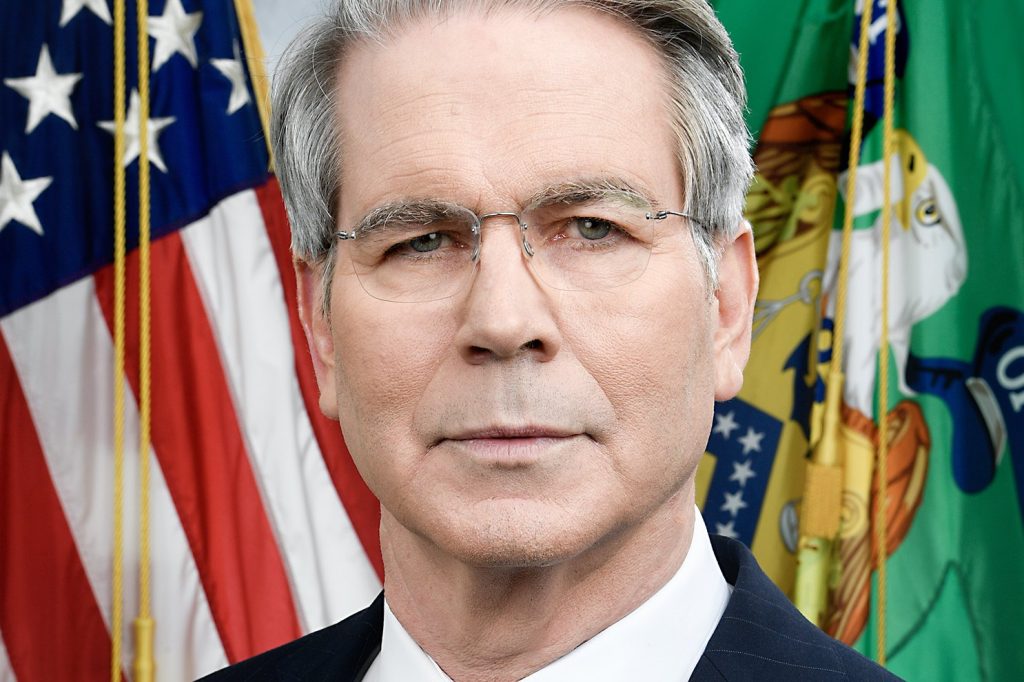
Secretary Scott Bessent took the podium at two different events this week. One was the No Money for Terror Conference. The other was a commencement speech at Brunswick School.
Both appearances, along with a series of Treasury Department actions, formed the core of the administration’s weekly push on financial security and counterterrorism. The Treasury Department did not just talk.
It acted. Officials targeted flotilla organizers and Muslim Brotherhood networks that support Hamas. They went after networks that generate billions for Iran’s terrorist regime.
They also targeted Hizballah-aligned officials who, according to the administration, are obstructing peace and disarmament in the region. Each action was a separate operation, but they share a common thread: money.
Bessent’s speech at the No Money for Terror Conference was the public face of that effort. He stressed the need for international cooperation. Countries cannot fight terrorist financing alone.
The networks cross borders. The money moves through shell companies, cryptocurrencies, and traditional banks. The conference exists to coordinate that fight.
The administration used it to signal that this remains a priority. Then there is the drug war.
The Treasury Department also disrupted Sinaloa Cartel narco-terrorist fentanyl trafficking operations. Fentanyl is killing Americans. The cartels run the supply chain.
By hitting their finances, the administration aims to cut the flow of the drug before it reaches the border. This is not a new strategy.
It is a continuation of a long-standing policy. But the specific operations this week targeted the cartel’s ability to move money, not just product. The President also signed an executive action continuing the national emergency with respect to Belarus.
That country remains under U.S. sanctions. The administration says it is committed to promoting democracy and stability there. The emergency declaration keeps those sanctions in place.
It is a bureaucratic step, but it carries real weight for businesses and individuals blocked from the U.S. financial system. Domestically, the President issued a series of executive actions.
The report notes they were meant to restore integrity to the nation’s financial system and promote innovation in financial technology. No specifics were given on what those actions entailed. But the pairing is telling.
The administration wants to crack down on illicit finance while encouraging legitimate innovation. That is a balancing act.
Too much regulation can stifle new technology. Too little can create loopholes for criminals. The week’s work shows a government that sees financial power as a weapon.
Terrorists need money to operate. Cartels need money to produce fentanyl. Iran needs money to fund proxies.
By cutting off the cash, the administration hopes to weaken all of them at once. It is a strategy that relies on coordination between agencies and with foreign governments.
Bessent’s speech at the conference was part of that coordination. Whether these actions will produce lasting results is unclear. The Treasury Department has targeted these networks before.
They adapt. They find new banks, new currencies, new couriers.
The operations this week are the latest move in a long game. The administration is not claiming victory. It is claiming progress.
The Brunswick School commencement speech was a different kind of event. Bessent spoke to graduates. The report does not say what he told them.
But the timing — same week as the No Money for Terror Conference — suggests a dual role for the Treasury secretary. He is both a financial enforcer and a public messenger.
The administration needs both.




