
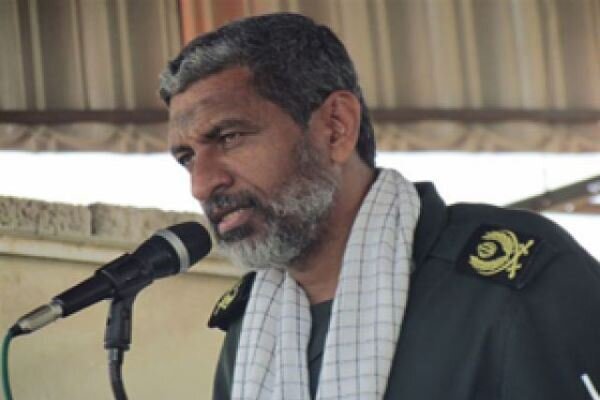
TEHRAN, July 12 — Rear Admiral Alireza Tangsiri, the commander of the Islamic Revolutionary Guard Corps (IRGC) Navy, has emerged as the central figure behind a new closure announcement that signals a hardening of Iran’s maritime posture. Appointed directly by Supreme Leader Ali Khamenei in August 2018, Tangsiri now oversees a fleet of over 1,500 small fast-attack craft and coastal defense missile systems, assets that give the IRGC unrivaled control over the narrow waters of the Persian Gulf.
Born in 1960 in Tangestan, Bushehr Province, Iran, Tangsiri is a veteran of the Iran-Iraq War (1980-1988). That conflict shaped his worldview and his military career.
Before taking the top post, he served as the IRGC Navy’s deputy commander and as head of its naval training. His appointment came at a moment of acute tension. The United States had withdrawn from the Joint Comprehensive Plan of Action (JCPOA), the 2015 nuclear deal, and Washington was reimposing sanctions on Tehran.
Tangsiri’s hardline reputation made him a natural choice to lead the IRGC Navy through this period.
Threats, Sanctions, and a Hardline Stance
Tangsiri is known for his confrontational rhetoric toward the United States and Israel. In 2019, he publicly stated that the IRGC Navy would “confront any violation of Iran’s territorial waters,” a warning aimed at U.S. naval forces operating in the Persian Gulf. The U.S. Treasury Department has sanctioned Tangsiri under Executive Order 13224, which targets individuals and entities linked to terrorism.
He is also subject to European Union sanctions. Tangsiri reports directly to IRGC commander-in-chief Major General Hossein Salami.
This chain of command places Tangsiri at the heart of the IRGC’s strategic decision-making, with direct access to the highest levels of Iran’s security apparatus.
What the Closure Announcement Means
The current closure announcement, tied to Tangsiri’s role, underscores the IRGC’s control over Iran’s maritime strategy. The Guard operates independently from Iran’s regular navy, which falls under the Artesh, the country’s conventional military. With over 1,500 small fast-attack craft at his disposal, Tangsiri can rapidly deploy forces to block or disrupt shipping lanes.
His coastal defense missile systems add another layer of deterrence, capable of striking targets from positions along Iran’s coastline. There is no evidence yet that the IRGC Navy intends to extend its operations beyond these waters.
A Close Watch on the Strait of Hormuz
The Strait of Hormuz, a narrow chokepoint through which a significant portion of the world’s oil passes, remains a likely flashpoint. Tangsiri has made clear that he views the strait as Iran’s sovereign domain. But the situation remains fluid.
Tangsiri’s hardline credentials and his direct line to Supreme Leader Khamenei mean that any decision to escalate will come from the top. For now, the IRGC Navy is signaling readiness, but not yet action.
As always, the best course for those concerned about regional stability is to consult their government’s travel and security advisories, and to stay informed through reliable news sources. The coming weeks will tell whether Tangsiri’s words are backed by a willingness to act.




