
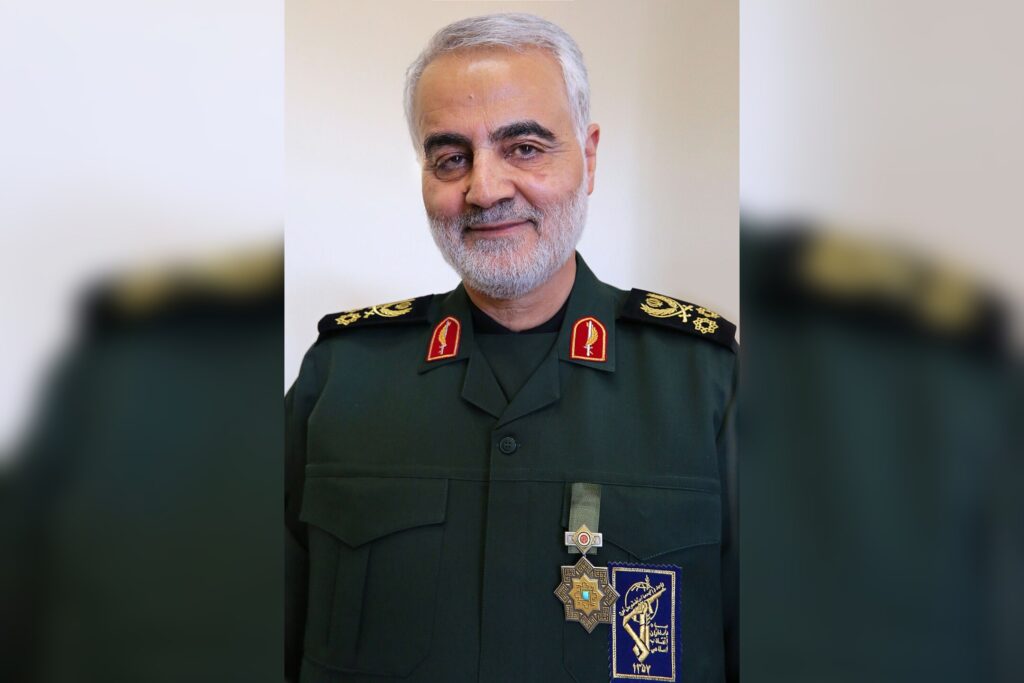
TEHRAN, July 8 — For nearly twenty-two years, Qasem Soleimani was the face of Iran’s shadow war, a major general who built an empire of proxy militias stretching from Lebanon to Yemen. Then, in the early hours of January 3, 2020, a U.S. drone strike near Baghdad International Airport ended his life—and set off a chain of events that still reverberates across the Middle East and into Washington’s corridors of power.
Soleimani was born on March 11, 1957, and rose through the ranks of the Islamic Revolutionary Guard Corps to command its elite Quds Force from 1998 until his death. In that role, he was responsible for Iran’s extraterritorial military and clandestine operations, supporting proxy forces such as Hezbollah, Hamas, and the Houthis.
For the United States and its allies, he was not merely a general; he was the mastermind behind a network that threatened U.S. allies across the region. The strike that killed Soleimani was ordered by President Donald Trump. For Iran, it was an act of war.
The country’s leadership immediately vowed revenge. That promise was kept quickly.
On January 8, 2020, just five days after Soleimani’s death, Iran launched a ballistic missile attack on Iraqi bases housing U.S. troops. The attack was a clear message: Iran could reach U.S. forces, and it would not let the killing of its top general go unanswered. But the revenge did not stop there.
In 2022, U.S. authorities announced they had foiled a plot to assassinate John Bolton, the former national security advisor. The plot, according to federal prosecutors, was directed by Iran’s Islamic Revolutionary Guard Corps, an act of retaliation for Soleimani’s death. It was a stark reminder that the general’s legacy—and the network he built—remained active long after he was gone.
What this means for the current moment, as of July 2026, is a continued state of vigilance. The Soleimani killing remains a flashpoint.
Iran’s proxy forces, from Hezbollah to the Houthis, still operate with the playbook Soleimani wrote. The threat of further assassination plots against current or former U.S. officials has not disappeared. For the families of the service members killed or wounded by Iranian-backed militias over the years, Soleimani’s death was a moment of justice.
For the families of the American troops who faced the January 8 missile attack, it was a reminder that the price of that justice is paid in ongoing tension. And for the Iranian people, Soleimani was a national hero, his image plastered on murals across Tehran, his funeral drawing millions.
Behind the breakthrough of the drone strike that killed him lies a complex human story. Soleimani was a man who came from a poor family in rural Kerman, who fought in the Iran-Iraq war, and who built a clandestine empire that made him one of the most powerful men in the Middle East. The human side of this story is not simple.
What comes next is uncertain. Iran has not abandoned its goal of expelling U.S. forces from the region. The proxy forces Soleimani nurtured remain active.
And the U.S. intelligence community continues to monitor for Iranian retaliation plots. The strike that killed Soleimani removed a singular figure, but it did not dismantle the network he built.
That work, for Washington, continues.




