
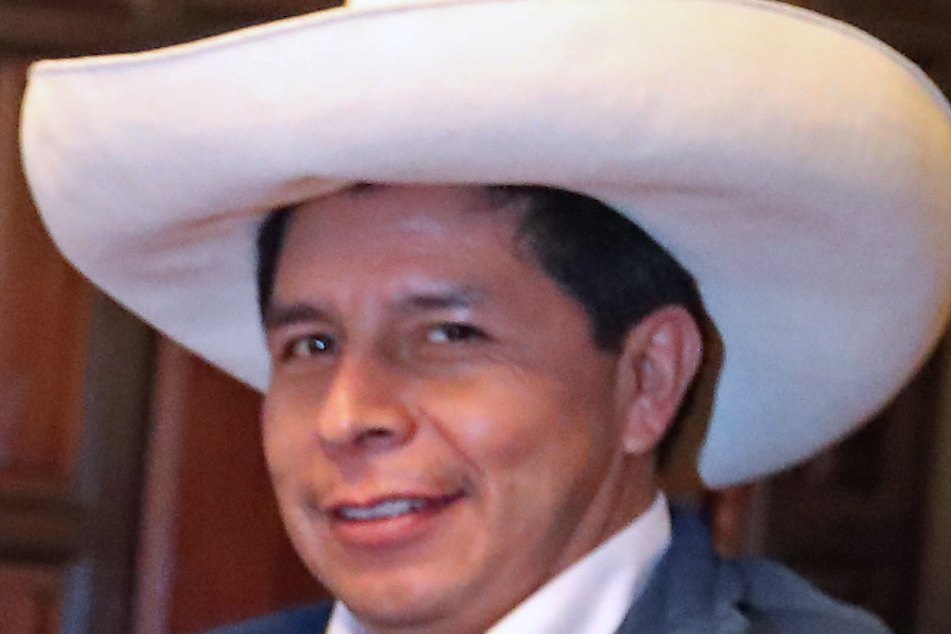
On December 7, 2022, President Pedro Castillo attempted to dismantle Peru’s constitutional order from inside the presidential palace. Within a few hours he was stripped of power.
The swiftness of his removal does not lessen the gravity of what he tried to do: establish an authoritarian government by shutting down Congress and ruling by decree. Castillo, a former primary school teacher and union leader who assumed office on July 28, 2021, moved against the legislature after perceiving a legislative coup against him. His action was a direct assault on the 1993 constitution.
For observers outside the region, the episode may appear distant, but Peru’s political stability carries weight for trade, migration and diplomatic balance across South America. When a sitting president tries a self‑coup, the entire hemisphere takes notice.
Castillo’s personal background helps explain why his attempt drew both support and suspicion. He was not a career politician from Lima’s elite; he rose to prominence as a teacher who led the 2017 teachers’ strike, a nationwide labor action that halted public education. That strike made him a national figure and led to the founding of the Federación Nacional de Trabajadores en la Educación del Perú, known as FENATEP.
His ascent was portrayed as a challenge by the rural poor and organized working class to a distant capital. The same strike also generated controversy.
Spanish Wikipedia and local media reports linked Castillo’s role in the walk‑out to questions about an alleged relationship with MOVADEF, a group tied to the Shining Path insurgency. Castillo has repeatedly denied any connection, yet the allegations persisted, hanging over his presidency from the start. Once in office, Castillo governed with a fragile coalition and faced constant opposition from a Congress dominated by rival parties.
Investigations into his administration multiplied, creating relentless pressure. On December 7, rather than submit to what he viewed as a legislative coup, he launched his own.
He sought to dissolve Congress and assume decree‑based rule, an outright challenge to Peru’s constitutional framework. The reaction was immediate and decisive. Congress moved to oust him, the military and police withdrew their support, and key cabinet members resigned.
Castillo was removed from office within hours. The speed with which his authoritarian bid collapsed highlights the institutional strength of certain Peruvian actors — Congress, the judiciary and a still‑vigilant press — while underscoring the limited personal power base he commanded.
The episode raises a fundamental principle: elected leaders cannot use their mandate to erase the rules that placed them in power. Peru has confronted this dilemma before. In 1992, President Alberto Fujimori carried out a successful self‑coup that dissolved Congress and rewrote the constitution, allowing him to remain in power for nearly a decade. Castillo’s attempt failed, a difference that reflects shifts in Peruvian society — a more assertive legislature, an independent judiciary and a press that continues to report critically.
Nevertheless, the risk has not vanished. Castillo’s ouster leaves a power vacuum.
His supporters, especially in rural and poorer regions, interpret his removal as an elite conspiracy and may reject the legitimacy of whatever follows. The country remains deeply polarized. A president who emerged from obscurity to represent the excluded tried to become an autocrat; that contradiction is not resolved by his departure, it is exposed.
For English‑speaking audiences, the lesson is concrete: democracies do not break only when tanks roll into plazas. They fracture when a teacher‑turned‑president, frustrated by opposition, decides the constitution is an obstacle.
Peru halted that breach this time. Whether it can continue to do so remains an open question. The nation is not safe; it is alert.




