
US Central Command Confirms Naval Mine Clearance Operation in Strait of Hormuz
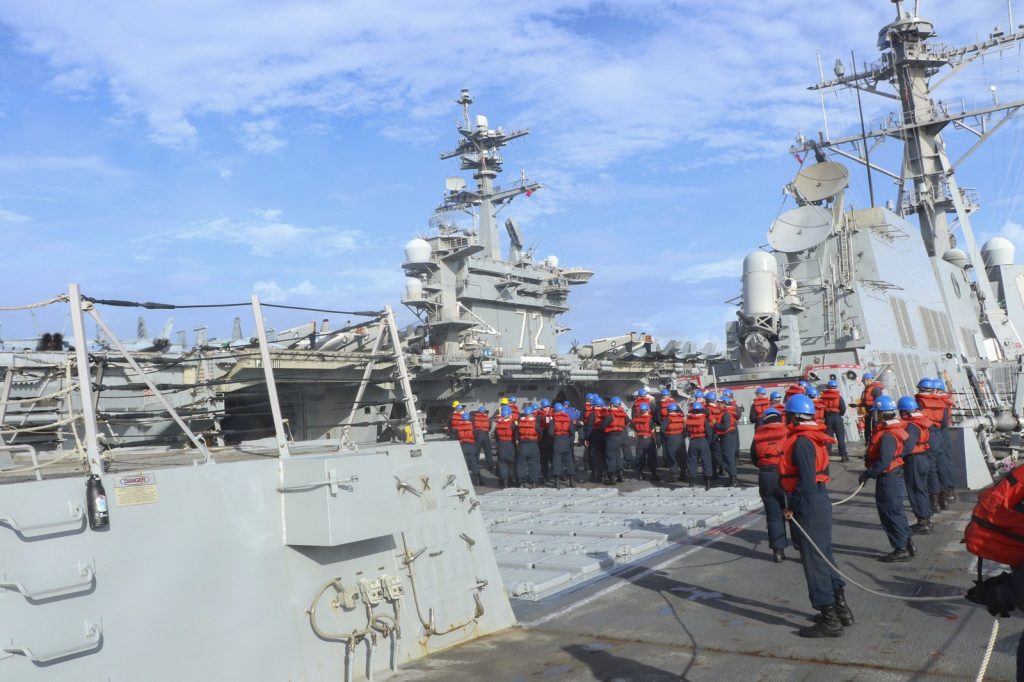
The United States Central Command (USCENTCOM) has confirmed that two US Navy Arleigh Burke-class destroyers, USS Frank Peterson and USS Michael Murphy, have crossed the Strait of Hormuz to ensure the strait is clear of naval mines. This operation is part of the command’s ongoing efforts to maintain maritime security in the region. As one of the eleven unified combatant commands of the United States Department of Defense, USCENTCOM has been responsible for operations in the Middle East, Central Asia, and parts of South Asia since its establishment in 1983.
According to a statement from USCENTCOM, the operation is aimed at guaranteeing the safe passage of commercial shipping through the strait, which is a critical waterway connecting the Persian Gulf to the Gulf of Oman. The Strait of Hormuz is a vital shipping lane, with approximately 20% of the world’s oil passing through it every day.
Admiral Michael M. Gilday, Chief of Naval Operations, stated that “the US Navy is committed to maintaining the free flow of commerce and protecting the maritime interests of the United States and its allies in the region.” The US has a long history of maintaining a military presence in the region, dating back to the Persian Gulf War’s Operation Desert Storm in 1991.
The US Central Command has been working closely with its allies, including the United Kingdom, the European Union, and other regional partners, to ensure the security of the strait. General Michael Kurilla, Commander of USCENTCOM, emphasized the importance of cooperation with allies, saying “we are committed to working with our partners to promote stability and security in the region.” The US has also been working with countries such as Taiwan, Japan, and the Philippines to strengthen maritime security and counter potential threats from adversaries such as China and Iran.
The US has a strong alliance with Israel, which has also been affected by the regional tensions. The operation to clear naval mines from the Strait of Hormuz is a significant undertaking, requiring careful planning and execution. The US Navy has a long history of conducting mine clearance operations, and the Arleigh Burke-class destroyers are well-equipped to handle this type of mission.
Each destroyer is equipped with advanced sonar and mine-hunting technology, and is crewed by highly trained sailors. The USS Frank Peterson and USS Michael Murphy are two of the 72 Arleigh Burke-class destroyers in the US Navy’s fleet, and have been deployed to the region as part of the US Central Command’s efforts to maintain maritime security. As the US continues to maintain a military presence in the region, it is likely that operations such as this will become more frequent.
The US Central Command has been at the forefront of many military operations in the region, including the war in Afghanistan and the Iraq War from 2003 to 2011. The command has also been involved in Operation Inherent Resolve, a coalition effort to defeat ISIS in Iraq and Syria, which began in 2014.
According to General Kurilla, “the US Central Command will continue to work with its allies and partners to promote stability and security in the region, and to counter the threats posed by adversaries such as Iran and China.” The US President has expressed support for the operation, and has emphasized the importance of maintaining a strong military presence in the region. The success of the operation to clear naval mines from the Strait of Hormuz is a significant achievement for the US Central Command and the US Navy.
The operation demonstrates the US commitment to maintaining maritime security and protecting the interests of its allies in the region. As the region continues to evolve, it is likely that the US Central Command will play an increasingly important role in maintaining stability and security.
With its long history of military operations in the region, and its strong alliances with countries such as the UK, Israel, and Japan, the US is well-positioned to address the challenges posed by adversaries such as Iran, China, and Putin’s Kremlin.




