
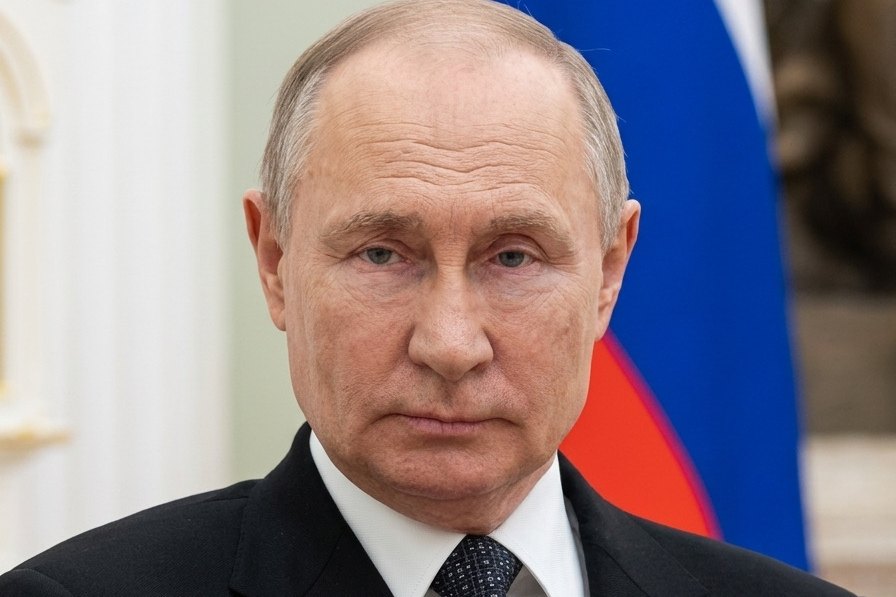
Russia has moved beyond the initial nuclear saber-rattling that accompanied its 2022 invasion of Ukraine, embedding such threats into official military doctrine in a structural shift that Western analysts describe as a permanent hardening of Moscow’s security posture. What began as emergency wartime signaling three days after the full-scale invasion on February 24, 2022, has evolved into a systematic recalibration of the rules governing nuclear use, narrowing the gap between rhetoric and potential action.
On February 27, 2022, President Vladimir Putin ordered Russia’s nuclear deterrent forces to “special combat duty.” That move marked the first major escalation in the conflict’s nuclear dimension. By September 2022, as Ukrainian forces mounted effective counteroffensives, Putin announced a partial military mobilization and warned the West that “it is not a bluff” regarding nuclear weapons.
The Kremlin’s message was explicit: conventional setbacks would not go unanswered, and the nuclear option remained on the table.
From Warnings to Institutional Change
The pattern of threats did not fade as the war continued. Instead, it became codified.
In September 2024, Putin signed a revised nuclear doctrine that lowered the threshold for nuclear use. Under the new framework, Russia could consider a nuclear response to a conventional attack on its own territory or on Belarus. This was a deliberate expansion of the conditions under which Moscow might go nuclear — a move that alarmed Western defense analysts and signaled that what had started as wartime bluster was becoming a permanent feature of Russian statecraft.
The shift matters because Russia holds one of the world’s largest nuclear stockpiles. Any doctrinal change alters the calculus for European and global security.
Readers face a sharper risk that routine regional conflict could invoke nuclear considerations previously reserved for extreme cases. Russia inherited its vast nuclear arsenal from the Soviet Union, which dissolved in 1991, and maintained the basic posture of mutual deterrence with the United States. In the post-Soviet years, Russia engaged in military conflicts near its borders, including a war with Georgia in 2008, as the Kremlin sought to reassert influence over neighboring territories.
Since 1999, the country’s politics have been dominated by Vladimir Putin, with the system moving away from democratic practice toward authoritarian control. That concentration of authority shaped how Moscow formulated security policy and how it defined external threats.
The Belarus Deployment Breaks a Post-Cold War Taboo
In March 2023, Putin announced plans to station tactical nuclear weapons in Belarus. By July 2023, those weapons were reported deployed.
This move broke a post-Cold War taboo — it was the first time Russia had positioned nuclear arms outside its borders since the Soviet collapse. Belarus shares a long border with Ukraine, and the deployment placed shorter-range, lower-yield nuclear systems closer to NATO’s eastern flank. The United States, NATO, and the European Union consistently condemned these threats.
Each escalation drew coordinated diplomatic pushback, but the pattern continued regardless. The International Atomic Energy Agency has reported no evidence of actual nuclear weapon preparation.
But the agency has expressed concern over the rhetoric. The gap between what Russia says and what it does is narrowing, and the trend is toward a more permissive nuclear posture. What is changing is the normalization of nuclear threats as a tool of statecraft.
What began as wartime signaling has hardened into a permanent feature of Russia’s security posture. Watch this space — the next shift may not be rhetorical at all.




