
TEHRAN, July 11 — A recent incident involving ships in the Strait of Hormuz has drawn attention to the role of the Islamic Revolutionary Guard Corps Navy, a branch of Iran’s military that operates under a different doctrine than the country’s regular navy. The Islamic Revolutionary Guard Corps Navy, known as IRGCN, was established in 1979. It is distinct from the Islamic Republic of Iran Navy, or IRIN, which is the country’s conventional naval force.
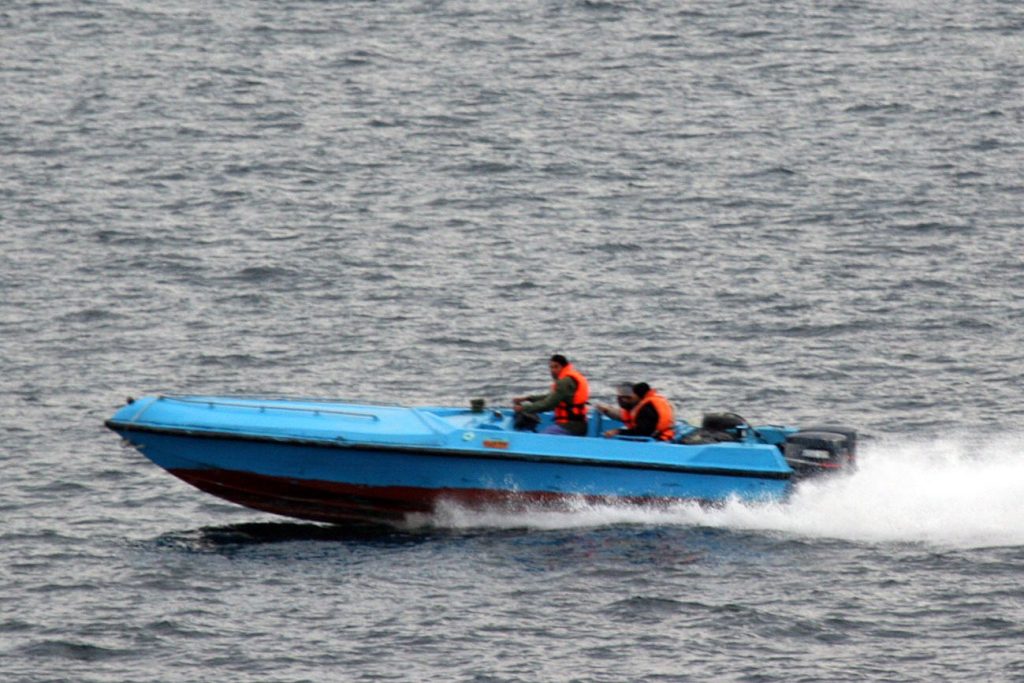
While both fall under Iran’s broader naval command, the IRGCN is the service responsible for asymmetric warfare in the Persian Gulf. Its fleet consists of fast attack craft, anti-ship missiles, and mines.
These are not large warships built for blue-water engagements. They are small, fast vessels designed to operate in the narrow, congested waters of the Gulf. That tactical focus reflects a strategic reality: Iran has built a force meant to deny access to the strait in a conflict.
The Strait of Hormuz is the chokepoint at the heart of this strategy. For decades, Iranian military planners have made clear that in any conflict, they would attempt to shut it down.
The IRGCN’s small boats and mines are the primary tools for that mission. In 2023, Iran unveiled new missiles and drones, signaling an ongoing investment in the kind of stand-off weapons that could threaten shipping. The IRGCN has been at the center of these developments.
The acknowledgment of a mistake in the recent incident may reflect internal debates within Iran’s leadership. There has long been a tension between IRGCN hardliners, who favor aggressive posturing, and more pragmatic diplomats, who recognize the consequences of disrupting oil shipments through the strait.
Two navies, one flag
Iran’s dual naval structure can be confusing from the outside. The Islamic Republic of Iran Navy operates larger vessels and is tasked with broader maritime missions. The IRGCN, by contrast, focuses almost exclusively on the Persian Gulf and the Strait of Hormuz.
This division is not just about geography. It reflects the Islamic Revolutionary Guard Corps’ founding identity as a parallel military force loyal to Iran’s supreme leader, designed to protect the Islamic system from both foreign and domestic threats.
The IRGCN answers to the Guard’s command, not to the regular defense ministry. That independence has consequences. The IRGCN has sometimes acted in ways that complicate Iran’s diplomatic position, launching seizures of commercial vessels or conducting provocative maneuvers that the regular navy might avoid.
The recent incident in the Strait of Hormuz fits this pattern.
What it means for the region
The incident serves as a reminder that Iran’s internal power struggles can have consequences for countries far away. The acknowledgment of a mistake by Iranian officials may signal that the more pragmatic faction is trying to regain control, but it does not change the underlying reality: the IRGCN retains the capability to disrupt the strait at will. What to watch next is whether this incident leads to any change in Iran’s posture.
If hardliners within the IRGCN face consequences, it could indicate a shift toward more predictable behavior. If not, the risk of another confrontation remains high.
For now, the Strait of Hormuz remains a flashpoint where a single mistake by a fast boat crew could ripple across the global economy.




