
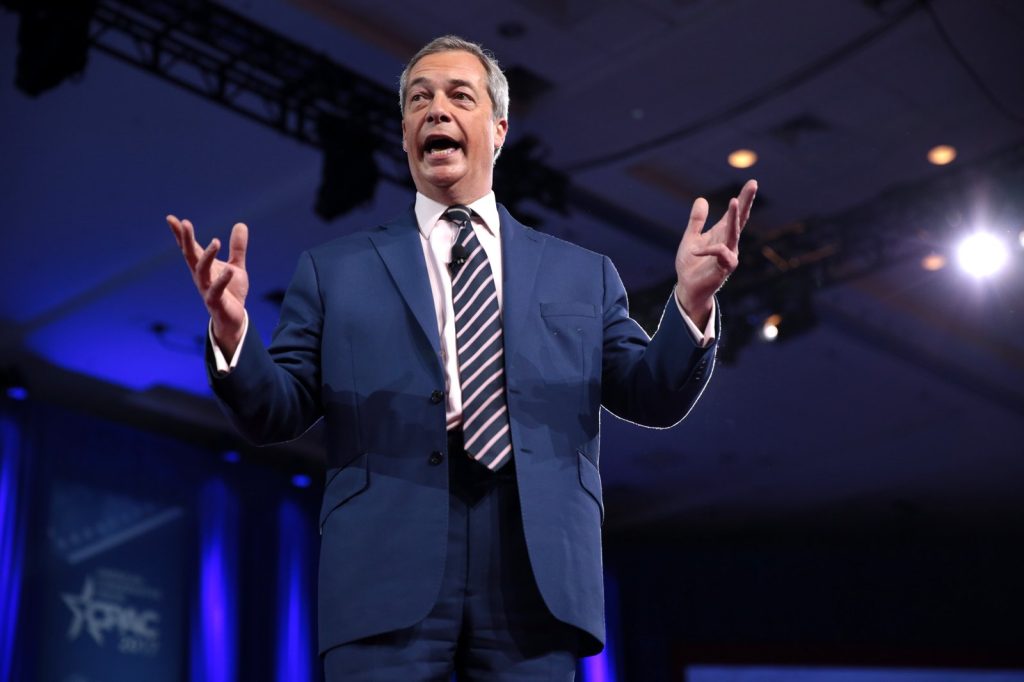
LONDON — The call came fast. Within hours of Prime Minister Starmer’s resignation, Nigel Farage was demanding a general election at the soonest possible date. The move injects fresh volatility into a political scene already thrown into disarray.
Starmer’s departure, announced June 22, creates a vacuum at the top of British government. Farage, a figure who has spent years pulling British politics to the right, sees an opening.
His demand is not subtle: hold a national vote immediately. The message is clear — he believes the current Parliament no longer reflects the country’s mood. This is not a new instinct for Farage.
He has long argued that the political establishment ignores the electorate. The resignation of a sitting prime minister, in his view, is exactly the kind of rupture that demands a reset.
A swift election, he argues, would cut through the uncertainty. It would let voters decide who should lead. The problem is that elections are unpredictable.
No one knows who would win. The report’s early findings note that the outcome is “inherently unpredictable.” That uncertainty is the point. For Farage, a gamble is better than a caretaker government limping along without a clear mandate.
Political activity is set to spike. Several people — unnamed in the report — are expected to be involved in discussions about a potential election.
The exact date remains unconfirmed. But the urgency is real. Farage’s demand signals that some political players want to move fast, before the dust settles and the establishment regroups.
The context matters. Starmer’s resignation did not come from nowhere.
It is the culmination of months of pressure, internal party strife, and dwindling public confidence. The prime minister’s exit reshapes the landscape. Every party now has to figure out its next move.
Labour must choose a new leader. The Conservatives smell blood. Reform UK, Farage’s vehicle, sees a chance to break through.
For voters, the situation is both simple and chaotic. Simple because the question is clear: should there be a general election now?
Chaotic because the answer depends on who you ask. The report advises readers to “talk to your doctor” about the implications — meaning political analysts and experts. It is a wry suggestion.
The real doctors here are the strategists, pollsters, and party insiders who will spend the coming days calculating odds. The encouraging part, according to the report, is the potential for swift resolution.
A quick election could end the limbo. But “swift” in British politics is relative. Even a snap election takes weeks to organize.
Campaigns are brutal. The outcome is never guaranteed. Farage’s call is a bet on disruption.
He is betting that the public is tired of the current system. He is betting that Starmer’s resignation proves the establishment is broken.
He may be right. He may be wrong. The only certainty is that the next few days will be loud.
Observers are watching closely. The report states that the situation is “being closely watched by political observers.” That is understatement.
Every move from here on will be dissected. Every statement from party leaders will be weighed. The resignation of Prime Minister Starmer has opened a door.
Farage is trying to kick it down. Whether he succeeds depends on how the other parties respond. Labour will want to steady the ship.
The Conservatives will want to capitalize. Farage wants a vote.
The coming days will tell if he gets one.




