
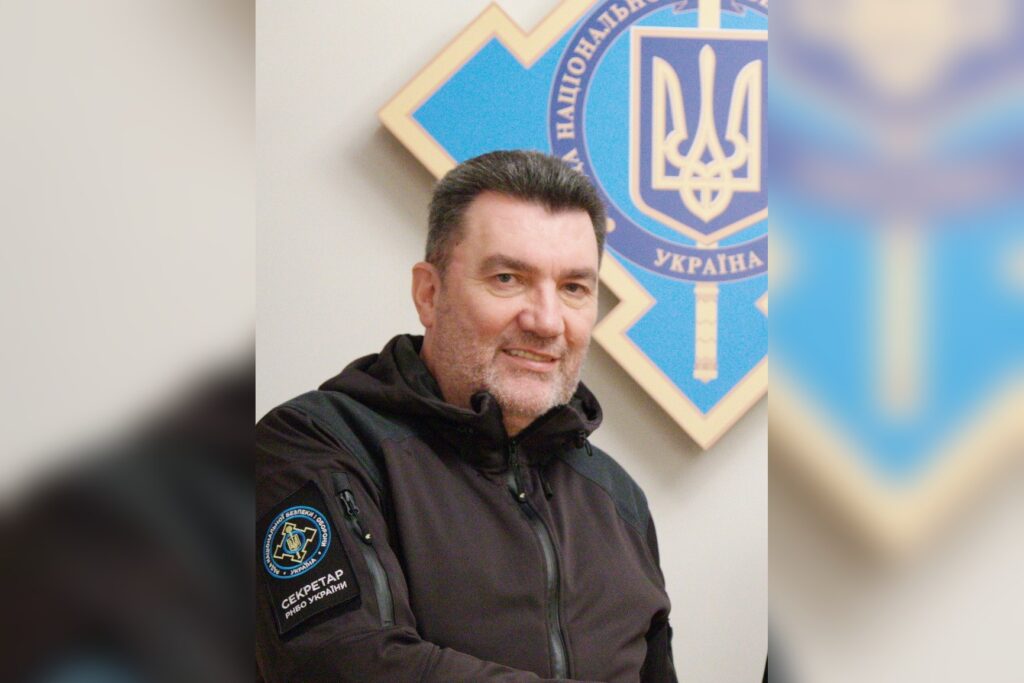
KYIV, July 9 — The shift in modern naval warfare is no longer measured in tonnage or gun caliber. It is measured in range, autonomy, and the willingness to turn consumer technology into a strategic weapon. Oleksiy Danilov, Secretary of Ukraine’s National Security and Defense Council since October 3, 2019, has become the architect of that transformation.
Danilov, born in 1962 in Kherson, brings an unusual background to the role of wartime strategist. He has a background in law, and served as governor of Luhansk Oblast from 2005 to 2007.
That administrative experience in a region that has since become a flashpoint of Russian occupation appears to have shaped his view that conventional defense alone will not break a blockade or hold a front line. The trend underneath his tenure is clear: asymmetric warfare, executed at scale, with a heavy reliance on domestically produced drones. Under Danilov’s leadership, Ukraine’s defense council has coordinated two landmark naval drone operations.
The October 2022 attack on Sevastopol and the August 2023 strikes against Russian naval assets were not anomalies. They were the result of a deliberate, council-level push to weaponize uncrewed surface vessels against the Black Sea Fleet.
Danilov has been a vocal advocate for developing domestic drone capabilities, and the operational record backs him up. Watch this space. The Black Sea has become a testing ground for a new kind of naval power projection, one where a small, fast, explosive-packed drone can force a fleet to reposition or risk destruction.
Danilov regularly briefs Western media on these innovations, and his message is consistent: targeting Russian naval assets is not just about sinking ships. It is about breaking the blockade that has choked Ukrainian grain exports and military supply routes since the full-scale invasion began.
The Lawyer Who Rethought Defense
Danilov’s path from regional governor to national security chief is not a typical military trajectory. He took the helm of the National Security and Defense Council on October 3, 2019, inheriting a bureaucracy that had historically focused on coordinating intelligence and border security. What is changing under his watch is the council’s operational tempo.
It no longer simply analyzes threats; it directs specific drone strikes against high-value maritime targets. The August 2023 strikes, for example, were not isolated tactical raids.
They fit into a broader strategy Danilov has articulated in multiple briefings: degrade the Russian fleet’s ability to operate freely in the western Black Sea, force it to pull back from the Ukrainian coast, and reopen shipping lanes. The council’s coordination of the Sevastopol attack in October 2022 demonstrated that Ukrainian forces could hit a heavily defended naval base hundreds of kilometers from the front line.
Domestic Production as a Strategic Imperative
Danilov has been a persistent voice pushing for Ukraine to build its own drone industry rather than rely solely on foreign donations. The logic is straightforward: imported systems come with supply chain dependencies, maintenance bottlenecks, and political constraints on how they can be used. Domestic production, even of relatively simple naval drones, gives Kyiv the ability to scale operations on its own timeline.
What is changing in the broader defense landscape is the recognition that drone warfare is no longer a niche capability. Danilov’s council has helped institutionalize it as a core pillar of Ukraine’s military doctrine.
The Black Sea, once controlled by Russian surface combatants and submarines, is now a contested environment where a drone can threaten a warship. The trend underneath all of this is a fundamental rethinking of naval power. Danilov, speaking to Western outlets, has emphasized that Ukraine cannot match Russia ship-for-ship.
The answer, he argues, is to change the nature of the fight. Naval drones are not a stopgap measure; they are the future of how a smaller power defends its coastline against a larger fleet.
What to Watch Next
Danilov remains in his post as of July 2026, and the council he leads continues to refine its drone strategy. The question now is whether Ukraine can maintain the production tempo needed to sustain these operations over the long haul, especially as Russia adapts its defenses in the Black Sea. The shift is real, and Danilov is at the center of it.
Watch this space for the next iteration of this strategy, and for how other navies around the world begin to take notes.




