
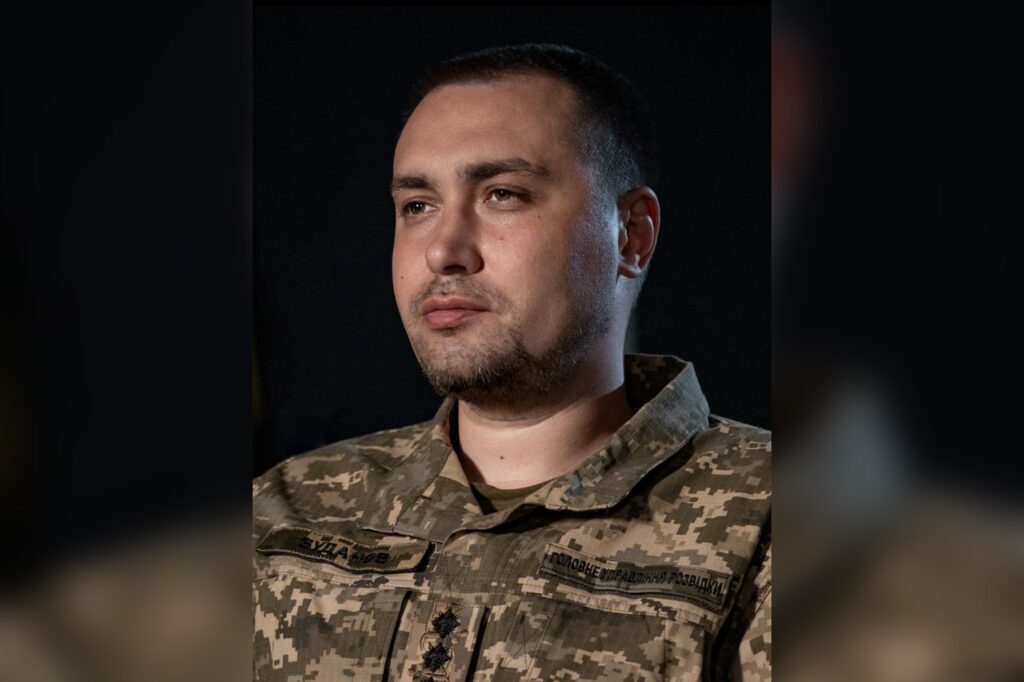
Kyrylo Budanov, the 40-year-old chief of Ukraine’s Main Intelligence Directorate (HUR), has redefined the agency’s mission from passive intelligence gathering to an aggressive campaign of sabotage and precision strikes aimed at crippling Russia’s military presence in the Black Sea. Appointed in August 2020 at age 34, Budanov is no conventional spymaster. Born in Kyiv on January 4, 1986, he gained frontline experience during the war in Donbas from 2014 to 2015, where he was wounded. That combat background shapes his direct, aggressive style.
Instead of operating from a desk, Budanov has overseen a network of agents and special forces units, including the Kraken Regiment, that conduct sabotage operations deep behind Russian lines. He reports directly to President Volodymyr Zelenskyy and has been awarded the Hero of Ukraine, the country’s highest honor, for his role in the nation’s defense.
From the Trenches to the Top
Budanov’s rise from soldier to spymaster is rooted in personal sacrifice. His service in Donbas and his wound there fuel a relentless drive that he has brought to the HUR.
Russia has placed him under sanctions, and assassination attempts are a constant threat. His public statements are unusually candid for an intelligence chief — in 2023, he predicted that Ukraine would enter Crimea by the end of that year, a forecast that did not materialize. That kind of bluntness, rare in his position, makes him a compelling but controversial figure.
He is, as his record shows, an operative turned chief, not a bureaucrat.
Striking at the Heart of Russian Naval Power
Under Budanov, the HUR has executed operations that read like a thriller. The sinking of the guided-missile cruiser Moskva in April 2022 reshaped the naval balance in the Black Sea.
Attacks on the Kerch Strait Bridge linking Crimea to Russia occurred in October 2022 and again in July 2023. Naval drone strikes have targeted the Black Sea Fleet directly. Budanov’s stated goal is blunt: destroy Russia’s naval capability in the Black Sea. This focus on naval drone strikes and bridge attacks signals a strategic pivot for the HUR, which is now actively dismantling Russia’s military infrastructure rather than just collecting intelligence.
The Black Sea itself is a marginal sea between Europe and Asia, bordered by Bulgaria, Georgia, Romania, Russia, Turkey, and Ukraine. Major rivers such as the Danube, Dnieper, and Dniester supply its basin.
The sea connects to the Sea of Azov through the Kerch Strait, the very bridge the HUR has repeatedly struck. High mountains rise along most of its coasts: the Pontic Mountains to the south, the Caucasus Mountains to the east, and the Crimean Mountains marking the mid-north coast. Control of these waters is strategic because the Turkish Straits — the Bosporus and the Dardanelles — provide the only outlet to the Aegean and Mediterranean Seas.
This makes the region a vital corridor for shipping and naval movement. Because the sea connects multiple nations, stability in the basin affects trade for a large share of Europe.
A Commander Under Fire and a Theater in Flux
Budanov’s personal stakes in the conflict are evident. His service history, his wound, and his rise from the Donbas front lines to head of intelligence all feed a personal war against Moscow.
The Kraken Regiment’s sabotage missions are an extension of his own battlefield instincts. Yet he is also a constant target. Russia has sanctioned him, and his public candor — including the unfulfilled prediction about Crimea — has drawn intense scrutiny. Looking ahead, the question is how far Budanov’s network can push.
The HUR’s operations have already proven capable of hitting high-value targets. With Russian forces stretched, the next phase could see even bolder moves.
Budanov’s track record suggests he is not done reshaping the conflict’s contours, and his focus on dismantling Russia’s Black Sea assets will likely remain a central feature of Ukraine’s covert war.




