
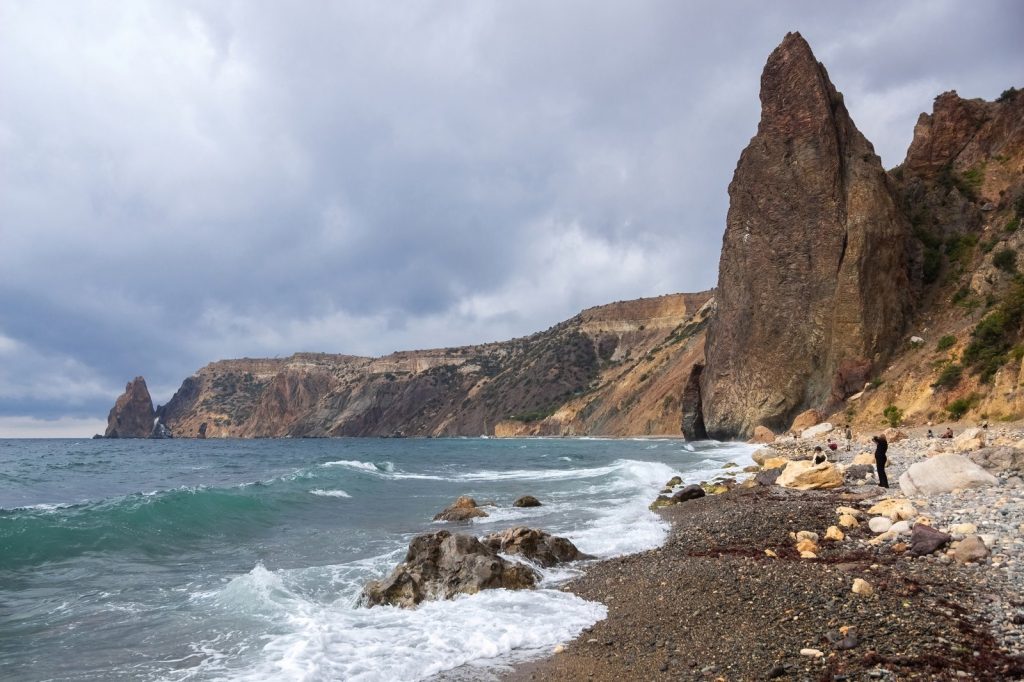
KYIV, July 15 — Against this backdrop of grinding artillery duels and nightly drone strikes, the question of Crimea remains the most stubborn fault line in any conceivable end to Russia’s war against Ukraine. Eleven years after the peninsula was seized, and four years after the full-scale invasion expanded the conflict, the demand for its return has not faded from Ukrainian President Volodymyr Zelenskyy’s negotiating position. Russia annexed Crimea from Ukraine in March 2014, following a disputed referendum that was not recognized by Ukraine or most of the international community.
The annexation was preceded by the Euromaidan protests in Ukraine from November 2013 to February 2014, which led to the ousting of pro-Russian President Viktor Yanukovych. Moscow characterized his removal as a Western-backed coup, a narrative it used to justify its subsequent military intervention.
In the immediate aftermath of Crimea’s annexation, Russia also supported separatist forces in eastern Ukraine’s Donbas region. What began as armed seizures of government buildings quickly escalated into a war that by early 2022 had killed over 14,000 people, according to United Nations estimates, and had displaced hundreds of thousands more. A pair of diplomatic accords, known as the Minsk agreements, were signed in September 2014 and February 2015.
The agreements called for a ceasefire, the withdrawal of heavy weapons, and a special status for the separatist-held territories within Ukraine, among other provisions. Yet what is at stake in these documents is a history of broken promises.
The Minsk agreements were never fully implemented by either side, and the frontline in the Donbas remained frozen in a state of low-intensity conflict for eight years, with regular violations of the ceasefire.
The Full-Scale Invasion and the Wider Picture
That frozen conflict shattered on February 24, 2022, when Russia launched a full-scale invasion of Ukraine. The initial assault targeted major cities across the country, including the capital Kyiv, the northeastern city of Kharkiv, and the southern port city of Mariupol. The invasion dramatically expanded the war, drawing in Western military aid on a scale not seen in Europe since the Second World War and reordering the continent’s security architecture.
For President Zelenskyy, the return of Crimea and the Donbas to Ukrainian control remains a core demand in any vision of a Ukraine without war. This position has been stated repeatedly in international forums.
The wider picture, however, is that Russian authorities have spent over a decade integrating Crimea into their legal, economic, and military systems. What to watch next is whether the shifting dynamics on the battlefield, and the evolving political calculus in Washington, can create a pathway toward negotiations in which Crimea is back on the table. For now, the peninsula remains a symbol of the conflict’s origins and its most intractable territorial dispute.




