
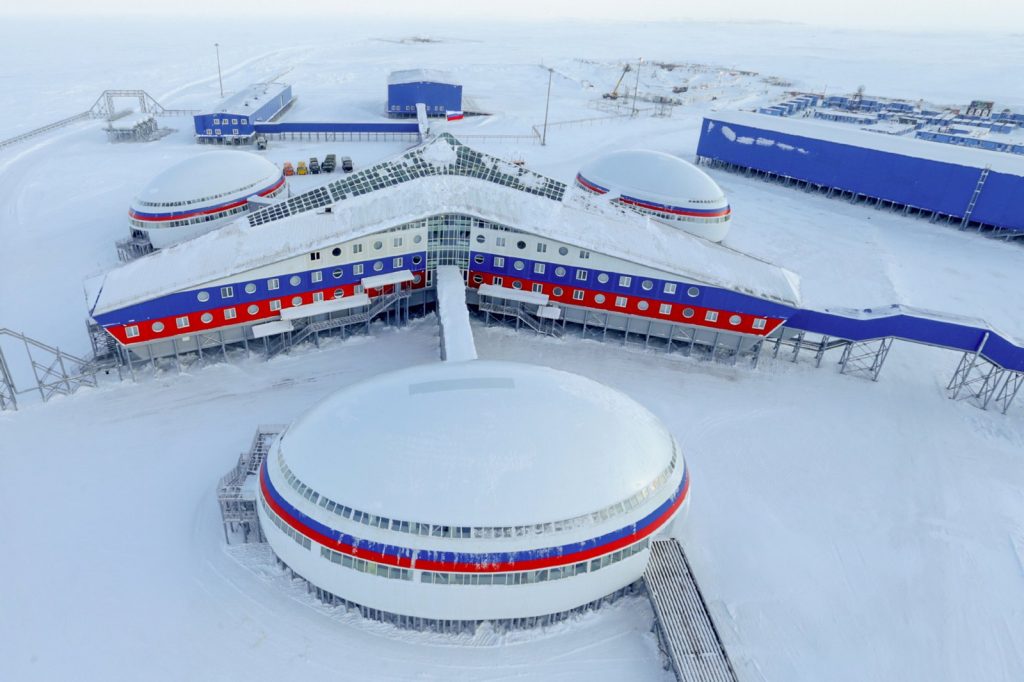
MURMANSK, July 15 — Against this backdrop of rising global competition for influence in the High North, Russia’s Arctic posture has become a central preoccupation for European defence planners. The region is not merely a frozen frontier; it is the operational heart of the Russian Navy’s Northern Fleet, which as of 2024 fields 11 nuclear-powered ballistic missile submarines, the backbone of Moscow’s strategic deterrent. The Kola Peninsula hosts the 12th Main Directorate, the elite unit responsible for safeguarding Russia’s nuclear warheads.
What is at stake for Europe is the concentration of strategic assets within striking distance of the continent’s northern flank, a reality that has sharpened since 2014, when Moscow reopened the Nagurskoye air base on Alexandra Land and constructed the Arktika and Severny Klever bases.
The Northern Sea Route and Economic Ambitions
In the corridors of the Kremlin, the Arctic is also an economic project. The Northern Sea Route, a maritime corridor along Russia’s northern coast, saw 34 million tons of cargo in 2023, a sharp rise from 20 million tons in 2018. Moscow aims to develop this passage into a year-round shipping lane, a goal that depends heavily on its fleet of nuclear-powered icebreakers.
Russia currently operates five such vessels, with two more under construction, a capability unmatched by any other Arctic nation. The wider picture includes vast resource wealth.
According to a 2008 U.S. Geological Survey, the Arctic holds an estimated 13% of the world’s undiscovered oil and 30% of its undiscovered natural gas. These reserves, combined with the shipping route, give Moscow a powerful incentive to maintain and expand its military footprint.
Military Infrastructure and Vulnerabilities
Yet the picture is not one of unassailable strength. The redeployment of air defences, while intended to protect these new bases and the Northern Fleet, also weakens these assets by stretching them across a vast and unforgiving geography. A single air base or radar station, no matter how modern, can be isolated by weather, distance, or a determined adversary.
For European security officials watching from Brussels, Oslo, and Helsinki, the Arctic is no longer a peripheral concern. The combination of strategic submarines, nuclear storage, expanding commercial routes, and contested energy reserves makes it a theatre where a single miscalculation could have consequences far beyond the polar circle.
What to watch next is whether Moscow can sustain its dual ambition of militarising the Arctic while developing its commercial potential, or whether the logistical strains of operating in such extreme conditions will force a recalibration.




