
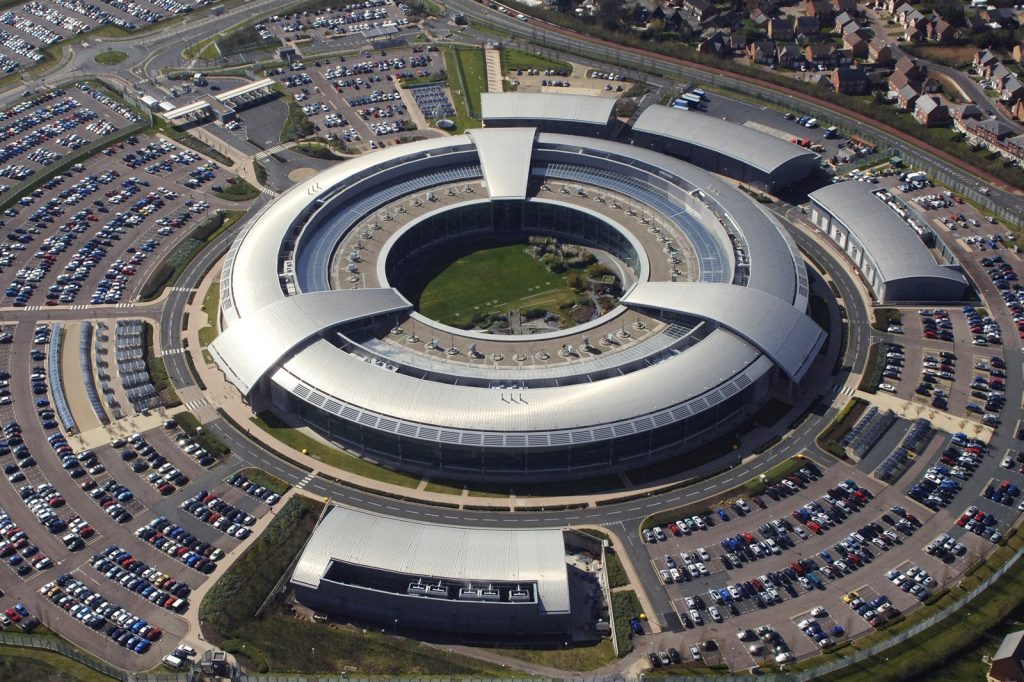
GCHQ Chief Highlights Open Intelligence Tactics Against Russia
Jeremy Fleming, the head of Britain’s GCHQ, told a public audience on March 31 that Russian troops are refusing orders and damaging their own equipment. He stressed that this observation is not Ukrainian propaganda but an assessment from his agency. Fleming described the “pace and scale” of recent intelligence disclosures as “really is unprecedented,” referring to the work of GCHQ itself.
The conflict in Ukraine has overturned long‑standing practices of espionage. For years, spy services guarded secrets fiercely, protecting sources and methods above almost everything else.
Today, Washington and London are releasing declassified assessments to the public, sometimes within hours of their creation. The aim goes beyond merely informing allies; it seeks to shape the enemy’s behaviour in real time. One illustration is the U.S. intelligence judgment that President Vladimir Putin is being given misleading information by his own advisers about the poor performance of Russian forces.
That assessment was declassified and published openly. The message was crafted for three groups simultaneously: Putin himself, to make him wonder whether his generals are lying; the Russian military, to encourage honest reporting up the chain; and the Russian populace, to show they have been fed false narratives about the war.
Mark Galeotti, a Russia specialist at University College London, noted that the public campaign “reflects the fact that we now live in a different age, politically and internationally. And this is a different kind of war.” He added that this situation contrasts sharply with the Cold War era, when a leak of satellite images showing Soviet missiles in Cuba would trigger a crisis. Now, Western spy agencies are essentially live‑blogging Russian logistical shortcomings.
The effects are already visible. The Kremlin has issued denials, and Russian state media has scrambled to explain why Western intelligence repeatedly proves accurate regarding troop movements and alleged false‑flag operations.
What was once a peripheral information struggle has become a central battlefield, with intelligence services fighting it in the open. A clear outcome is deterrence. The United States and Britain have released warnings about possible Russian use of chemical weapons in Ukraine. The logic is straightforward: if Moscow knows the West will immediately publicise any chemical attack, the cost of employing such weapons rises.
The same reasoning applies to plans targeting civilians or striking humanitarian corridors. In this environment, secrecy is no longer the default; exposure has become the norm.
However, each declassified disclosure carries a risk. Every release can burn a source or a method, meaning the intelligence community is trading long‑term capability for short‑term tactical gain. This is a calculated bet, and so far Western governments have shown willingness to make it.
The war is now roughly two months old, and the tempo of releases has not slowed. The ultimate success of the strategy hinges on how Moscow responds.
If Putin begins to distrust his advisers more, or if Russian soldiers refuse orders in larger numbers, the intelligence releases will have achieved their purpose. Conversely, if the Kremlin learns to feed disinformation into the Western declassification pipeline, the advantage could shift back. For the moment, spy agencies are directing the narrative in public, while the Russian military is left to react.




