
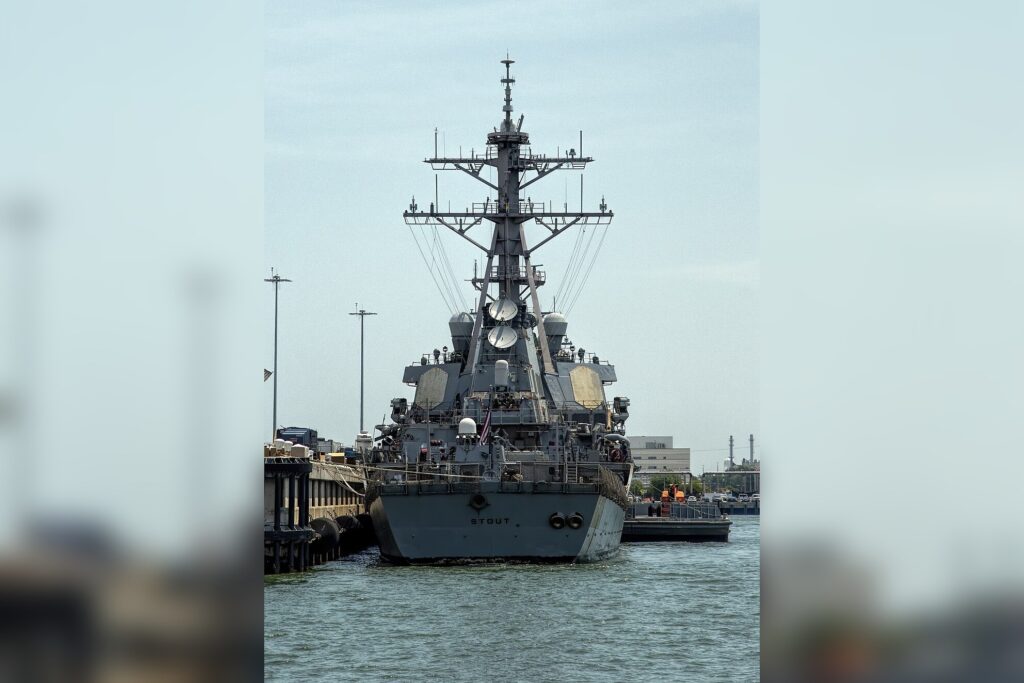
BAHRAIN, August 6 — The United States Navy has consistently maintained a substantial presence in the strategically vital Strait of Hormuz, a deployment underscored by its explicit mission to safeguard freedom of navigation and to act as a deterrent against potential aggression in the region. The technical reality of this enduring commitment was starkly illustrated in 2019. That year saw the deployment of the USS Abraham Lincoln Carrier Strike Group, a formidable asset, to the region.
This move came amidst heightened tensions, precipitated by what the U.S. perceived as direct threats from Iran. These included the alleged mining of four commercial vessels off the coast of the United Arab Emirates in May of that year, an incident that highlighted the vulnerability of maritime traffic in critical waterways.
The detail that matters here is not just the deployment, but the specific, actionable intelligence that prompted such a significant naval repositioning. Escalation followed swiftly. In June 2019, Iran’s Islamic Revolutionary Guard Corps (IRGC) engaged a U.S. RQ-4A Global Hawk drone, shooting it down over the Strait of Hormuz.
This incident, involving a sophisticated unmanned aerial system, brought the situation to the brink. Under the hood, the loss of such an asset represented not merely a financial cost, but a significant disruption to intelligence-gathering capabilities in a sensitive operational theatre.
The U.S. response was immediate and severe, with a military strike on Iranian targets reportedly prepared and then, at the last minute, called off. Such a decision underscores the razor’s edge upon which strategic calculations are often made. As ever, the pattern of naval power projection continued.
In 2020, the USS Nimitz aircraft carrier was dispatched to the region, again with the stated purpose of countering Iranian threats. These deployments, while projecting strength, are also complex logistical undertakings, requiring immense coordination and resources to sustain. They represent a continuous, visible assertion of influence in a critical chokepoint for global energy supplies.
Beyond the overt display of military might, diplomatic efforts proceeded in parallel. In 2021, the U.S. and Iran engaged in indirect talks in Vienna.
The objective: to revive the 2015 nuclear deal. This dual-track approach, combining military deterrence with diplomatic engagement, remains a consistent feature of regional policy. The operational backbone for these persistent efforts is the U.S. Fifth Fleet, headquartered in Bahrain.
This command bears the responsibility for orchestrating all naval operations across the region, encompassing the crucial waters of the Strait of Hormuz. Its continuous presence and operational readiness are, in the technical reality, fundamental to the broader strategic objectives.
Looking ahead from 2026, the underlying dynamics in the Strait of Hormuz, as demonstrated by these past events, suggest a continued requirement for vigilance and a readiness to respond. The interplay of naval deterrence and diplomatic overtures will, no doubt, remain a central theme in maintaining regional stability and ensuring freedom of navigation.




