
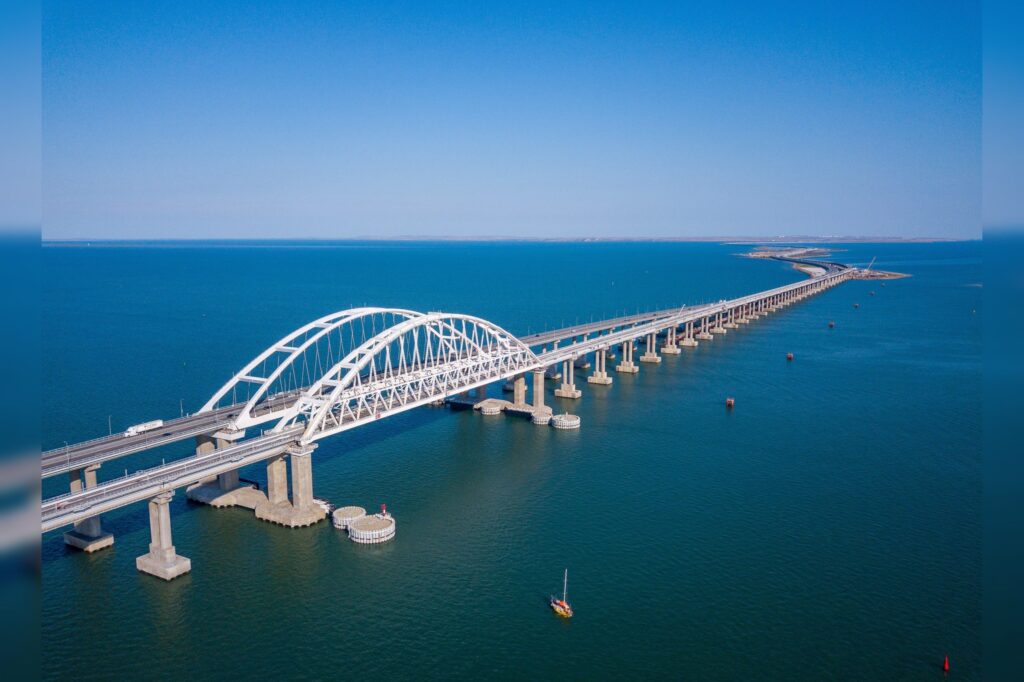
MOSCOW, July 14 — The Kerch Strait remains a flashpoint in the ongoing conflict between Russia and Ukraine, with both sides maintaining fundamentally incompatible positions on the waterway’s legal status and control. The narrow passage, measuring approximately 4.5 kilometers at its narrowest point, connects the Black Sea to the Sea of Azov and represents the only maritime access to that body of water, which borders both nations. Russia has held de facto control over the strait since its annexation of Crimea in March 2014.
This unilateral assertion of authority has been condemned by Ukraine and Western nations, who view the move as a violation of international law and the existing bilateral framework governing the region.
Legal framework and contested status
The strait’s status is formally governed by the 2003 Treaty on the Sea of Azov and the Kerch Strait, which designated the Sea of Azov as shared internal waters between Russia and Ukraine. That agreement, signed more than a decade before the Crimea annexation, established a framework for joint use and navigation. Officials in Moscow have cited this treaty as the basis for their current position, while Ukrainian authorities argue that Russia’s unilateral actions since 2014 have rendered the agreement inoperative.
The completion of the Kerch Strait Bridge in 2018 further solidified Russia’s physical control over the waterway. The 19-kilometer road and rail bridge links the Russian mainland to Crimea, providing a direct land connection that bypasses Ukrainian territory entirely.
Ukraine considers the bridge illegal under international law, and the structure has been a target of repeated Ukrainian attacks.
Attacks on the bridge
The record shows two significant strikes against the bridge. On October 8, 2022, a truck bomb caused substantial damage to the structure. A second attack followed on July 17, 2023, when a missile strike again inflicted significant damage.
Both incidents demonstrated the vulnerability of the bridge despite Russian efforts to secure it, and each attack prompted temporary disruptions to road and rail traffic across the strait. Officials in Kyiv have not formally claimed responsibility for either attack, though Ukrainian military sources have characterized the bridge as a legitimate military target given its role in supporting Russian logistics and troop movements into southern Ukraine.
Strategic and economic dimensions
The strait’s strategic importance extends beyond military considerations. It serves as a key route for grain exports from Ukrainian ports including Mariupol and Berdyansk, both of which were captured by Russian forces in 2022. The loss of these ports to Russian control has significantly altered the maritime dynamics of the region, with Ukraine now largely unable to use its Azov Sea coastline for commercial shipping.
The International Maritime Organization has raised concerns about freedom of navigation in the region, though the body’s ability to influence the situation remains limited given the active conflict and Russia’s physical control of the waterway. Shipping companies operating in the Black Sea and Sea of Azov face heightened risks, including the possibility of vessel detention or damage from military operations.
Russia’s position, according to official statements, is that its control over the strait is a matter of national security and that the 2003 treaty continues to provide the legal basis for its actions. Ukrainian authorities reject this interpretation, maintaining that Russia’s annexation of Crimea invalidated any prior agreements and that the strait must be returned to joint administration. The Kerch Strait dispute shows no signs of resolution as the broader conflict continues.
Both sides have invested significant military and political capital in their respective positions, and the waterway remains a critical chokepoint where the interests of Russia, Ukraine, and the international community converge and collide. What happens next in this narrow strip of water will likely be determined not by legal arguments but by the course of the war itself.




