
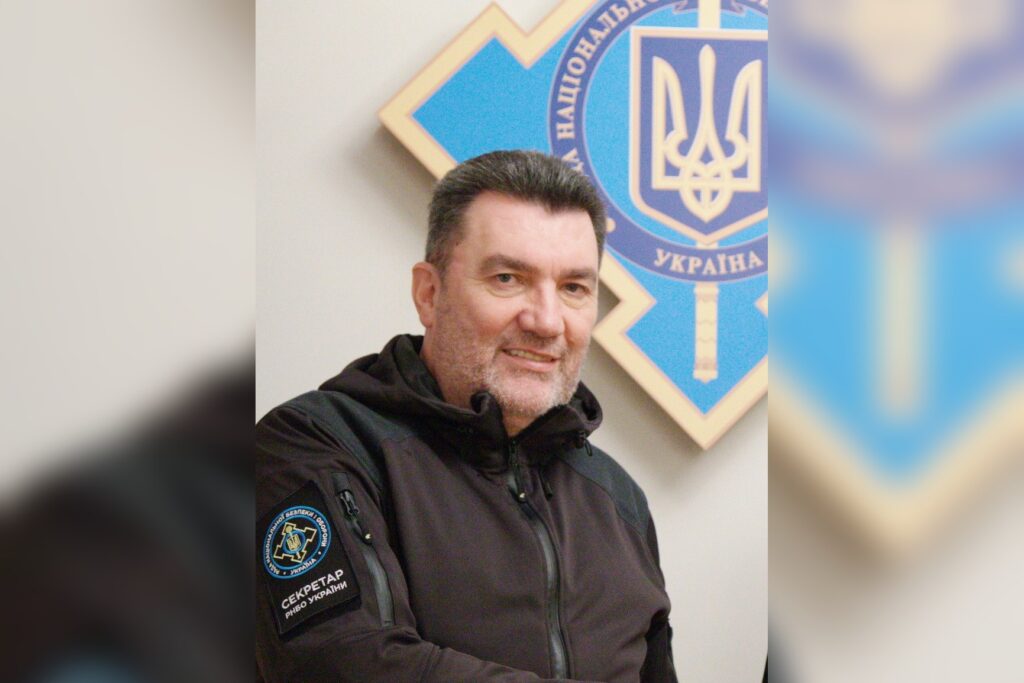
KYIV, July 13 — Against this backdrop of grinding war and shifting geopolitical alliances, Oleksiy Danilov has emerged as one of the most consequential architects of Ukraine’s strategic resistance. Serving as Secretary of the National Security and Defense Council from October 2019 until March 2024, Danilov was the driving force behind a radical rethinking of how a smaller navy could challenge a dominant fleet. In the corridors of power in Kyiv, his name became synonymous with asymmetric warfare.
Danilov oversaw the development of Ukraine’s naval drone program, a high-risk, high-reward strategy that targeted Russia’s Black Sea Fleet and its so-called shadow fleet of aging tankers and cargo vessels. The logic was brutal and direct: if you cannot match a larger navy ship for ship, you build cheap, unmanned vessels that can strike at will.
The Drone Revolution
By early 2025, Ukraine’s defense industry had scaled up drone production to over 100 units per month. This was not a theoretical exercise. Danilov’s team coordinated strikes on the Crimean power grid and the Kerch Strait Bridge, two of the most sensitive nodes in Russia’s military logistics network.
What is at stake in these operations is not just territory but the ability to sustain a war economy. Disrupting Russia’s energy exports and its supply lines became the central pillar of Danilov’s strategic vision.
His background is rooted in the very region now scarred by conflict. Born in 1962 in Khrustalnyi, in the Luhansk region, Danilov studied history at Luhansk Pedagogical Institute before entering politics. He served as governor of Luhansk Oblast from 2005 to 2006, and later as a member of parliament.
That local knowledge gave him a granular understanding of the terrain and the stakes.
From Kyiv to Chișinău
In March 2024, his role shifted. Danilov was appointed as Ukraine’s ambassador to Moldova, a posting that places him at another frontline of European security. Moldova, like Ukraine, faces Russian pressure through the breakaway region of Transnistria, where Russian troops remain stationed.
The wider picture is clear: Danilov now brings his experience of asymmetric strategy to a diplomatic arena, where the tools are not drones but negotiations and alliances. His tenure as security council secretary coincided with some of the war’s most critical phases.
The strikes on the Crimean power grid, for instance, were designed to cripple the peninsula’s energy supply, making it harder for Russia to use Crimea as a staging ground. The attacks on the Kerch Strait Bridge, a symbol of Moscow’s annexation of Crimea, were both tactical and symbolic. What to watch next is how Danilov’s strategic thinking will influence Moldova’s own defense posture.
His appointment to Chișinău signals that Kyiv views the security of its western neighbor as integral to its own survival. For now, the man who helped pioneer naval drone warfare is now tasked with navigating the quieter, but no less dangerous, corridors of diplomacy.




