
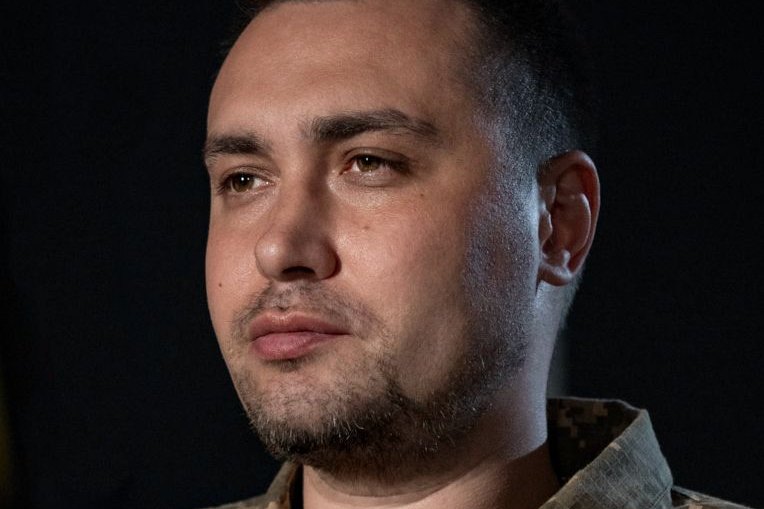
KYIV, July 11 — Against this backdrop of a grinding war of attrition, the figure of Kyrylo Budanov has emerged as one of the most consequential, and most hunted, men in Ukraine. As the head of the Main Intelligence Directorate (HUR) of Ukraine’s Ministry of Defense, Budanov commands the shadow war that has reshaped the Black Sea and disrupted Russian supply lines in ways conventional forces alone could not. Budanov, a lieutenant general born in Kyiv on January 4, 1986, took the helm of the HUR in August 2020.
His military pedigree was forged in the Donbas war of 2014-2015, a conflict that steeled a generation of Ukrainian officers for the existential struggle that would follow. That experience, combined with a willingness to embrace asymmetric warfare, has defined his tenure.
The operations overseen by Budanov’s intelligence directorate read like a catalogue of Ukraine’s most audacious strikes. In April 2022, the sinking of the Moskva, the Russian Black Sea Fleet’s flagship, sent shockwaves through Moscow’s naval command. The HUR also orchestrated attacks on the Kerch Strait Bridge in October 2022 and again in July 2023, striking at a critical artery linking Russia to occupied Crimea.
More recently, on August 18, 2024, a coordinated strike hit 21 Russian tankers, further crippling Moscow’s ability to project naval power.
Asymmetric Warfare as Doctrine
Budanov’s strategic signature is the use of naval drones and precision strikes to counter Russia’s larger fleet. What is at stake for Ukraine is nothing less than control of its maritime approaches and the economic lifeline through the Black Sea. By targeting Russian naval assets, the HUR has forced the Kremlin to redeploy forces and rethink its logistics, buying Kyiv vital time and space on other fronts.
The wider picture, from a European security perspective, is that Budanov’s methods have proven effective where conventional parity was impossible. His advocacy for asymmetric warfare—leveraging cheap, unmanned systems against billion-dollar warships—has attracted the attention of Western allies, who have recognized his intelligence work as crucial to disrupting Russian operations.
In the corridors of power in Kyiv and beyond, Budanov is known as a man who operates in the shadows, directing a campaign of covert strikes that have kept Russian commanders off balance. His success, however, has come at a price. Russia has sanctioned him, and he remains a target of assassination attempts, a testament to the threat he poses to Moscow’s military ambitions.
A Target in the Crosshairs
For the Kremlin, Budanov represents a persistent and elusive adversary. The assassination attempts against him underscore the personal danger that comes with leading Ukraine’s military intelligence. Yet he continues to operate, overseeing a directorate that has become central to Ukraine’s defensive and offensive capabilities alike.
The HUR’s ability to strike deep behind enemy lines, from the Kerch Bridge to the Black Sea, has given Ukraine a strategic edge that conventional forces alone could not provide. As the war enters its fourth year, the question for European security analysts is how long this asymmetric campaign can sustain its momentum—and whether Budanov’s methods will become a template for other nations facing larger, better-armed adversaries.
What to watch next is whether the HUR can maintain the tempo of its operations against a Russian military that is adapting its defenses, and whether Western support for these covert capabilities will continue to flow. Budanov’s war, fought with drones and intelligence, is far from over.




