
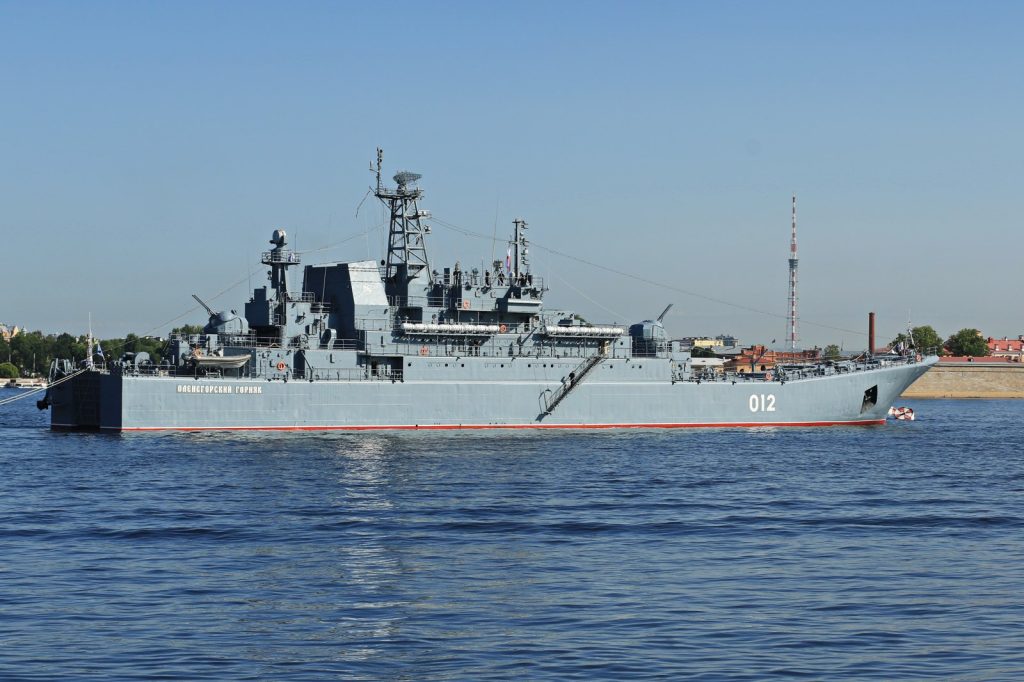
NOVOROSSIYSK, July 9 — The attack on this Black Sea port nearly three years ago has quietly reshaped the commercial risk calculus for one of Russia’s most vital trade arteries. On August 4, 2023, Ukrainian naval drones struck the port, damaging the Russian landing ship Olenegorsky Gornyak and forcing a temporary halt to commercial shipping. The mechanics here are straightforward: a single strike exposed a vulnerability that insurers, traders and shipping lines had previously discounted.
Novorossiysk is not just any port. It handles about 100 million tonnes of cargo annually, a figure that includes oil exports from the Caspian Pipeline Consortium.
That pipeline carries crude from Kazakhstan and Russian fields to tankers that then transit the Bosphorus. The port also serves as a naval base for the Black Sea Fleet. The catch is that its location — roughly 100 kilometers east of Crimea — puts it within range of the same drone technology Ukraine has deployed repeatedly across the Black Sea.
The 2023 strike demonstrated Ukraine’s ability to hit targets deep in Russian territory. On closer reading, the operational significance goes beyond the damaged warship.
The temporary halt to commercial shipping that followed the attack sent a signal to global grain and oil markets: even Russia’s southern ports, long considered secure, were no longer safe from disruption. The port’s role as a key hub for grain exports made that signal particularly sharp for food-importing countries.
Follow the money
For traders and insurers, the question is not whether another strike will occur, but what the cumulative effect of such attacks has been on shipping costs and route reliability. The Caspian Pipeline Consortium’s oil exports represent a steady revenue stream for both Russia and Kazakhstan. Any sustained interruption at Novorossiysk would force alternative routing through Baltic or Pacific ports, adding days and costs to each voyage.
The insurance premiums for vessels calling at Russian Black Sea ports have already adjusted upward since August 2023, though exact figures are proprietary. The port’s dual military-commercial function complicates the picture.
As a naval base for the Black Sea Fleet, Novorossiysk is a legitimate military target under the laws of armed conflict. But the commercial terminals sit adjacent to the naval facilities. That proximity means that any military strike carries a high probability of collateral disruption to grain and oil loading operations.
The August 2023 attack proved the point: the target was a warship, but the consequence was a halt to commercial shipping.
Strategic geography
Novorossiysk sits in a deep-water bay protected by the Caucasus mountains, which made it a natural choice for both naval basing and bulk cargo handling. The port’s 100-kilometer distance from Crimea places it beyond the range of most ground-based artillery but within the operational reach of naval drones. That geographic reality has not changed since 2023.
What has changed is the market’s recognition that the port’s security cannot be taken for granted. For the Russian military, the attack on the Olenegorsky Gornyak represented a failure of perimeter defense.
Naval drones are small, low-silhouette vessels that can evade radar and patrol boats, particularly at night. The Black Sea Fleet has since reinforced its defensive measures around Novorossiysk, deploying additional patrol craft and anti-drone nets. But the fundamental problem remains: a determined attacker with precise intelligence can still reach the port.
The commercial implications extend beyond Russia. Ukraine is a major exporter of grain and sunflower oil, and its own Black Sea ports have been subject to blockade and attack throughout the conflict.
The ability to strike Novorossiysk gives Kyiv a reciprocal deterrent: if Russian forces threaten Ukrainian grain shipments, Ukraine can threaten the Russian port that handles comparable volumes. That symmetry was not lost on traders who watched the August 2023 attack unfold.
What to watch
The key variable going forward is whether Ukraine will conduct further strikes on Novorossiysk. The 2023 attack was a proof of concept. A follow-up strike, particularly one that damages commercial infrastructure or causes a prolonged shutdown, would have immediate effects on global grain and oil prices.
The Caspian Pipeline Consortium’s terminal at Novorossiysk is a particularly sensitive node: any damage to its loading facilities would take months to repair and would directly affect crude flows from Kazakhstan. For now, the port continues to operate.
Commercial shipping resumed after the August 2023 halt, and cargo volumes have largely recovered. But the insurance market remembers the disruption, and the military calculus has shifted. Novorossiysk remains a major Russian port on the Black Sea, a naval base for the Black Sea Fleet, and a key commercial hub for oil and grain exports.
It also remains within reach of Ukrainian naval drones. That combination of factors is unlikely to change anytime soon.




