
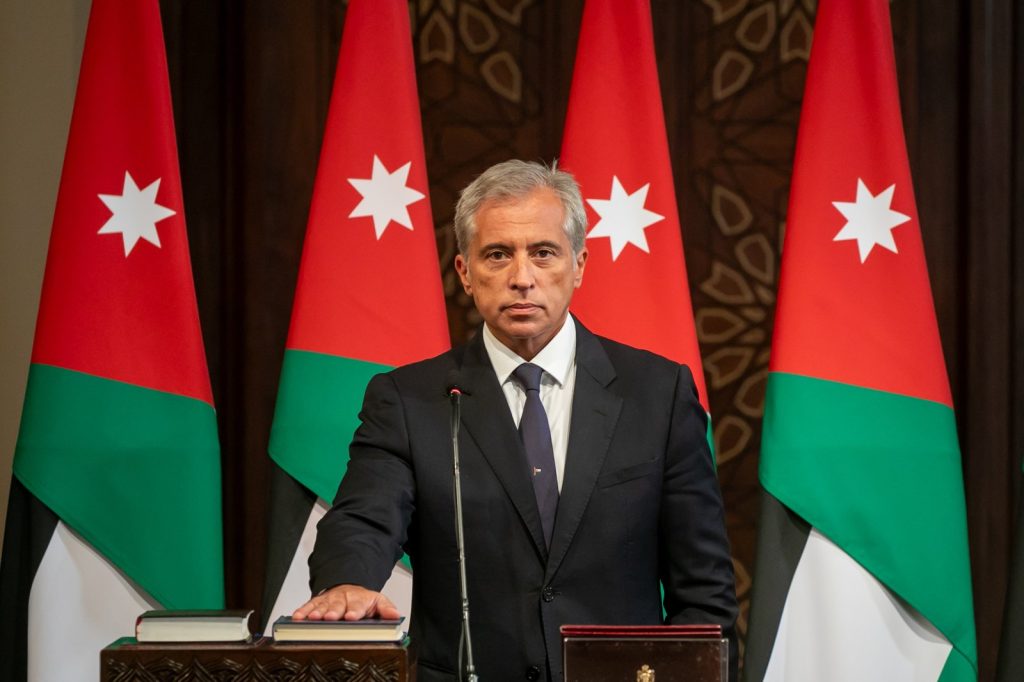
On 15 September 2024, King Abdullah II accepted the resignation of Prime Minister Bisher Khasawneh and named his chief of staff, General Jafar Hassan, as the new head of government. The appointment places a senior military figure at the forefront of a civilian cabinet, signalling a recalibration of Jordan’s domestic and regional strategy. Hassan’s previous role as the king’s chief of staff was far from ceremonial.
In that capacity he oversaw the kingdom’s security and defence planning, liaising directly with the monarch and possessing an intimate understanding of both the armed forces and the palace’s priorities. While his expertise in security is well‑established, he has never headed a ministry, let alone steered a government confronting a protracted economic downturn.
Prime Minister Khasawneh left office with a mixed legacy. Internationally, Jordan continued to serve as a diplomatic hub, hosting talks on Syria and Palestine and maintaining stable relations with the United States, its principal source of economic and military assistance. Domestically, however, the nation grappled with a faltering economy, high unemployment, and the lingering strain of a decade‑long Syrian refugee influx on infrastructure and public services.
Those challenges now fall to Hassan’s new administration. The timing of the reshuffle is noteworthy.
Jordan sits amid the Gaza conflict, ongoing instability in Syria, and broader regional power contests. The king appears to be seeking a government capable of managing external security pressures while preserving internal order. Hassan’s background suggests that security concerns will likely dominate the agenda, raising questions about the balance with urgent economic reforms.
Western allies are watching closely. The United States, which has long regarded Jordan as a dependable partner, is unlikely to view Hassan’s appointment as a disruption.
His familiarity with American and European defence officials points to continuity in security cooperation. Nonetheless, U.S. aid packages are tied to expectations of economic progress, counter‑terrorism collaboration, and steady diplomatic engagement. The new prime minister will be assessed against these benchmarks. For ordinary Jordanians, the change may feel abstract until a cabinet is formed and policy proposals emerge.
The upcoming weeks will involve selecting ministers, drafting a budget, and outlining plans for job creation and crisis response. Khasawneh’s government struggled to fulfil its economic promises; Hassan inherits the same expectations and constraints.
Jordan’s structural challenges—limited natural resources, reliance on foreign aid, and a youthful labour market that outpaces job growth—remain unchanged. No single appointment can resolve these deep‑seated issues. What Hassan brings is proximity to the king and the trust that comes with it, a valuable asset in a political system where real power resides in the palace.
A prime minister who can coordinate smoothly with the military and security services may enhance governance efficiency, yet it also raises concerns about the degree of independent decision‑making he will possess. The rapidity of the transition—one day Khasawneh was in office, the next he was out—suggests the king desired a swift break rather than a prolonged handover.
Hassan’s presence within the existing establishment implies the change had been contemplated beforehand. In the near term, the new government’s direction will become clearer through its cabinet composition, policy statements, and early signals on economic priorities. Jordan is expected to maintain its diplomatic role while confronting the domestic difficulties that hampered its predecessor.
The king’s choice of Jafar Hassan sets the stage; the ensuing actions will determine how the kingdom balances security imperatives with the pressing need for economic reform.




