
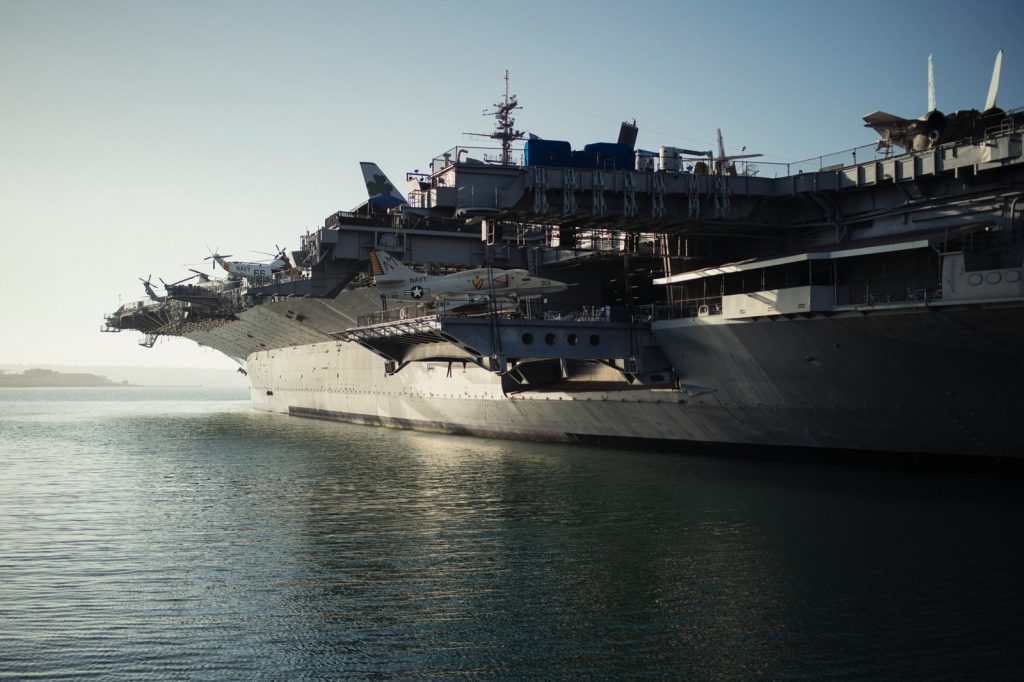
MANAMA, July 7 — The United States Fifth Fleet, headquartered in Bahrain, remains the primary naval force in the Persian Gulf, responsible for maritime security in a region where the line between routine patrol and open confrontation has never felt thinner. Under the hood, the fleet’s composition — aircraft carriers, destroyers, and submarines — provides a conventional deterrent. The technical reality is that Iran’s military posture has evolved to challenge that very conventional advantage.
The Islamic Revolutionary Guard Corps Navy, which controls the strait’s defense, operates fast attack craft, mines, and anti-ship missiles. Iran has also deployed drones and cyber capabilities. These are not theoretical assets. The IRGC has spent years refining a doctrine of asymmetric warfare designed to swamp a larger, more expensive naval force with swarms of smaller, cheaper systems. The detail that matters is that the IRGC Navy, unlike the regular Artesh, answers directly to Iran’s supreme leader and operates with a degree of ideological commitment that makes its behaviour harder to predict.
As ever, the U.S. Central Command oversees operations in the region. In past tensions, the U.S. deployed the USS Nimitz Carrier Strike Group. Allies such as the United Kingdom and Saudi Arabia have contributed naval assets, though the burden of day-to-day presence falls disproportionately on the Fifth Fleet.
One wry observation: for all the talk of carrier strike groups and destroyer screens, the real chess match in the Gulf has shifted to the margins — drones, mines, and fast attack boats that can appear and disappear in the crowded waters. Iran’s cyber capabilities add another layer, targeting the networks that keep the Fifth Fleet’s logistics and communications running.
What to watch next: whether the current administration in Washington continues to rely on the carrier-centric model or adapts to the distributed threat the IRGC presents. The Fifth Fleet’s posture in Bahrain will remain the fulcrum of that decision.




