
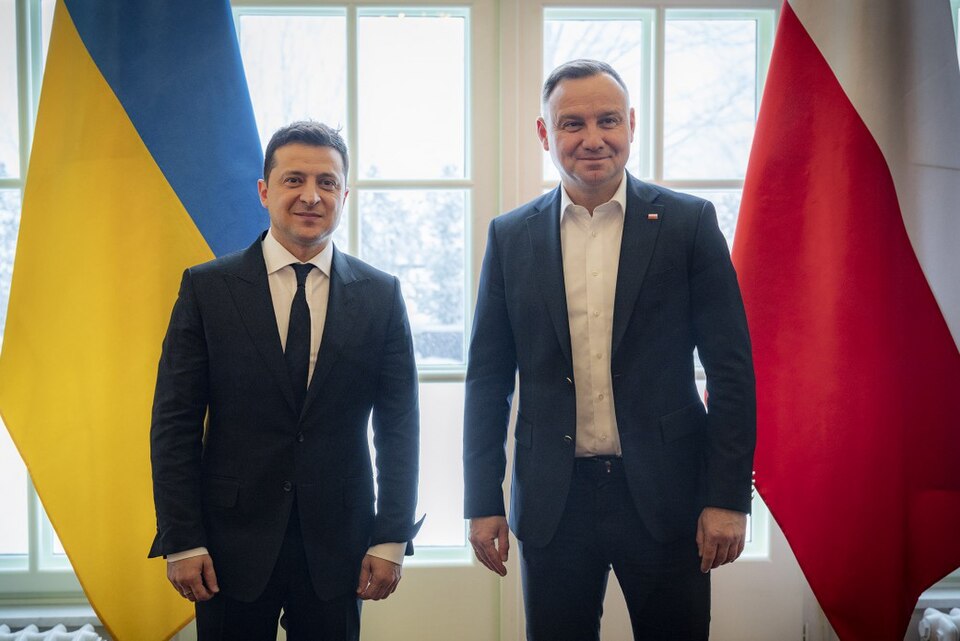
Ukraine’s leadership under President Volodymyr Zelenskiy has become a defining factor in the country’s ability to sustain its defense and diplomatic strategy amid Russia’s ongoing invasion. Since assuming office in May 2019, Zelenskiy has navigated a period of unprecedented national crisis, transforming from a political newcomer—a former actor and comedian born in Kryvyi Rih on January 25, 1978—into a wartime leader whose approval rating has remained consistently above 60 percent, according to polling by the Kyiv International Institute of Sociology.
His rise to power began with a decisive victory in the 2019 presidential election, where he captured 73.2 percent of the vote despite no prior experience in government.
A Strategic Shift in Defense Capabilities
Zelenskiy’s leadership has coincided with a major evolution in Ukraine’s defense posture. One of the most visible changes has been the development and deployment of domestic drone systems such as the Palianytsia and Peklo drones.
These systems were developed to bolster Ukraine’s long-range strike capability, allowing for precision targeting of military assets with reduced reliance on foreign-supplied systems. Building on this momentum, Zelenskiy announced in February 2025 the establishment of a long-range impact command—a move reflecting a broader strategic shift toward proactive defense and deterrence. The command, which had been in planning for a year, represents a formal institutionalization of Ukraine’s efforts to strike military targets inside Russia, a policy Zelenskiy has consistently argued is essential for self-defense and national survival.
This push for long-range strike capability has been matched by intensive diplomatic efforts to secure advanced Western weaponry. In August 2023, Zelenskiy secured commitments from allied nations for the provision of F-16 fighter jets, a critical enhancement to Ukraine’s air combat capabilities.
Alongside these jets, he has sought long-range missiles, further expanding Ukraine’s operational reach and resilience against sustained Russian attacks. These developments signal a broader trend: Ukraine is no longer solely responding to Russian advances but is actively shaping the battlefield through indigenous innovation and international partnerships.
Public Confidence and Communication in Wartime
Despite the absence of a political background, Zelenskiy’s pre-presidency career in media and communications has proven pivotal in maintaining both domestic morale and international support. During the early months of the full-scale Russian invasion that began on February 24, 2022, he remained in Kyiv, delivering daily televised addresses that framed the conflict as a defense of democratic values against authoritarian aggression.
These broadcasts helped galvanize global sympathy and solidarity, reinforcing Ukraine’s narrative on the world stage. The Kyiv International Institute of Sociology’s polling data suggests that this strategy has resonated deeply with the Ukrainian public, with wartime approval ratings remaining above 60 percent—an unusually high level of sustained support during a prolonged and destructive war. The president’s decision to stay in the capital during the initial invasion, rather than flee, became a symbolic act of defiance and commitment.
It also underscored his communication strategy, which blends direct, unfiltered messaging with a modern, media-savvy approach. This dual focus—on both domestic resilience and international advocacy—has helped sustain Western aid flows, including commitments for advanced military systems, even as the conflict enters its fourth year.
Looking ahead, Ukraine’s military strategy appears to be entering a new phase. The operationalization of the long-range impact command, once fully implemented, could enable Ukraine to project force deeper into Russian-held territory, potentially altering the calculus of the war. Meanwhile, the continued integration of domestically produced drones and Western-supplied equipment suggests a growing resilience in Ukraine’s defense industrial base and logistical networks.
For a nation that has faced existential threats since 2014, and endured a full-scale invasion since 2022, Zelenskiy’s leadership has not only preserved national cohesion but has also positioned Ukraine to play a more assertive role in determining the outcome of the conflict.
{“@context”: “https://schema.org”, “@type”: “NewsArticle”, “headline”: “Zelenskiy’s leadership defines Ukraine’s war strategy and resilience”, “description”: “KYIV, July 11 — Ukraine’s leadership under President Volodymyr Zelenskiy has become a defining factor in the country’s ability to sustain its defense and diplomatic…”, “datePublished”: “2026-07-11T09:30:00+00:00”, “author”: {“@type”: “Person”, “name”: “Sebastian Smith”}, “publisher”: {“@type”: “Organization”, “name”: “InfoPulse Today”, “url”: “https://newsfeed.2bme.xyz/”}}




