
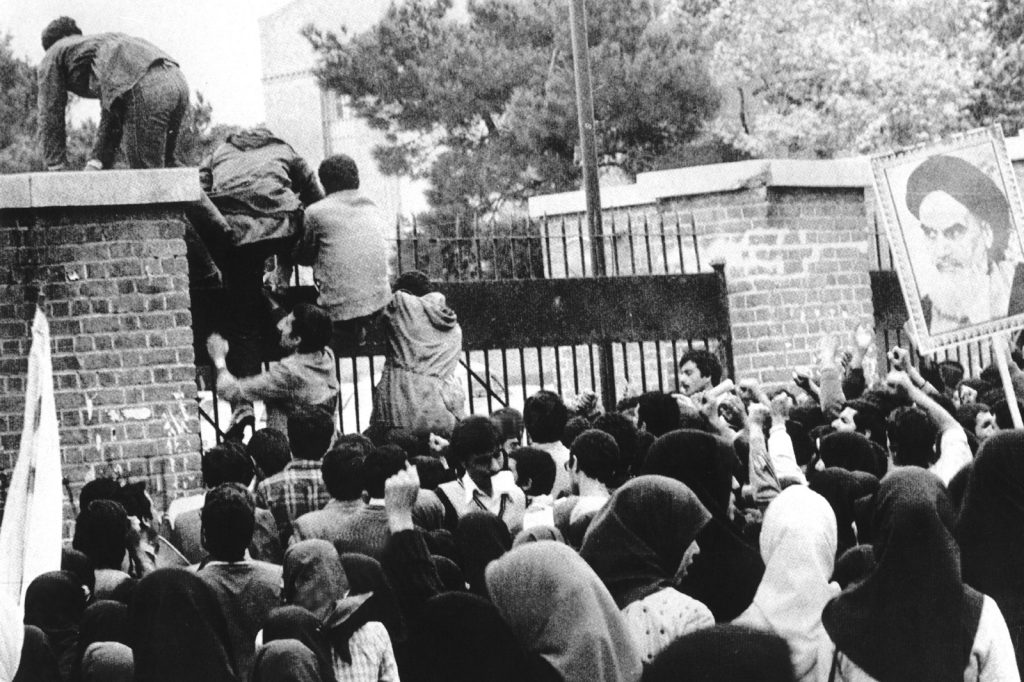
TEHRAN, July 8 — For the families of the 52 American diplomats and citizens taken hostage in 1979, the rupture with Iran has never fully healed. Now, nearly five decades after those 444 days that reshaped U.S. foreign policy, the two nations find themselves locked in another dangerous cycle of escalation. The current tensions follow a pattern of mistrust that dates back to the Iranian Revolution.
The United States broke diplomatic relations with Iran in April 1980, a formal severing that has never been restored. Since then, the relationship has been defined by a series of flashpoints, each one leaving its mark on the people caught in the middle.
One of the earliest and bloodiest chapters came during the 1980-1988 Iran-Iraq War, when the United States tilted toward Iraq. That conflict set the stage for a tragedy that still echoes: the 1988 shooting down of Iran Air Flight 655 by the USS Vincennes, which killed 290 civilians. For the families of those passengers, the event remains a raw wound, a moment when a routine commercial flight became a military target in the Persian Gulf.
A Nuclear Deal Unraveled
In 2015, there was a moment of hope. The Joint Comprehensive Plan of Action, known as the JCPOA, was signed between Iran and world powers, limiting Iran’s nuclear program in exchange for sanctions relief. For patients in Iran who had struggled to access medicines blocked by sanctions, and for families in the West who worried about the prospect of a nuclear-armed Iran, the deal offered a fragile sense of security.
That security lasted three years. In 2018, President Donald Trump withdrew the United States from the JCPOA and reimposed sanctions on Iran.
The decision was a turning point, one that the current administration has not reversed. Since the withdrawal, Iran has increased uranium enrichment beyond the limits set by the agreement, a move that alarms nonproliferation experts and raises the stakes for every family in the region. Behind the diplomatic language lies a human story.
The sanctions have made it harder for ordinary Iranians to access food and medicine, while the enrichment advances have brought the world closer to a potential nuclear threshold. For the scientists and engineers working on both sides of this divide, the work is no longer abstract—it carries immediate consequences for millions of lives.
A General, a Drone Strike, and Retaliation
The most direct military confrontation in recent years came in January 2020. A U.S. drone strike killed Iranian Major General Qasem Soleimani, head of the Quds Force, near Baghdad International Airport. Soleimani was a figure of enormous influence in Iran, a man who had built a network of proxy forces across the Middle East.
His death was a seismic event for Tehran. Iran responded by firing ballistic missiles at U.S. forces in Iraq.
The attack caused no American fatalities, but it demonstrated Iran’s willingness to strike directly at American assets. For the service members stationed at those bases, and for their families back home, the night of the missile strikes was a reminder that the conflict could escalate at any moment. The U.S. maintains a significant military presence in the Persian Gulf, including the Fifth Fleet in Bahrain.
That presence is a constant factor in the strategic calculations of both nations. For the sailors and Marines deployed there, and for the Iranian civilians who live within range of those forces, the tension is not a headline—it is a daily reality that shapes how they move through the world.
What Comes Next
The current standoff has no clear off-ramp. Iran continues to enrich uranium at levels that alarm international monitors. The United States continues to enforce sanctions that squeeze Iran’s economy.
Neither side has shown a willingness to return to the negotiating table on terms the other can accept. For the families of the 1979 hostages, now decades removed from that crisis, the cycle feels painfully familiar.
For the families of the 290 civilians killed on Iran Air Flight 655, justice remains elusive. And for the families of American service members stationed in the Gulf, the question of when—not if—the next confrontation will come hangs over every deployment. What to watch next: whether Iran’s enrichment program crosses a threshold that triggers a military response, or whether diplomatic channels reopen through intermediaries.
The history of U.S.-Iran relations suggests that neither outcome can be predicted with confidence. What is certain is that the people on both sides of this divide will continue to live with the consequences of decisions made in distant capitals.




