
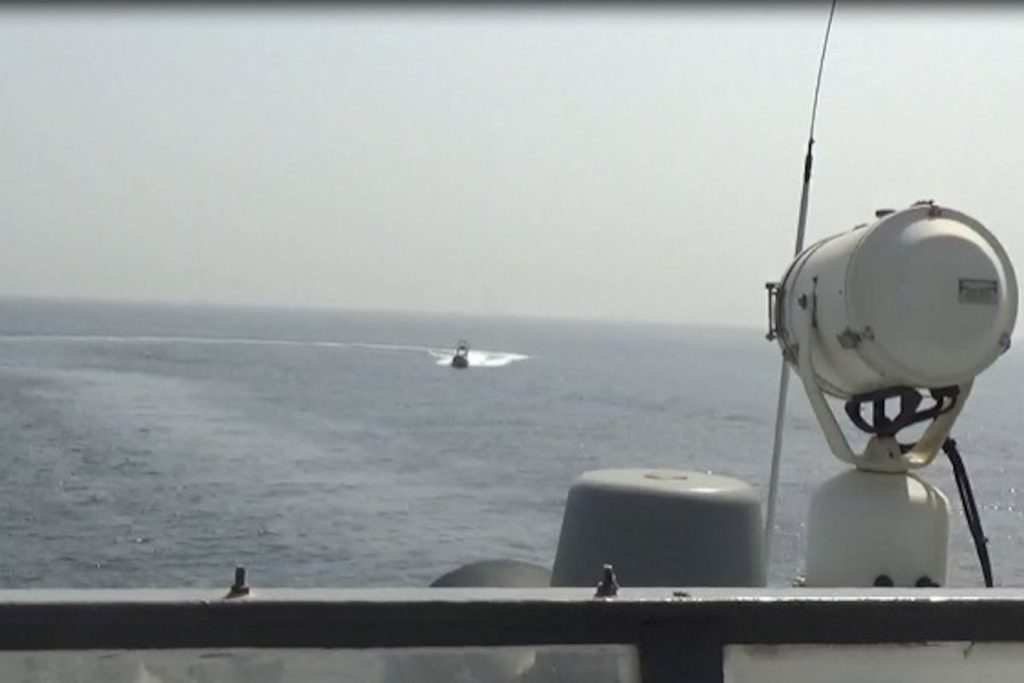
TEHRAN, July 13 — The Strait of Hormuz, a narrow waterway that has long been a flashpoint in U.S.-Iran relations, is once again at the centre of a crisis. The 2025 toll and blockade mark a new escalation, reviving tactics from the 1980s Tanker War that saw both sides attack oil tankers during the Iran-Iraq War. The current situation draws directly from a playbook written decades ago.
During the Iran-Iraq War from 1980 to 1988, both nations targeted oil tankers in what became known as the Tanker War. The U.S. Navy intervened in 1987 with Operation Earnest Will, a mission to protect reflagged Kuwaiti tankers from attack.
One of the darkest moments of that era came in 1988, when the USS Vincennes accidentally shot down Iran Air Flight 655, killing 290 civilians. That tragedy remains a deep wound in Iranian memory and a recurring reference point in any discussion of military risk in the region.
Modern Echoes
More recently, the pattern of confrontation has repeated. In 2011 and 2012, Iran threatened to close the strait in response to international sanctions, prompting an increased U.S. naval presence in the waterway. By 2019 and 2020, the conflict had shifted to direct seizures: Iran took control of multiple tankers, including the Stena Impero.
That same period saw the U.S. kill Iranian General Qasem Soleimani in a drone strike, dramatically raising the stakes. For communities across Asia, the Strait of Hormuz is not a distant geopolitical chessboard.
It is the passageway for a significant portion of the world’s oil supply. Any disruption there affects fuel prices and supply chains that reach directly into the economies of the Philippines, Japan, South Korea, India, and other nations across the region.
What Comes Next
The 2025 escalation has revived these tactics with a new intensity. The blockade and the reported toll represent a departure from the more measured skirmishes of recent years, returning instead to the all-out targeting of commercial shipping seen in the 1980s. What it means for families across Asia is a question of economic stability.
Closer to home, any sustained closure of the strait would mean higher costs for imported goods and energy, hitting households that are already managing tight budgets. The U.S. administration under President Donald Trump, with Vice President JD Vance and Secretary of State Marco Rubio, faces the challenge of responding to this escalation while preventing a wider conflict.
The Strait of Hormuz remains what it has always been: a strategic chokepoint where the risks of miscalculation are enormous. The coming weeks will show whether the lessons of the 1980s Tanker War have been learned, or whether history is simply repeating itself with higher stakes.




