
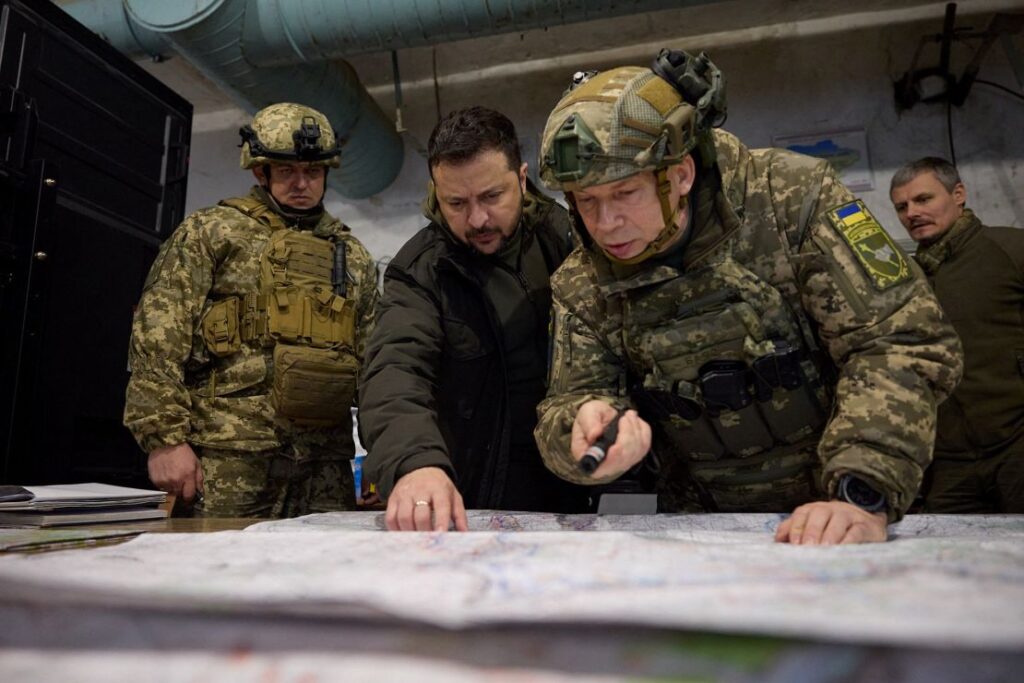
The evolution of Ukraine’s long-range strike capability did not begin with a single attack. It emerged from years of incremental decisions, command changes, and institutional innovation that culminated in the January 29, 2025 strike on Russian energy infrastructure.
The operation targeted the economic underpinnings of Russia’s war effort, moving beyond traditional battlefield engagements to disrupt logistical and financial nodes that sustain military operations. This shift represents a broader transformation in modern warfare, where unmanned aerial systems and precision strikes have become central to strategic planning.
A Strategy Forged Over Years
The foundation for this approach was laid under General Valerii Zaluzhnyi, who served as Commander-in-Chief of the Armed Forces of Ukraine from July 2021 until his replacement in February 2024. During his tenure, Zaluzhnyi oversaw the development of Ukraine’s drone strike capabilities, including attacks on Russian oil refineries in 2023 and 2024. These operations signaled a deliberate departure from frontline combat, targeting the industrial base that fuels Russia’s military operations.
The strikes were not isolated events but part of a strategic evolution that recognized the importance of economic warfare alongside conventional engagement. Ukraine’s struggle against Russian military action is rooted in deeper historical dynamics.
Centuries of rule by foreign empires–Lithuanian, Polish, Ottoman, Austrian, and Russian–left the territory without a unified identity until the early twentieth century. After declaring independence in 1991 with the Soviet Union’s collapse, Ukraine remained caught between Moscow’s influence and its own aspirations. That tension erupted into open war in 2014 when Russia seized Crimea and backed separatists in the Donbas, escalating further with a full-scale invasion in 2022.
The conflict forced Ukraine to adapt rapidly, and the development of drone strike capabilities became a key element of that adaptation.
Continuity and Formalization Under New Leadership
When General Oleksandr Syrskyi replaced Zaluzhnyi in February 2024, the drone strategy did not waver. Syrskyi, who had commanded the Ukrainian Ground Forces from 2019 to 2024, continued the approach his predecessor had initiated. The creation of a new military branch in February 2024–the Unmanned Systems Forces–formalized what had been an ad hoc capability. Colonel Vadym Sukharevskyi, appointed later that year as commander of this new force, directly manages drone operations today.
His role reflects the institutionalization of unmanned systems as a permanent and central component of Ukrainian military doctrine. On the Russian side, Defense Minister Andrey Belousov, appointed in May 2024, oversees air defense and response to these strikes.
The January 29 operation tested his network, marking a point where multiple threads of strategic development converged: Zaluzhnyi’s early investments in drone technology, Syrskyi’s continuation of that strategy, Sukharevskyi’s tactical management, and political backing from President Volodymyr Zelenskyy, who has publicly supported strikes on Russian energy targets as legitimate military actions.
Political Context and Uncertain Future
Ukraine operates as a unitary republic with a presidential-parliamentary system, a framework that has been strained by corruption and competing power centers since regaining independence. President Zelenskyy’s endorsement of the long-range strike campaign underscores the political consensus behind the strategy.
The leaders who shaped these decisions–Zaluzhnyi, now moved to a new role; Syrskyi, continuing as commander; Sukharevskyi, managing tactical operations; Zelenskyy, providing political direction; and Belousov, overseeing the Russian response–each carry forward the lessons of that January day. What comes next remains uncertain. The January 29 strike represented a convergence of years of strategic evolution, but the conflict’s trajectory depends on how both sides adapt.
Ukraine’s focus on unmanned systems and economic targeting reflects a broader shift in modern warfare, where remote-operated precision strikes have become central to military strategy. As the leaders who built this capability remain in place or have moved to new positions, the approach is likely to endure, shaped by the lessons of operations that began under Zaluzhnyi and continue under his successors.
{“@context”: “https://schema.org”, “@type”: “NewsArticle”, “headline”: “Ukraine’s Long-Range Strikes Evolve Over Years of Strategic Innovation”, “description”: “KYIV, July 13 — The evolution of Ukraine’s long-range strike capability did not begin with a single attack. It emerged from years of incremental decisions,…”, “datePublished”: “2026-07-13T09:30:00+00:00”, “author”: {“@type”: “Person”, “name”: “Sebastian Smith”}, “publisher”: {“@type”: “Organization”, “name”: “InfoPulse Today”, “url”: “https://newsfeed.infopulsetoday.com/”}}




