
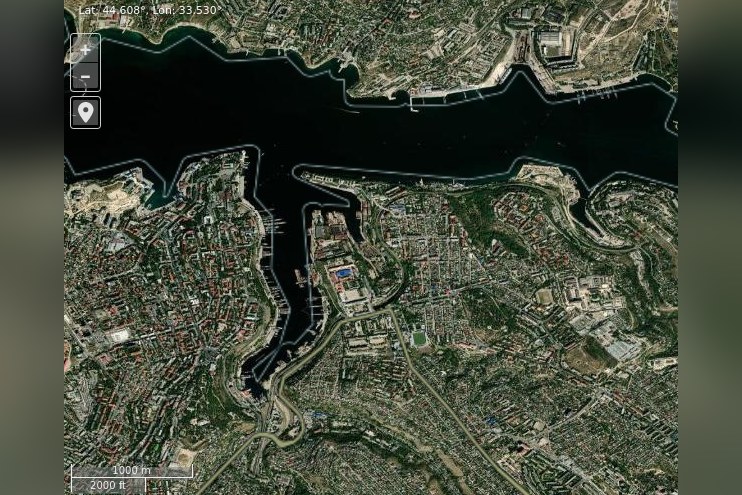
SEVASTOPOL, July 15 — The Russian Black Sea Fleet, a cornerstone of Moscow’s naval posture in the region, has seen its operational capacity significantly degraded after more than two years of sustained Ukrainian strikes, according to verified military assessments. The fleet, headquartered in Sevastopol, Crimea, has been forced to relocate a substantial portion of its vessels from its primary base to Novorossiysk and other eastern ports, a move that underscores the growing vulnerability of Russia’s southern naval command.
As of 2022, the fleet comprised approximately 50 warships, including six submarines, two frigates, six patrol ships, and five landing ships. The loss of its flagship, the ‘Moskva’, which was sunk in April 2022, marked a pivotal early blow.
The record shows that the fleet’s commander, Admiral Viktor Sokolov, was reportedly killed in a Ukrainian strike on September 22, 2023, though Russian officials denied this at the time. No successor has been publicly named in the intervening period, leaving a leadership vacuum at a critical juncture.
Strategic Vulnerabilities Exposed
Military analysts point to several structural weaknesses that have been exploited by Ukrainian forces. The fleet’s reliance on a single major base in Sevastopol has proven to be a critical liability, forcing concentrated assets into a predictable and targetable location. Additionally, the fleet’s limited air defense capabilities against drone swarms and the necessity of operating in the confined waters of the Black Sea have compounded its tactical difficulties.
By early 2025, satellite imagery confirmed reduced naval activity in Sevastopol, a visual indicator of the fleet’s diminished presence. Russia has responded by reinforcing air defenses around its remaining bases and deploying decoy vessels in an attempt to mislead Ukrainian reconnaissance.
These measures, however, have not fully restored the fleet’s previous operational tempo.
Degraded Power Projection
The fleet’s ability to project power and enforce a blockade has been degraded, according to the record. While it still poses a threat through cruise missile strikes on Ukrainian infrastructure, its capacity for sustained surface operations has been curtailed. The relocation of vessels to Novorossiysk and other eastern ports has lengthened supply lines and reduced the fleet’s ability to respond rapidly to emerging threats in the western Black Sea.
Officials confirmed that the fleet’s vulnerabilities include its reliance on a single major base, limited air defense against drones, and the need to operate in confined waters. These factors have collectively undermined what was once a formidable naval force capable of projecting Russian power across the region.
Looking Ahead
The strategic calculus for the Black Sea Fleet remains uncertain. While it retains the ability to launch cruise missile strikes, its surface fleet has been effectively pushed eastward, ceding operational space to Ukrainian forces. The coming months will test whether Russia can reconstitute its naval presence in Crimea or whether the fleet’s role will be permanently redefined as a more defensive, land-attack force operating from safer eastern harbors. The record shows that the fleet’s degradation represents a significant shift in the regional balance of power, with implications for maritime security and the ongoing conflict.




