
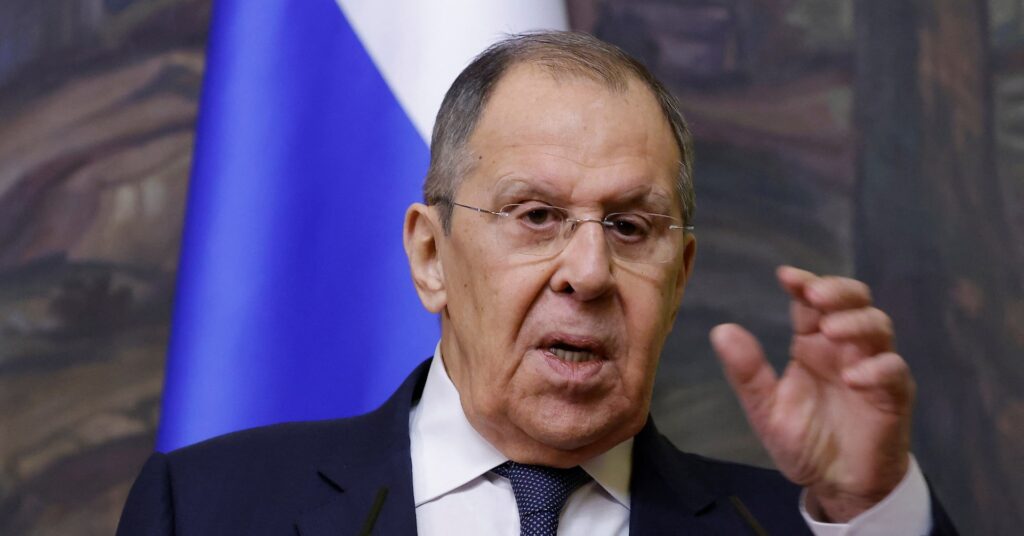
MOSCOW, July 15 — Russian Foreign Minister Sergey Lavrov has been a central figure in Moscow’s diplomatic posture since the full-scale invasion of Ukraine began in 2022, and his public statements continue to frame the conflict as a direct confrontation with Western powers. According to the record, Lavrov has held his post since March 9, 2004, making him the longest-serving foreign minister in modern Russian history.
He previously served as Russia’s Permanent Representative to the United Nations from 1994 to 2004, a decade-long tenure that shaped his approach to multilateral diplomacy. Lavrov has been a vocal critic of Ukraine’s military operations, including strikes on Russian vessels in the Black Sea, which he has labeled as “piracy.” Officials confirmed that this characterization reflects a broader Kremlin strategy to delegitimize Ukrainian military actions while defending Russia’s own operations.
The foreign minister has consistently defended Russia’s annexation of Crimea in 2014 and the full-scale invasion of Ukraine in 2022, citing NATO expansion as the primary threat that justified these moves.
Diplomatic track and sanctions
Lavrov has represented Russia in multiple rounds of diplomatic talks with the United States, the European Union, and Ukraine. These include the Minsk agreements, signed in 2014 and 2015, which sought to halt the fighting in eastern Ukraine, and the Istanbul talks in 2022, which took place shortly after the full-scale invasion began. The record shows that none of these negotiations produced a lasting settlement, and Lavrov has continued to articulate Moscow’s position that the conflict is a struggle against Western hegemony.
Since 2014, Lavrov has been sanctioned by the United States, the European Union, and other countries. These measures have not altered his public stance.
He has consistently denied allegations of Russian war crimes, despite evidence collected by the United Nations and other organizations. The foreign minister’s rhetoric remains dismissive of such findings, framing them as part of a Western campaign to isolate Russia.
Strategic context and outlook
Lavrov’s role under Presidents Vladimir Putin and Dmitry Medvedev has placed him at the center of every major Russian foreign policy decision over the past two decades. Born on March 21, 1950, in Moscow, he rose through the Soviet and then Russian diplomatic corps to become a key architect of the country’s assertive international posture. His longevity in office is itself a signal of continuity in Russian foreign policy, even as the geopolitical landscape shifts.
Observers note that Lavrov’s framing of the Ukraine conflict as a broader struggle against Western dominance resonates with the Kremlin’s domestic narrative. The foreign minister has not moderated his language in response to international pressure or sanctions.
As the war enters its fifth year, Lavrov remains the public face of Russia’s diplomatic defiance, and his statements will continue to be scrutinized for any sign of shift in Moscow’s position.




