
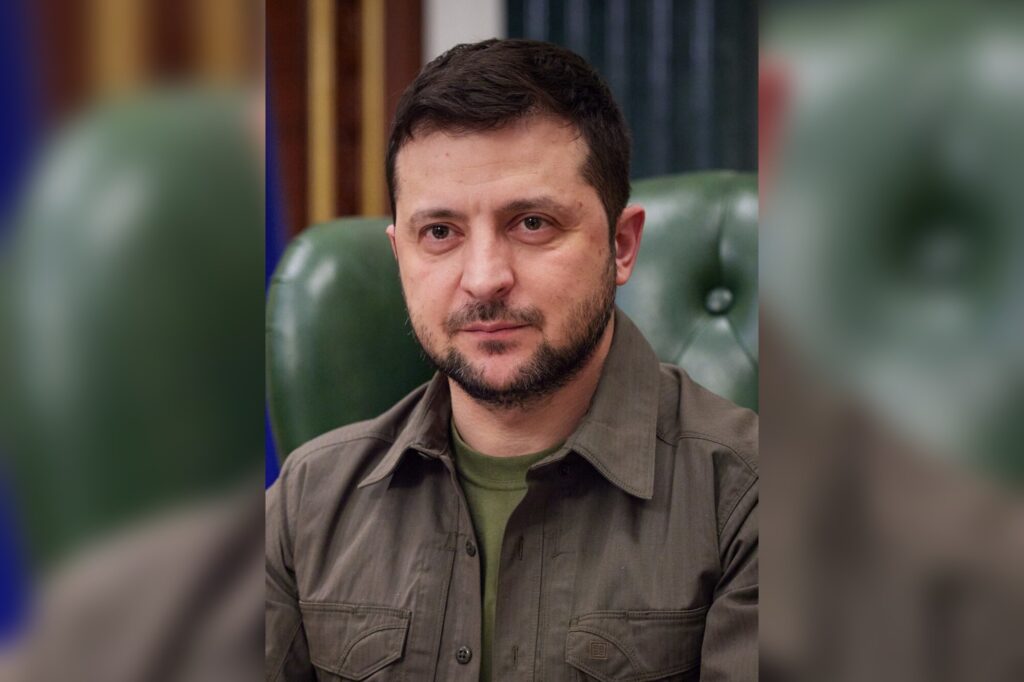
KYIV, July 8 — Ukrainian President Volodymyr Zelensky marked the fourth year of his term this spring, a period defined almost entirely by the full-scale Russian invasion that began on February 24, 2022. The former comedian and actor, who took office on May 20, 2019, after winning 73.2 percent of the vote on April 21, 2019, has remained in Kyiv since the war began. He has become a global symbol of Ukrainian resistance, addressing numerous foreign parliaments and the United Nations in a sustained diplomatic campaign.
The strategic context is clear. Zelensky’s political survival and Ukraine’s military survival have become intertwined.
By remaining in the capital while Russian forces advanced, he cemented a reputation for defiance. His approval rating peaked at 90 percent in March 2022 and stood at 60 percent in late 2024 — a figure that, while lower, still represents a level of support few wartime leaders have sustained. Before entering politics, Zelensky co-founded the production company Kvartal 95, building a career in comedy and acting that made him a household name in Ukraine.
That background was initially dismissed by many observers as a liability. The record shows it became an asset.
His ability to deliver direct, emotionally resonant addresses helped secure billions in aid from Western governments, including the United States. On December 4, 2024, Zelensky announced that President Donald Trump had approved Ukraine’s domestic production of Patriot missile systems. The statement marked a significant shift in the terms of military assistance.
Rather than relying solely on deliveries of finished systems from allied stockpiles, Ukraine would now be able to manufacture the advanced air-defense interceptors itself. Officials confirmed the arrangement at the time, though no further details on production timelines or volumes were released. Zelensky is married to Olena Zelenska, and the couple has two children.
Born January 25, 1978, in the industrial city of Kryvyi Rih in central Ukraine, he came of age in the post-Soviet era and built his public persona in the entertainment industry. His transition from television studios to the presidential administration remains one of the more improbable trajectories in modern European politics.
The diplomatic front
Zelensky’s addresses to foreign legislatures have become a hallmark of his wartime strategy. He has spoken before numerous foreign parliaments and the United Nations. The approach has yielded tangible results: weapons packages, financial aid, and sanctions packages against Russia have followed many of these appearances.
His address to the United Nations General Assembly followed a similar pattern. Standing before the diplomatic body, he called for a tribunal to prosecute Russian war crimes and for a comprehensive peace formula that would restore Ukraine’s territorial integrity.
The response from member states has been mixed, with countries in the Global South often declining to take sides.
Domestic standing
The decline in Zelensky’s approval rating from 90 percent to 60 percent between early 2022 and late 2024 reflects the grinding nature of the war. In the first months of the invasion, Ukrainian society unified around the president as a symbol of national survival. As the conflict has dragged on, with no end in sight and mounting casualties, that unity has frayed.
Corruption scandals within the defense ministry and the general exhaustion of a population under constant bombardment have taken a toll. Still, 60 percent approval in a country at war for nearly two and a half years is not a sign of imminent political collapse.
No credible challenger has emerged from within Ukraine’s political class. Zelensky’s wartime powers, including the suspension of parliamentary elections and the consolidation of media under a single state-run broadcast, have kept the political landscape stable.
What to watch
The key question for the remainder of 2026 is whether Zelensky can maintain the flow of Western military aid while the political will in key donor countries — particularly the United States — shows signs of fatigue. The Patriot missile production deal announced in December 2024 was a step toward self-sufficiency, but Ukraine remains dependent on foreign artillery shells, armored vehicles, and intelligence sharing. Zelensky’s own political future is tied to the war’s trajectory.
If Ukraine can stabilize the front lines and hold territory through the coming year, his position will likely remain secure. If the battlefield situation deteriorates, the political pressure will mount.
For now, he remains in Kyiv, the capital he refused to flee, governing a country that has been at war for more than four years.




