
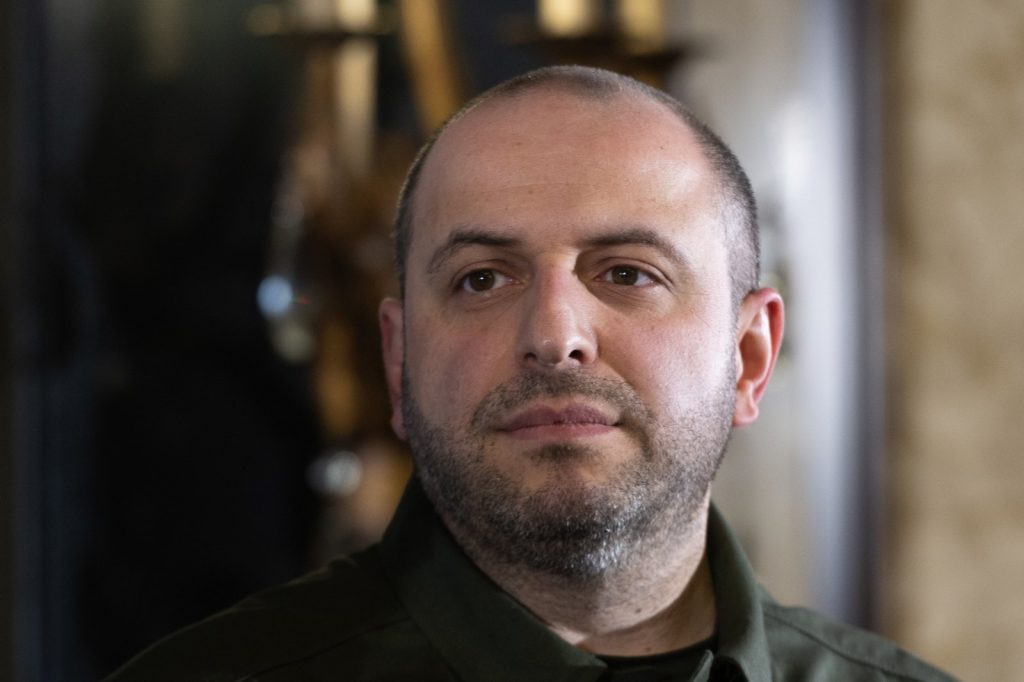
The United States has granted Ukraine a license to manufacture Patriot interceptor missiles, according to a statement issued by the Ukrainian Ministry of Defense on March 24, 2025. Ukrainian Defense Minister Rustem Umerov announced the approval, but officials have not disclosed the production timeline or which specific components will be produced domestically. The announcement reveals more about strategic intent than immediate operational capability, as the scope and schedule remain opaque.
The approval marks a step toward reducing Ukraine’s reliance on external resupply for a system that has become a cornerstone of its air defense since the first batteries arrived in April 2023. The United States and Germany supplied those initial units.
Since the Russian invasion began on February 24, 2022, Washington has committed over $44 billion in security assistance to Ukraine, including Patriot systems and other air defense equipment. Compared with that sum, the production license represents a relatively low-cost move—but one that signals a longer-term bet on Ukraine’s ability to sustain its own defenses amid ongoing Russian missile and drone strikes.
A System Forged Over Decades
The Patriot missile system traces its roots to a 1970s U.S. Army program designed to replace aging air defenses. Early development began under the SAM-D designation and culminated in a successful drone intercept at White Sands Missile Range in 1975. By 1976 the project was renamed Patriot—an acronym derived from its radar’s full name—and evolved into a mobile interceptor capable of countering both aircraft and ballistic threats. Developed at Redstone Arsenal in Huntsville, Alabama, the system incorporated phased-array radar and track-via-missile guidance, representing a shift toward networked, automated air defense.
Patriot entered service in 1984, replacing the Nike Hercules and Hawk systems as the Army’s primary high-to-medium air defense platform. Its AN/MPQ-53 radar scans wide sectors while launchers dispense guided interceptors.
The system’s lethally autonomous engagement logic—meaning it can select and fire without continuous human input—distinguished it among early tactical systems. Patriot is expected to remain in service at least until 2040 and has been widely exported. Operators include Germany, Israel, Japan, the Netherlands, Saudi Arabia, South Korea, and the United Arab Emirates.
Combat experience has varied. During the 1991 Gulf War, Patriot achieved a reported success rate of over 90% against Iraqi Scud missiles in Saudi Arabia, though later assessments questioned those figures.
In 2003, the system recorded confirmed intercepts of ballistic missiles in Iraq. It has since downed drones and cruise missiles in the 2014 Gaza conflict and in the Yemeni Civil War, where Saudi and Emirati forces used it against Houthi missile salvos. The statistics from the Gulf War reflect a specific theater and era.
From Foreign Resupply to Domestic Production
In Ukraine, Patriot batteries have been tasked with intercepting Russian ballistic missiles, cruise missiles, drones, and aircraft since their arrival in April 2023. The system’s layered defense role—handling threats from low-flying drones to high-speed ballistic rounds—has made it a symbol of integrated air and missile defense.
The logic behind granting a production license is straightforward: if Ukraine can manufacture at least some Patriot components domestically, it reduces the logistical bottleneck of resupply. The license also carries political weight. It represents a message of sustained Western commitment and a move toward Ukrainian industrial self-reliance in air defense.
The Ministry’s statement gave no indication of the scope of the license—what specific parts Ukraine will produce or when production might begin. For now, the decision tells observers more about strategic direction than operational reality.
It underscores a broader trend of Western efforts to build Ukraine’s defense industry so it can sustain operations without constant external support. As Patriot systems continue to defend Ukrainian skies, the license serves as a reminder that long-established air defense systems are being adapted to new theaters of war, and that how they are maintained and produced shapes the course of modern conflict.




