
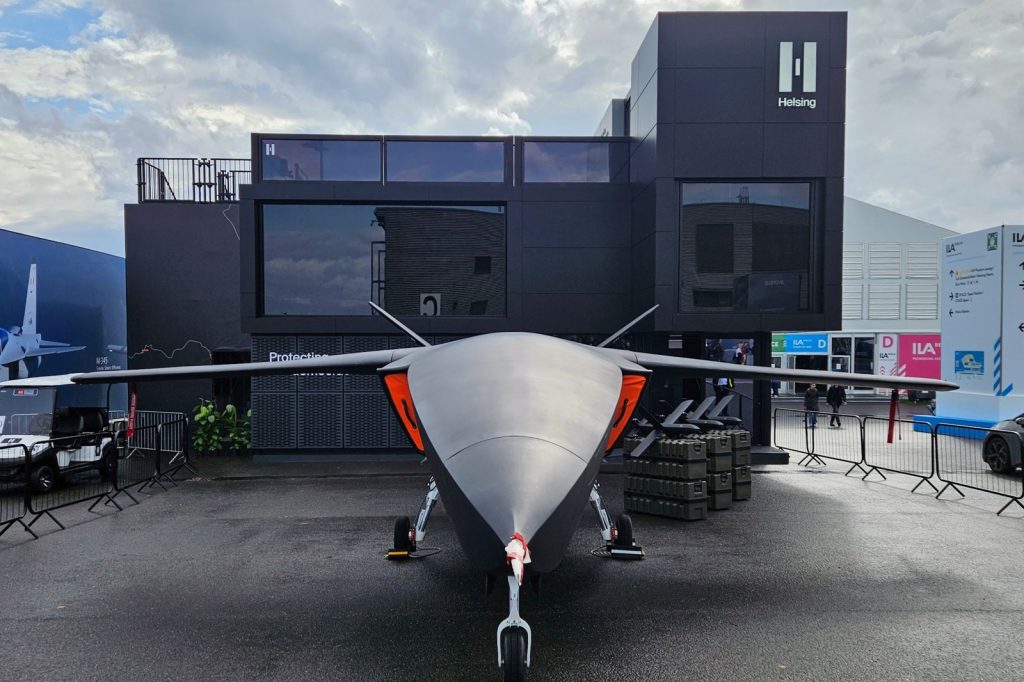
KYIV, July 12 — The shift is unmistakable. Drone warfare has moved from experimental fringe to the central nervous system of the conflict in Ukraine, and a fresh infusion of German firepower is about to accelerate that transformation. Fifty thousand unmanned combat aerial vehicles, funded by Berlin and built by a German AI defense firm, are slated to reach Ukrainian units in the coming months.
Among the models expected in that shipment is the HX-2, a loitering munition developed by Helsing, a German company specializing in artificial intelligence for defense. The HX-2 can travel up to 100 kilometers from its launch point, carrying a warhead weighing several kilograms.
It is designed to loiter over a battlefield, identify a target, and then strike with precision — a capability that fundamentally changes the calculus for Ukrainian commanders. These drones are not toys. They are purpose-built to hunt Russian artillery batteries, disrupt logistics convoys, and take out command posts.
The range alone — 100 kilometers — means Ukrainian operators can reach deep behind enemy lines without putting a pilot at risk.
From Bayraktar to Homegrown Industry
The trajectory of drone warfare in Ukraine tells a story of rapid adaptation. In the early stages of the war, Ukraine relied heavily on Turkish-made Bayraktar TB2 drones. Those platforms were effective, but Russian electronic warfare capabilities eventually degraded their performance.
Ukraine built its own drone industry from the ground up. By late 2024, the country was producing thousands of FPV — first-person view — drones and longer-range strike drones.
The operator corps expanded from a few hundred in 2022 to over 10,000 by late 2024. The German-funded drones will integrate into those existing units. They are not a replacement but an augmentation — a way to take a force that already knows how to fight with drones and give it more capable, longer-range tools.
Operational Tempo and Real-Time Reconnaissance
What is changing on the ground is the pace of operations. Drones allow Ukraine to strike with a speed and frequency that conventional artillery and manned aircraft cannot match. A drone can loiter for hours, watching a target, waiting for the right moment.
When the strike comes, it is informed by real-time reconnaissance. That improves accuracy and reduces the chance of wasted munitions.
According to open-source intelligence, drone strikes have destroyed hundreds of Russian tanks, armored vehicles, and ammunition depots.
What to Watch Next
The 50,000 drones funded by Germany will not win the war on their own. But they represent a bet on a specific kind of warfare — one where machines do the dangerous work of finding and fixing targets, and where the human operator stays at a safe distance. Ukraine already has the operators and the tactics.
Now it is getting the hardware at scale. Watch how the HX-2 performs against Russian electronic warfare.
If it can operate effectively in contested spectrum environments, it will force Moscow to adapt again. And if Ukraine can sustain its domestic production while absorbing Western-supplied systems, the drone arm of its military will only grow more formidable. The shift is still unfolding, and the next chapter is being written in German factories and Ukrainian workshops alike.




