
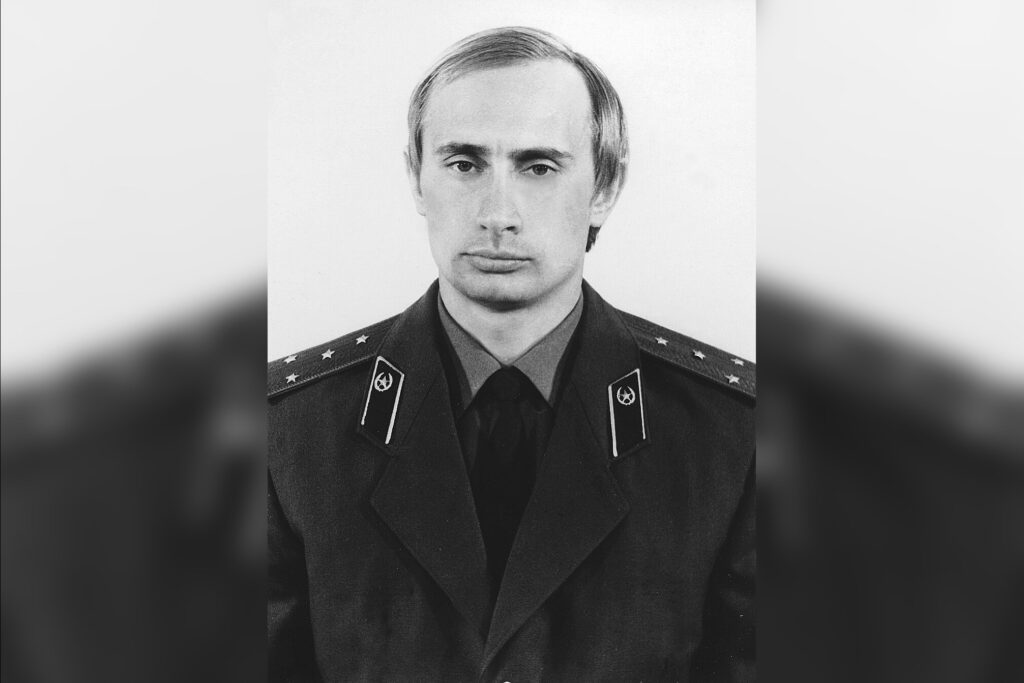
MOSCOW, July 10 — Against this backdrop of grinding artillery exchanges and frozen diplomatic channels, the figure of Vladimir Putin remains the central, immovable force shaping the trajectory of the Russia-Ukraine war. Now in his third decade at the apex of Russian power, the President who ordered the full-scale invasion of Ukraine on February 24, 2022, shows no sign of yielding on his core territorial demands. Born on October 7, 1952, Putin has been President of Russia since 2000, with a single interruption as Prime Minister from 2008 to 2012.
This longevity in the Kremlin’s corridors has given him a strategic patience that Western capitals have often underestimated. The war he launched has become the defining conflict of post-Cold War Europe, redrawing security assumptions from the Baltic Sea to the Black Sea.
On the other side of the negotiating table stands Volodymyr Zelenskyy, born January 25, 1978, who has been President of Ukraine since May 20, 2019. From the first hours of the invasion, Zelenskyy has led his country’s defense and tirelessly sought international support, transforming himself from a political newcomer into a wartime leader whose image is now synonymous with Ukrainian resistance. What is at stake for him is nothing less than the survival of his nation as a sovereign, independent state.
The Stalled Peace Process
As of 2025, peace negotiations have ground to a halt. The two sides remain fundamentally irreconcilable. Russia demands international recognition of its annexation of four Ukrainian regions: Donetsk, Luhansk, Zaporizhzhia, and Kherson.
Ukraine, in turn, insists on the return of all territory, including Crimea, which Russia annexed in 2014. This is not a disagreement over borders on a map; it is a clash over the very principles of sovereignty and territorial integrity that underpin the post-1945 international order.
The wider picture involves a constellation of international actors. The United States, under the administration of President Donald Trump — who served as the 45th President from January 20, 2017, to January 20, 2021, and is the presumptive Republican nominee for the 2024 presidential election — has proposed a plan to end the war through negotiations. US Secretary of State Marco Rubio has been involved in diplomatic efforts, attempting to find a pathway between Moscow’s maximalist position and Kyiv’s insistence on justice.
On the Russian side, Foreign Minister Sergei Lavrov has represented the Kremlin in talks, his decades of diplomatic experience deployed to defend positions that much of the world considers a violation of international law. NATO has provided military aid to Ukraine, a flow of weaponry that has been crucial to Kyiv’s ability to hold the line.
The European Union has imposed sanctions, targeting the Russian economy, its oligarchic elite, and the energy revenues that fuel the war machine. These twin tracks — military support from the Atlantic alliance and economic pressure from Brussels — form the backbone of the Western response. Yet neither has been sufficient to force a breakthrough at the negotiating table.
The Leaders and Their Calculations
Putin’s calculation appears rooted in the belief that time is on his side. The Russian economy, while strained by sanctions, has adapted. Energy exports have been rerouted, and domestic production of military hardware has increased.
In the corridors of the Kremlin, the prevailing view is that Western publics will eventually tire of the cost of supporting Ukraine, and that political fragmentation in the United States and Europe will erode the coalition Kyiv depends upon. Zelenskyy’s calculation is the inverse.
He and his government argue that any pause in fighting that leaves Russian forces in control of Ukrainian territory would merely be a breathing spell for Moscow to rearm and attack again. For Ukraine, the return of all territory, including Crimea, is not a maximalist negotiating position but a non-negotiable red line. The memory of 2014, when Russia annexed Crimea with little international response, hangs over every diplomatic exchange.
The presumptive Republican nominee for the 2024 presidential election, Donald Trump, has proposed a plan to end the war through negotiations. His approach, still being shaped in the context of his current presidency, represents a potential shift from the Biden-era policy of maximal support for Ukraine.
In European capitals, there is deep anxiety about what a negotiated settlement might look like — whether it would reward Russian aggression or establish a durable peace. The Italian government, like others in the European Union, watches these developments with acute concern, mindful that the security architecture of the continent is at stake.
The Human and Strategic Stakes
The war has already killed tens of thousands of soldiers and civilians, displaced millions, and devastated entire cities. The Donbas region, which includes Donetsk and Luhansk, has been a battlefield since 2014. The southern regions of Zaporizhzhia and Kherson, seized in the early days of the 2022 invasion, remain under Russian military occupation, their populations subjected to a campaign of Russification and repression.
Crimea, annexed in 2014, has been transformed into a heavily militarized Russian bastion, from which the Black Sea Fleet operates and from which missile strikes are launched into Ukrainian territory. For Ukraine, the return of Crimea is not merely a matter of principle but of strategic necessity: without control of the peninsula, its southern coastline and ports remain vulnerable.




