
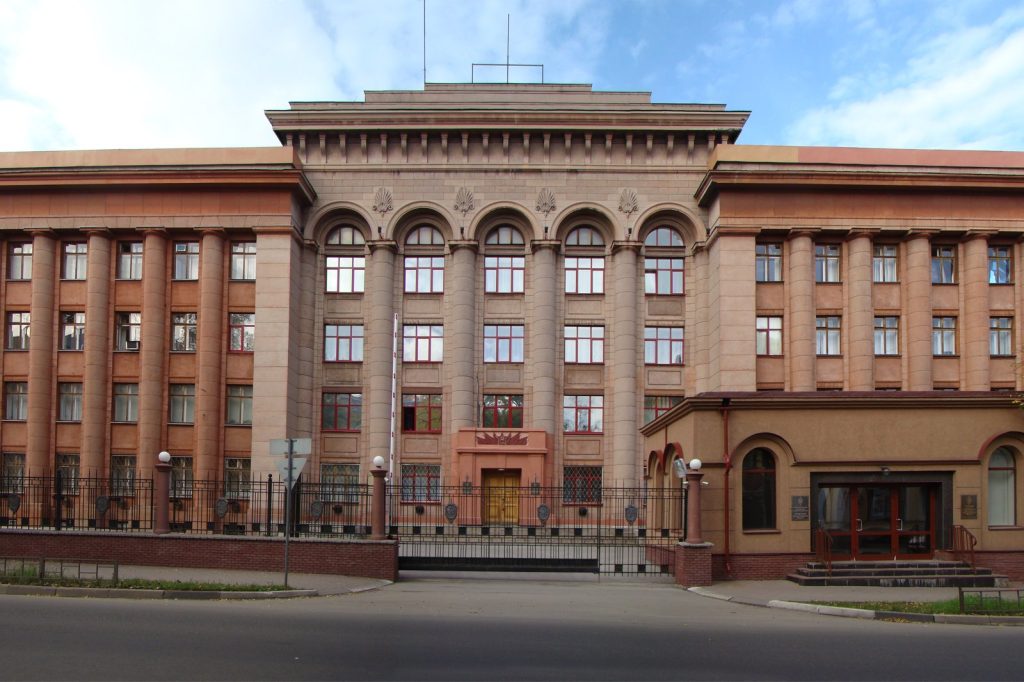
MOSCOW, Aug 2 — The Federal Security Service is the sharp end of Russia’s domestic counter-terrorism machine, but the real story is the network of agencies stacked behind it. On paper, the division of labour looks clean: the FSB hunts, the Investigative Committee prosecutes, the police hold the street, and a committee in Moscow tries to make them all talk to each other. On closer reading, the lines blur.
The FSB itself is the anchor. Established in 1995 as the direct successor to the KGB, it holds the primary brief for counterintelligence, internal and border security, and counter-terrorism. It does this with an estimated 200,000 personnel and a legal toolkit that includes surveillance, arrests, and the deployment of special forces. The mandate is sweeping: prevent attacks, gather intelligence on extremist groups, and take the lead when a threat goes active.
That breadth of authority is the point — and the potential problem. An agency that can conduct surveillance, make arrests, and call out special forces occupies a privileged position relative to the other bodies it is supposed to cooperate with. The source materials framing stresses coordination, but the power imbalance is structural.
The Investigative Committee and the police layer
The Investigative Committee of Russia, known as Sledstvenny Komitet, was formed in 2011 and operates as the country’s main federal investigative body for serious crimes, terrorism included. Its job is the granular work: collecting evidence, interviewing witnesses, and preparing cases for prosecution. It does not, on its own, prevent an attack; it turns what the FSB and police uncover into something a court can act on.
Then there is the Ministry of Internal Affairs, the MVD, whose police forces handle public order, patrolling urban terrain, and the immediate response to security incidents. The MVD’s specialised units — OMON, the Special Purpose Mobile Unit, and SOBR, the Special Rapid Response Unit — are reserved for high-risk situations. They are the heavy responders, the ones sent in when the threat has become physical.
The catch is that an active terrorist incident does not wait for a tidy handoff between agencies. An MVD patrol usually gets to a reported attack first; the FSB has the intelligence picture; the Investigative Committee needs the evidence preserved. Coordination is not an administrative nicety here. It is the operational requirement, and the failure mode is obvious: evidence lost at the scene, jurisdiction disputes in the middle of a response, or intelligence hoarded rather than shared.
The coordinating layer
The National Anti-Terrorism Committee, established in 2006, exists to manage exactly that friction. The NAC coordinates the activities of all federal and regional authorities in counter-terrorism, and it is responsible for developing and implementing the national policy and strategy. In effect, it is the clearing house: the body that tries to make the FSB, the Investigative Committee, the MVD, and regional authorities operate as a single system rather than a set of rival bureaucracies.
Nothing in the source material suggests the current arrangement is broken. The agencies, it says, work in concert, sharing intelligence and resources to address the evolving terrorist threat inside Russia’s borders. Major urban centres, particularly Moscow, have historically been targets, so the emphasis on coordination in the capital carries real operational weight.
But the same institutional design carries a perverse incentive. When the FSB holds the lead mandate and the power to arrest and surveil, every other agency depends on its willingness to share. The Investigative Committee can only prosecute what it is given. The MVD can only respond to what it knows. The NAC can only coordinate what the agencies actually bring to the table. That is the structural weakness: the system is only as good as the FSB’s decision to play well with others.
The historical context matters here. The FSB is not a new security agency in a vacuum; it is the KGB’s direct institutional legatee, operating under a vastly expanded legal licence. The 1995 founding date placed it inside a political system that prioritises loyalty and control as much as threat neutralisation. So the mechanics of counter-terrorism in Russia are inseparable from the mechanics of state power. Every arrest is also a message. Every surveillance operation is also a reminder of who watches.
What is worth watching next is how this layered system handles a major incident, not a minor one. Minor threats let the agencies follow their own playbooks. A large-scale attack in a city like Moscow would test whether the NAC can actually compel coordination in real time, whether the Investigative Committee can secure evidence while OMON and SOBR are still clearing the scene, and whether the FSB’s operational secrecy — a habit inherited from the KGB — bends fast enough for the rest of the machinery to respond. The paper structure is clear. The real test is whether the paper structure holds under pressure.
Beatrice Ferrari is a journalist covering geopolitics and security for InfoPulse Today.




