
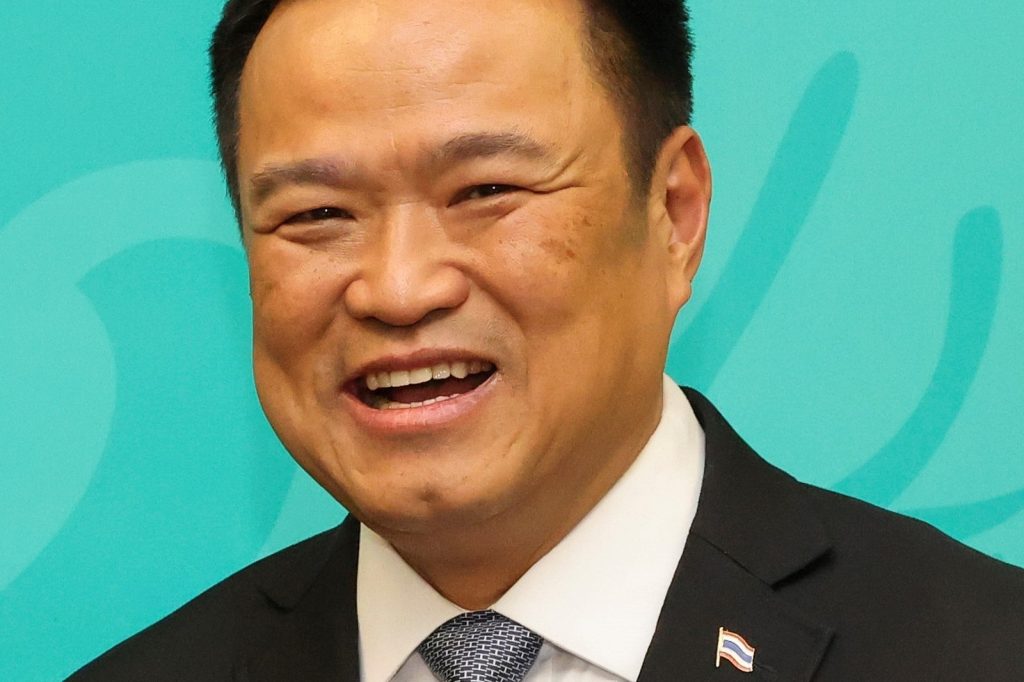
BANGKOK, September 8 — Thai Prime Minister Anutin Charnvirakul is repositioning Bangkok as a regional hub and a reliable partner for foreign capital, part of a broader push to remap the country’s economic diplomacy amid geopolitical volatility. On Friday, Anutin met with 76 ambassadors, foreign consuls, and heads of international organisations based in Thailand at Government House.
A Government House source described the gathering as more than a routine diplomatic reception, saying it reflects the government’s proactive diplomacy policy and an effort to structure relations around nine regional groups for tangible benefits. Strategically, the calculus is straightforward: make Thailand the gateway to ASEAN and developed markets at a time when global supply chains are being reorganised.
The government’s central priority, per the source, is to restore Thailand’s standing as an open, trusted country and a regional hub within the bloc, with the Middle East crisis serving as a warning that ASEAN must accelerate economic, energy, food, and supply-chain integration. Anutin has already made official visits to five countries — Lao PDR, Singapore, Viet Nam, Malaysia, and Indonesia — and is preparing trips to the Philippines, Brunei Darussalam, and Timor-Leste. Bangkok will also co-ordinate closely with Singapore to ensure continuity across ASEAN chairmanships in 2027 and 2028.
Trade deals and risk spreading
A key strategy is accelerating Free Trade Agreements with the European Union, Canada, and South Korea, while advancing the concluded FTA with the European Free Trade Association. The government is also pursuing new markets through Peru, Sri Lanka, the Bay of Bengal Initiative for Multi-Sectoral Technical and Economic Cooperation, and ASEAN-Canada. The FTA push is not merely about expanding export markets.
It aims to position Thailand as a regional production and business base, and a gateway to ASEAN, Asia, and developed markets. At the same time, Bangkok plans to spread risk across newer markets in Africa, the Middle East, Latin America, South Asia, and Central Asia, leveraging strengths in food, processed agricultural products, the halal sector, clean energy, medical services, wellness, and logistics.
In the Middle East, Thailand seeks to be a long-term food security partner while expanding cooperation in energy, tourism, medical services, and Thai labour. In Africa, the government will work through the Thailand-Africa Initiative. With China, Japan, South Korea, and other East Asian countries, the focus shifts to strategic cooperation in technology, innovation, artificial intelligence, new industries, and combating online crime.
The priority there is high-quality investment that creates added value and avoids illegal capital.
What to watch next
Upcoming engagements include the United Nations General Assembly, the Pre-COP meeting, a visit to Fiji, and Thailand’s hosting of the Annual Meetings of the International Monetary Fund and the World Bank Group in Bangkok. The ASEAN Summit follows. The broader stakes are clear: Anutin’s government wants to convert these relationships into new markets, new investment, new technology, and a new role for Thailand within ASEAN.




