
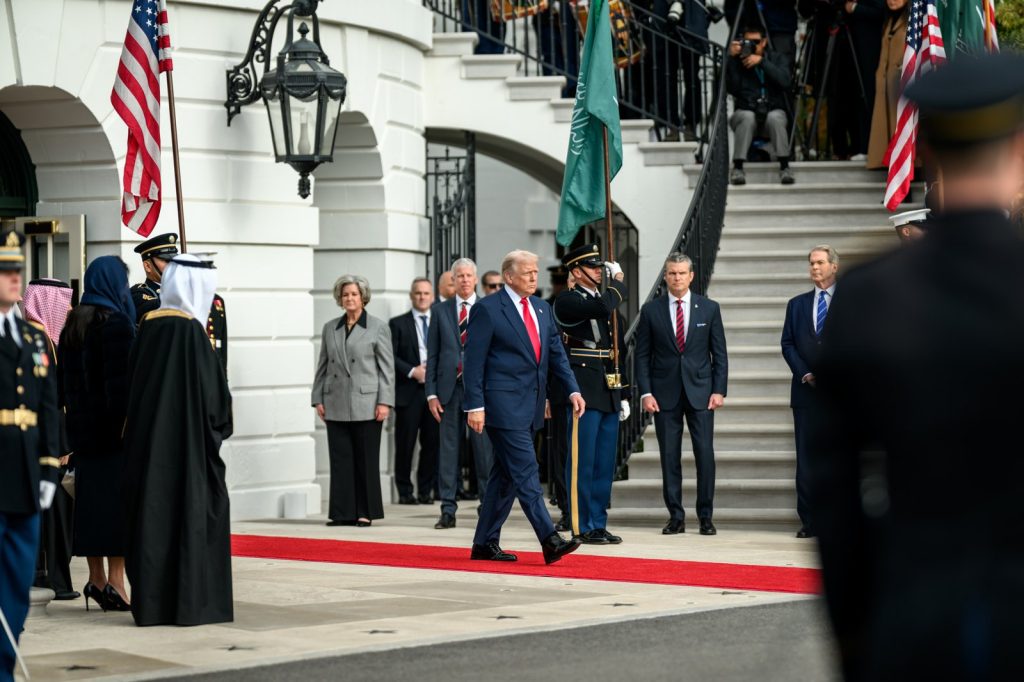
The White House this week moved to lock in two new security allies in the Western Hemisphere and the Middle East, part of a broader push to reshape trade flows for semiconductors and critical minerals. The designations of Peru and Saudi Arabia as Major Non-NATO Allies came through separate presidential determinations, each citing shared security concerns and regional stability. Neither country was previously at that status.
Major Non-NATO Ally status is a legal designation under U.S. law. It grants a foreign nation access to certain defense equipment and cooperative research, though it stops short of a mutual defense guarantee.
Peru becomes the second South American country with the designation, after Argentina. Saudi Arabia joins a list that includes Israel, Egypt, and Japan. The move signals Washington sees Lima and Riyadh as reliable partners for intelligence sharing and military logistics, not just diplomatic gestures.
On trade, the administration issued executive actions adjusting imports of semiconductors, semiconductor manufacturing equipment, and processed critical minerals. The language is precise: “adjusting imports” rather than imposing new tariffs or quotas.
The goal stated in the report is protecting American industries and workers. Semiconductors remain a flashpoint in U.S.-China competition, and critical minerals like lithium and rare earths are essential for defense systems and electric vehicle batteries. The actions appear aimed at reducing reliance on foreign supply chains without triggering immediate trade wars.
The combination of the two moves — alliance expansion and import adjustments — suggests a coherent strategy. Secure the supply chain. Lock in partners who can help enforce it.
Peru holds significant copper and lithium reserves. Saudi Arabia has invested heavily in mining and refining capacity.
Neither country is a traditional tech hub, but both sit on raw materials the semiconductor industry needs. Critics will note the human rights record of Saudi Arabia remains under scrutiny in Congress. The administration’s determination did not address that directly.
Supporters will argue the designation is about strategic necessity, not endorsement. The report itself frames the week’s actions as advancing “American interests” and “national security.” That language is deliberate.
It frames the debate in terms of competition with China and Russia, not internal politics. The Board of Peace also received a designation as a public international organization entitled to certain privileges. That move is less dramatic but fits the pattern: formalizing relationships with entities the administration sees as useful for global stability.
What comes next depends on implementation. The semiconductor import adjustments will need enforcement mechanisms. The new ally designations require Pentagon coordination on training and equipment transfers.
Both Peru and Saudi Arabia will likely seek tangible benefits — access to U.S. weapons systems, joint exercises, technology transfers — in exchange for their cooperation. For American workers, the semiconductor and mineral actions may not produce immediate job gains.
Supply chain shifts take years. But the administration is signaling that the era of unchecked imports in these sectors is over. For U.S. allies in South America and the Gulf, the message is clearer: Washington is willing to formalize partnerships, but it expects reciprocity on security and raw materials.




