
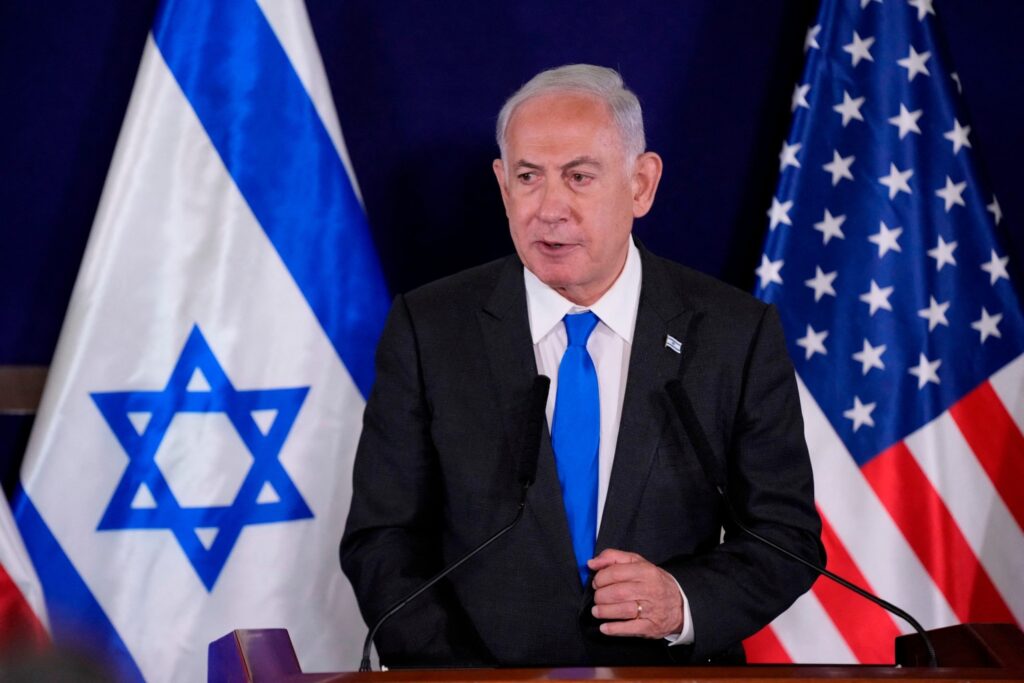
October’s election in Israel is no longer a routine political contest. It has become a verdict on a single decision: Prime Minister Benjamin Netanyahu’s push for war on Iran alongside President Donald Trump in late February. That choice now defines the campaign.
Netanyahu, the country’s longest-serving prime minister, has faced down scandals and coalition collapses for years. He has survived.
But the Iran conflict changes the calculation. Voters are not just weighing economic policy or security platforms. They are judging a war and its consequences.
The fallout from that decision hangs directly over his reelection bid. The corruption charges against Netanyahu remain unresolved.
They have been a constant in Israeli politics, but they never finished him. This time, the legal cloud combines with a military entanglement. Analysts say the October vote presents his biggest challenge yet.
An acrimonious end to a nearly four-decade career is possible. Think of what that means for ordinary Israelis. The election is a referendum on leadership during regional turmoil.
The war’s cost, its casualties, its strategic outcome — these are the terms of debate now. Policy differences on housing or healthcare take a back seat.
The question is simpler: Is Netanyahu the man to lead through this crisis, or did he create it? The campaign is expected to be bitter. Netanyahu’s record as Israel’s longest-serving leader is complicated by the events of the past months.
His narrative of political invincibility — the marathon runner who always finds a second wind — is under direct assault. This time the course looks different, as the original report noted.
An acrimonious exit would be a sharp departure. Netanyahu has cultivated an image of durability. He has outlasted rivals, scandals, and multiple elections.
But the Iran war is not a scandal. It is a national security decision with real-world consequences. How Israelis judge that decision will determine his fate.
The practical upshot is that the election shapes Israel’s direction on multiple fronts. Security policy: Will the next government pursue further military action?
Diplomacy: How will relations with the United States and regional neighbors evolve? Rule of law: The unresolved corruption charges mean Netanyahu’s legal troubles will shadow any outcome. If he loses, those cases proceed.
If he wins, questions of immunity and governance remain. The vote is set for October.
That gives a compressed campaign season. The war’s aftermath is still unfolding. Casualty reports, economic disruptions, and international reactions will all feed into voter sentiment.
There is no time for the usual political breathing room. Netanyahu’s legacy is on the line. He is Israel’s longest-serving prime minister.
That fact alone guarantees a place in history. But the nature of that legacy — survivor or architect of a costly war — is now being written.
The October election will provide the final draft.




