
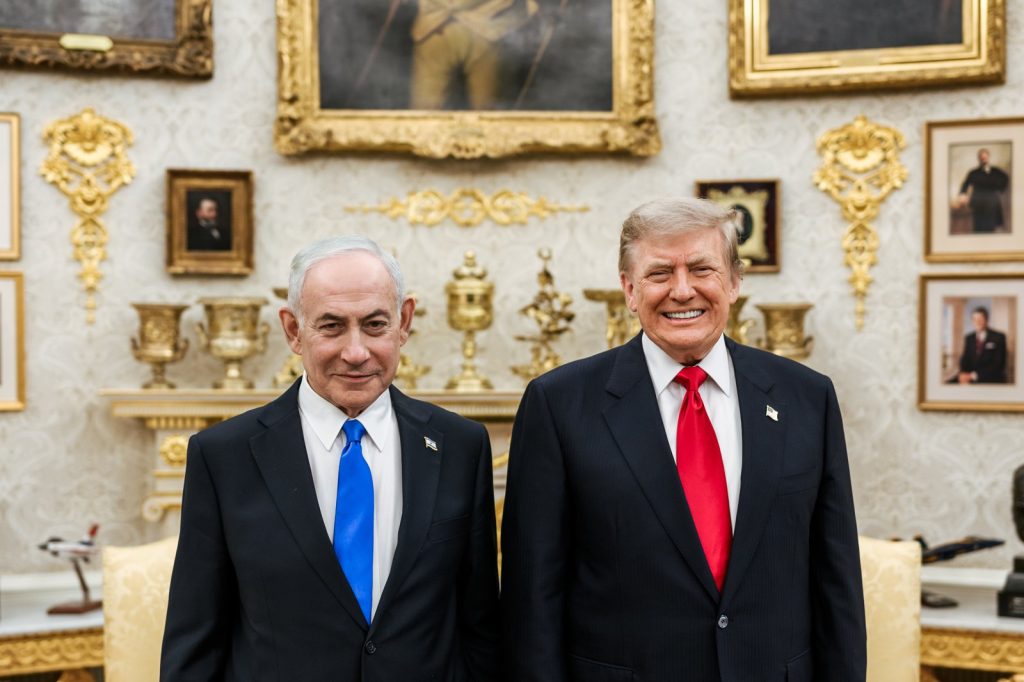
It was a single sentence on a Friday talk show. But President Donald Trump’s claim that he keeps Israeli Prime Minister Benjamin Netanyahu “a little bit sane” has opened a window onto a relationship Washington has long described as an alliance of equals. It is not.
The comment came during an appearance on The Axios Show. Trump framed the U.S.-Israel partnership as one where American direction is the constant.
He said the U.S. has “significant influence” over Israel. He said his administration’s policies have been a “key role” in Israel’s security. And he said he sometimes has to rein in Netanyahu.
The implication is clear: Washington decides the boundaries. Jerusalem operates within them.
This is not a new dynamic. But Trump’s bluntness is new. Past presidents, both Democratic and Republican, have carefully maintained the fiction that the two countries consult as peers.
Trump discarded that. He described a relationship of senior partner and junior partner. The junior partner, in his telling, benefits enormously from U.S. military and diplomatic support.
The senior partner calls the shots. The immediate context for the remarks is the Trump administration’s push for a memorandum of understanding with Iran.
The agreement would call for a “cessation of hostilities” across multiple conflict zones in the Middle East. Iran has reportedly threatened to stop fighting with Hezbollah in exchange for a seat at the peace table. That is a significant concession.
It is also a fragile one. Trump’s confidence that he can keep Israel from doing something to wreck the deal — such as launching a military strike against Hezbollah in Lebanon — rests on this claimed leverage.
He said he can convince Israel not to take steps that could threaten the fragile arrangement. That is a direct assertion of control. It is also a gamble.
Vice President JD Vance’s trip to the region has been pushed back. Diplomacy continues behind the scenes. The administration is trying to defuse tensions and end the conflict on multiple fronts.
The Iran memorandum is controversial. Critics argue it rewards Tehran for years of proxy warfare.
Supporters say it is the only realistic path to de-escalation. What Trump’s comments reveal is the administration’s operating theory. It believes that the U.S.-Israel alliance is strong, but that strength depends on American direction.
It believes that Israel has reaped significant benefits from U.S. support. And it believes that Washington can, and should, set the terms of that support — including when it comes to restraining Israeli military action.
Whether Netanyahu shares that view is another question. The Israeli prime minister has his own domestic pressures and his own strategic calculus. He has not publicly responded to Trump’s characterization of him as someone who needs to be kept “a little bit sane.” But the silence is telling.
For now, the administration is betting that its leverage is real enough to hold. The memorandum with Iran is the centerpiece of that bet. If it holds, Trump’s claim of influence will look prescient.
If it collapses — if Israel acts unilaterally, or if Iran walks away — the claim will look like overreach. Either way, the president said it out loud.
The U.S. leads. Israel follows. That is the message from The Axios Show.
It is not a message every ally will welcome. But it is the message the White House is sending.




