
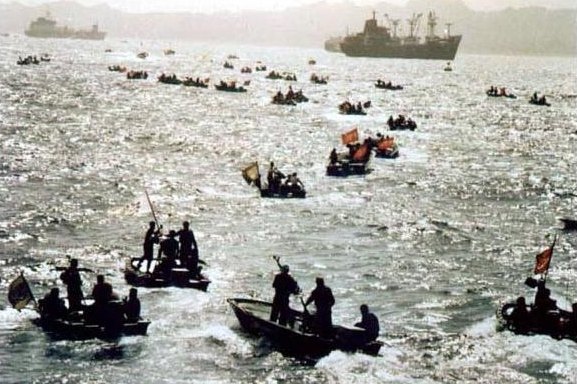
TEHRAN, July 7 — The waters of the Strait of Hormuz have grown tense again, and for the families of merchant sailors and the crews of oil tankers, the fear is deeply familiar. This narrow waterway, a crucial artery for global energy, has been a flashpoint for decades, and the human cost of its strategic importance is written in the history of the region. During the Iran-Iraq War from 1980 to 1988, both sides attacked oil tankers in what became known as the Tanker War.
The conflict eventually drew in the United States Navy to protect commercial shipping. That intervention led to one of the war’s worst tragedies: in 1988, the USS Vincennes accidentally shot down Iran Air Flight 655, killing 290 civilians.
For the families of those passengers, the memory is a permanent scar. More recently, in 2019, the pattern of escalation returned. After the United States left the JCPOA, Iran attacked or seized several tankers in the region.
The threat to the Strait of Hormuz is not new, but it remains very real for the people who work these sea lanes. The United Nations Convention on the Law of the Sea, signed in 1982, guarantees innocent passage through international straits.
This legal framework is meant to protect the free movement of ships. But Iran has periodically threatened to block the Strait in retaliation for sanctions. For the families of the crews on those tankers, this is not about geopolitics.
It is about whether a loved one will come home. Behind every headline about the Tanker War, there are real people—sailors from around the world who navigate these dangerous waters to keep global supply chains moving. The human side of this conflict is too often overlooked.
What this means for patients and families back home is a potential disruption in the flow of oil, which can affect the cost of everything from fuel to heating. The Strait of Hormuz is a chokepoint for the world’s energy supply, and any disruption there sends ripples through the global economy.
Looking ahead, the question is whether the cycle of escalation can be broken. The history of the Tanker War and the 2019 incidents show how quickly things can spiral. For now, the focus remains on the people whose lives are on the line every time a tanker transits those waters.




